Zhang Yue, Li Jianguo, Xiao Yan, Zhang Jing, Wang Ying, Chen Lan, Paranhos-Baccalà Gláucia, Ren Lili, Wang Jianwei
MOH Key Laboratory of Systems Biology of Pathogens and Christophe Mérieux Laboratory, IPB, CAMS-Fondation Mérieux, Institute of Pathogen Biology (IPB), Chinese Academy of Medical Sciences (CAMS) & Peking Union Medical College, Beijing 100730, PR China.
Fondation Mérieux, Lyon, 69002, France.
J Infect. 2015 Jun;70(6):641-50. doi: 10.1016/j.jinf.2014.12.005. Epub 2014 Dec 18.
Human coronavirus (HCoV) OC43 is the most prevalent HCoV in respiratory tract infections. Its molecular epidemiological characterization, particularly the genotyping, was poorly addressed.
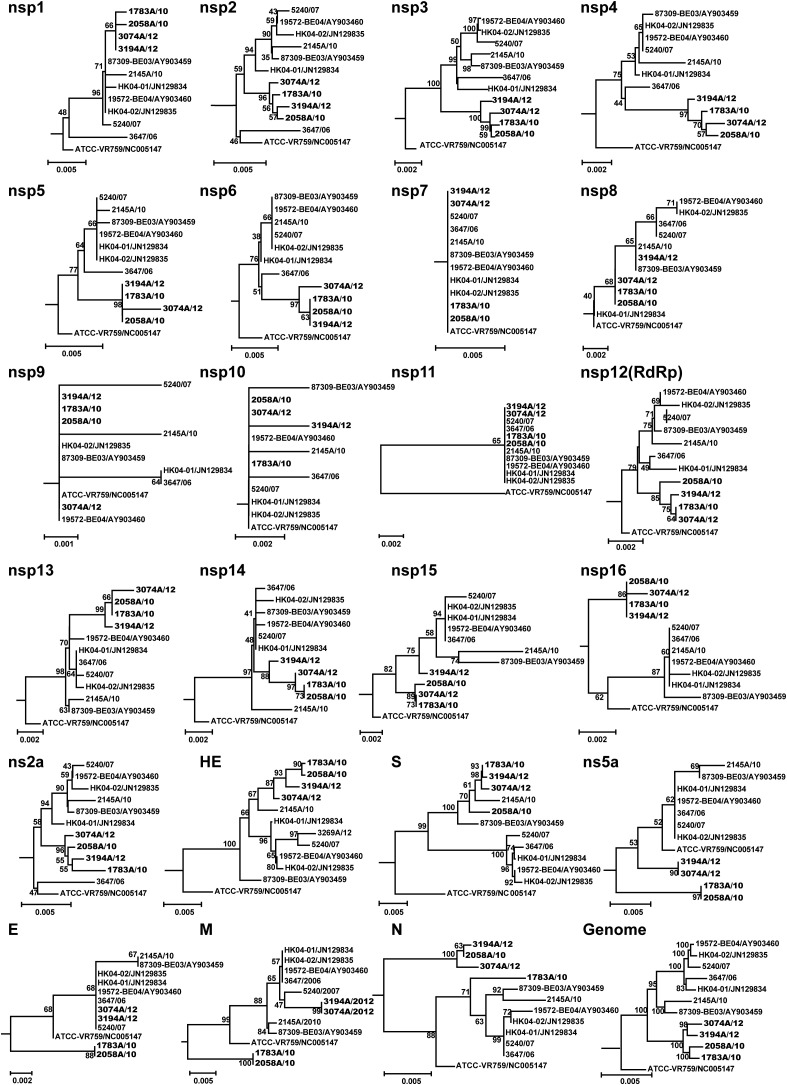
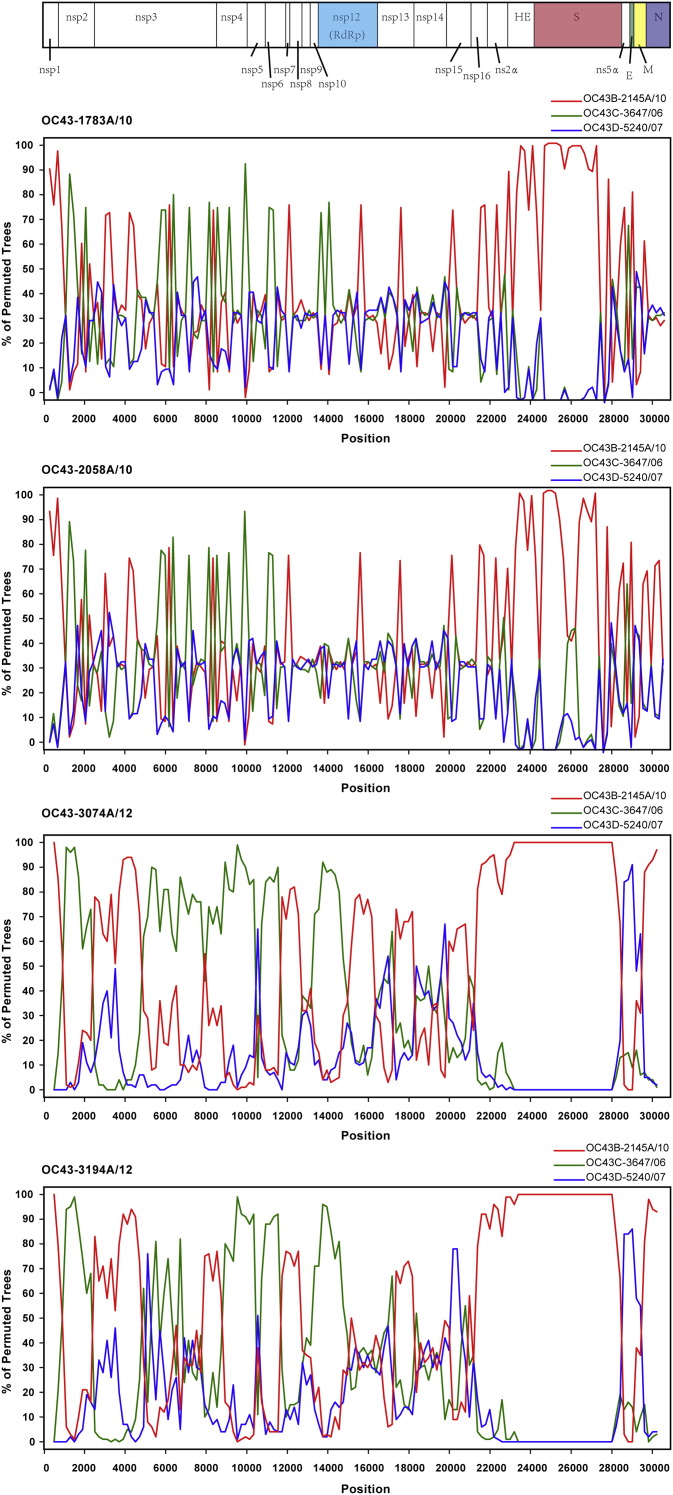
The full-length spike (S), RNA-dependent RNA polymerase (RdRp), and nucleocapsid (N) genes were amplified from each respiratory sample collected from 65 HCoV-OC43-positive patients between 2005 and 2012. Genotypes were determined by phylogenetic analysis. Recombination was analyzed based on full-length viral genome sequences. Clinical manifestations of each HCoV genotype infection were compared by reviewing clinical records.
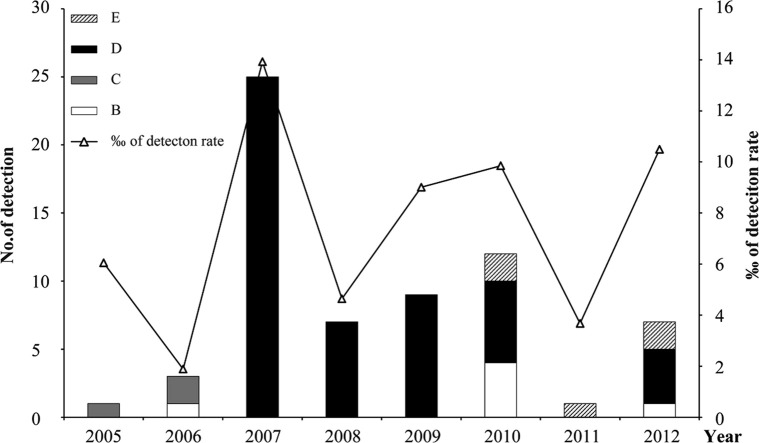
Sixty of these 65 samples belong to genotypes B, C and D. The remaining five strains had incongruent positions in the phylogenetic trees of the S, RdRp and N genes, suggesting a novel genotype emerging, designated as genotype E. Whole genome sequencing and bootscan analysis indicated that genotype E is generated by recombination between genotypes B, C and D. Temporal analysis revealed a sequential genotype replacement of C, B, D and E over the study period with genotype D being the dominant genotype since 2007. The novel genotype E was only detected in children younger than three years suffering from lower respiratory tract infections.
Our results suggest that HCoV-OC43 genotypes are evolving. Such genotype shift may be an adapting mechanism for HCoV-OC43 maintaining its epidemic.
人冠状病毒(HCoV)OC43是呼吸道感染中最常见的HCoV。其分子流行病学特征,尤其是基因分型,尚未得到充分研究。
从2005年至2012年收集的65例HCoV-OC43阳性患者的每份呼吸道样本中扩增全长刺突(S)、RNA依赖RNA聚合酶(RdRp)和核衣壳(N)基因。通过系统发育分析确定基因型。基于全长病毒基因组序列分析重组情况。通过查阅临床记录比较每种HCoV基因型感染的临床表现。
这65份样本中有60份属于B、C和D基因型。其余5株在S、RdRp和N基因的系统发育树中位置不一致,表明出现了一种新的基因型,命名为E基因型。全基因组测序和bootscan分析表明,E基因型是由B、C和D基因型之间的重组产生的。时间分析显示,在研究期间,C、B、D和E基因型依次更替,自2007年以来D基因型为优势基因型。仅在患有下呼吸道感染的3岁以下儿童中检测到新型E基因型。
我们的结果表明HCoV-OC43基因型在不断演变。这种基因型转变可能是HCoV-OC43维持其流行的一种适应机制。