Wu Dan, Huang Lin, Jiang Max S, Jiang Huabei
School of Physical Electronics, University of Electronic Science and Technology of China, Chengdu 610054, China.
College of Medicine, University of Central Florida, Orlando, FL 32827, USA.
Int J Mol Sci. 2014 Dec 18;15(12):23616-39. doi: 10.3390/ijms151223616.
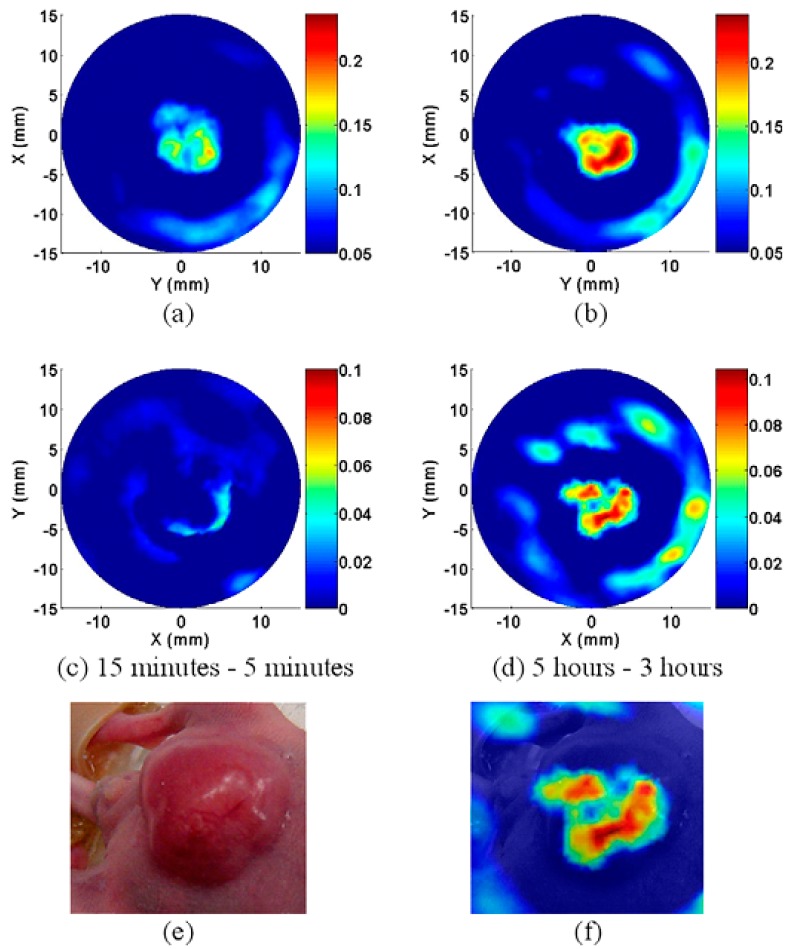
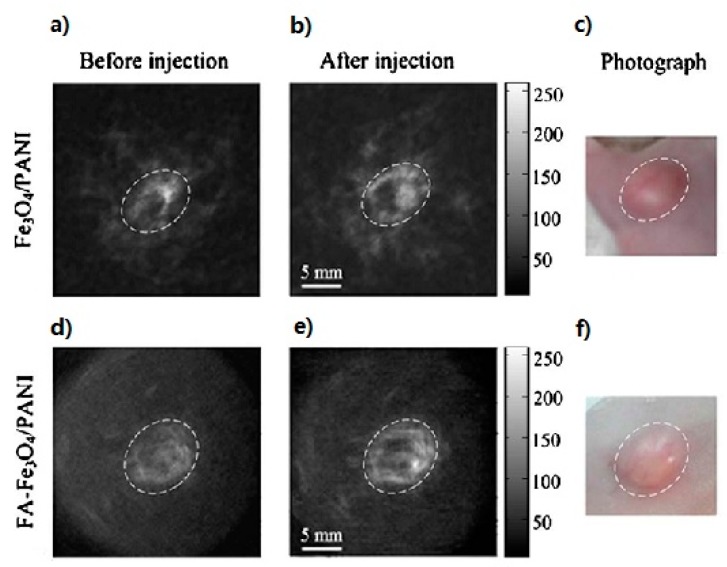
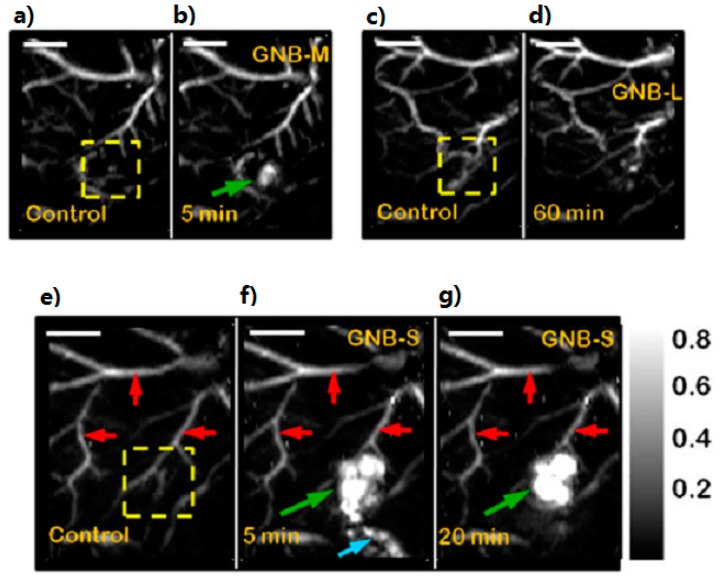
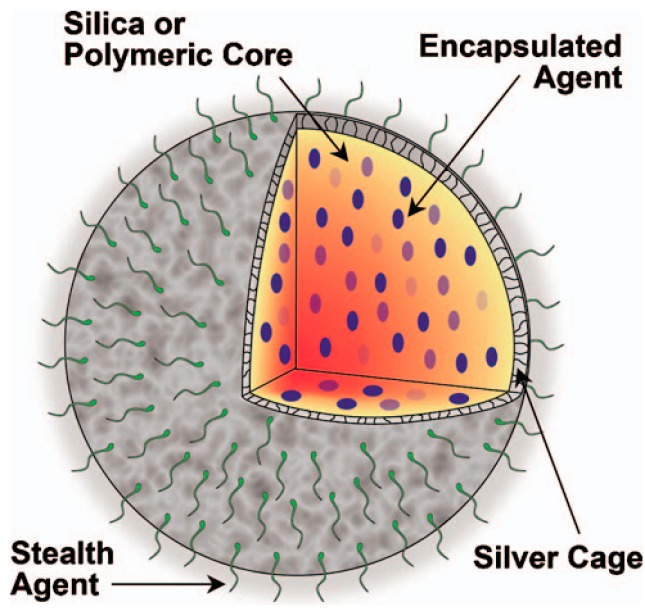
Photoacoustic imaging (PAI) and thermoacoustic imaging (TAI) are two emerging biomedical imaging techniques that both utilize ultrasonic signals as an information carrier. Unique advantages of PAI and TAI are their abilities to provide high resolution functional information such as hemoglobin and blood oxygenation and tissue dielectric properties relevant to physiology and pathology. These two methods, however, may have a limited detection depth and lack of endogenous contrast. An exogenous contrast agent is often needed to effectively resolve these problems. Such agents are able to greatly enhance the imaging contrast and potentially break through the imaging depth limit. Furthermore, a receptor-targeted contrast agent could trace the molecular and cellular biological processes in tissues. Thus, photoacoustic and thermoacoustic molecular imaging can be outstanding tools for early diagnosis, precise lesion localization, and molecular typing of various diseases. The agents also could be used for therapy in conjugation with drugs or in photothermal therapy, where it functions as an enhancer for the integration of diagnosis and therapy. In this article, we present a detailed review about various exogenous contrast agents for photoacoustic and thermoacoustic molecular imaging. In addition, challenges and future directions of photoacoustic and thermoacoustic molecular imaging in the field of translational medicine are also discussed.
光声成像(PAI)和热声成像(TAI)是两种新兴的生物医学成像技术,它们都利用超声信号作为信息载体。PAI和TAI的独特优势在于能够提供高分辨率的功能信息,如血红蛋白、血液氧合以及与生理和病理相关的组织介电特性。然而,这两种方法的检测深度可能有限且缺乏内源性对比。通常需要外源性造影剂来有效解决这些问题。此类造影剂能够极大地增强成像对比度,并有可能突破成像深度限制。此外,靶向受体的造影剂可以追踪组织中的分子和细胞生物学过程。因此,光声和热声分子成像可以成为各种疾病早期诊断、精确病变定位和分子分型的出色工具。这些造影剂还可以与药物联合用于治疗或用于光热治疗,在其中作为诊断与治疗一体化的增强剂发挥作用。在本文中,我们对用于光声和热声分子成像的各种外源性造影剂进行了详细综述。此外,还讨论了光声和热声分子成像在转化医学领域面临的挑战和未来发展方向。