Murphy Patricia J, Frei Mark G, Papolos Demitri
Parallax Innovations LLC, 22 Crescent Rd. Westport, CT 06880.
Parallax Innovations LLC, 22 Crescent Rd. Westport, CT 06880 ; Director of Research, The Juvenile Bipolar Research Foundation, 277 Martine Avenue, White Plains NY 10601.
J Clin Med. 2014;3(3):959-71. doi: 10.3390/jcm3030959.
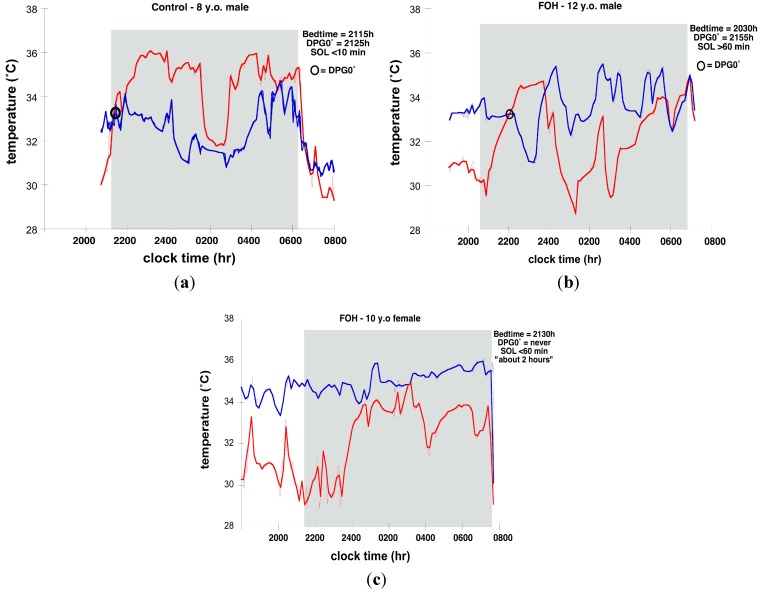
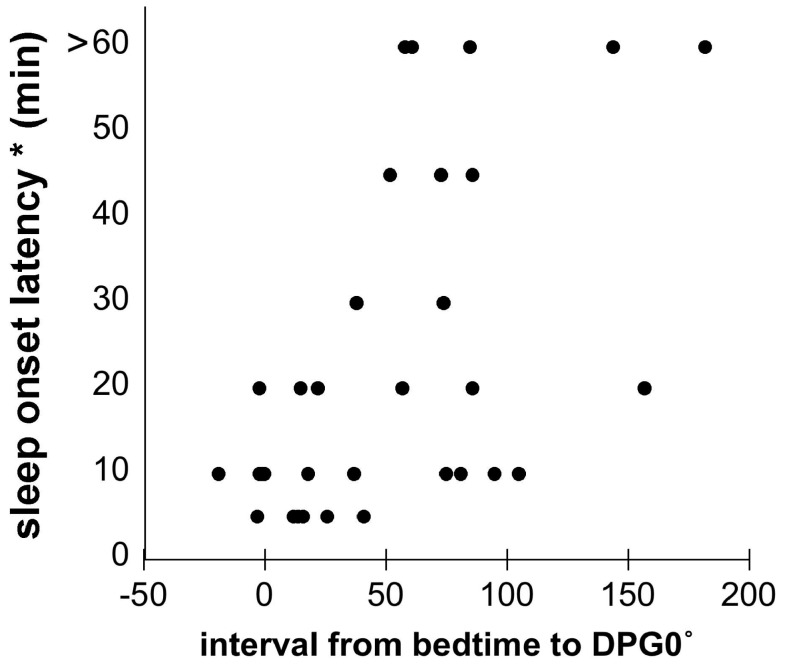
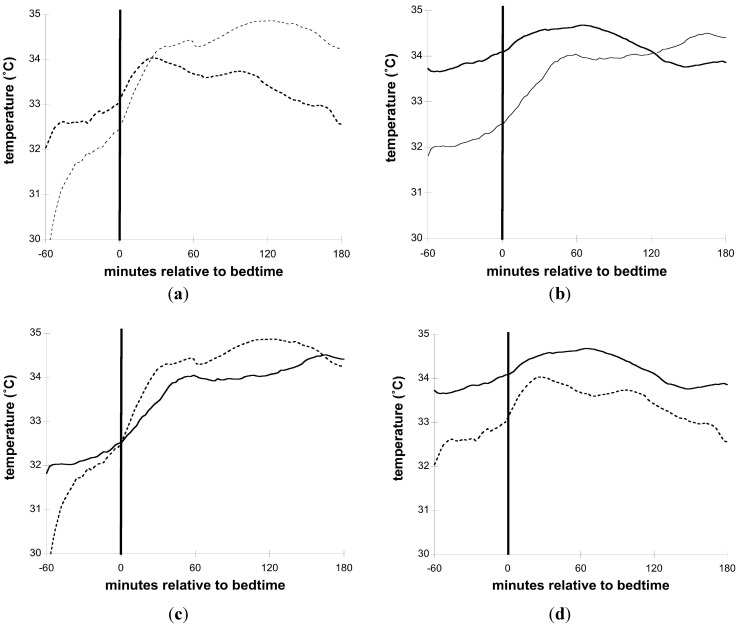
In children diagnosed with pediatric bipolar disorder (PBD), disturbances in the quality of sleep and wakefulness are prominent. A novel phenotype of PBD called Fear of Harm (FOH) associated with separation anxiety and aggressive obsessions is associated with sleep onset insomnia, parasomnias (nightmares, night-terrors, enuresis), REM sleep-related problems, and morning sleep inertia. Children with FOH often experience thermal discomfort (e.g. feeling hot, excessive sweating) in neutral ambient temperature conditions, as well as no discomfort during exposure to the extreme cold, and alternate noticeably between being excessively hot in the evening and cold in the morning. We hypothesized that these sleep- and temperature-related symptoms were overt symptoms of an impaired ability to dissipate heat, particularly in the evening hours near the time of sleep onset. We measured sleep/wake variables using actigraphy, and nocturnal skin temperature variables using thermal patches and a wireless device, and compared these data between children with PBD/FOH and a control sample of healthy children. The results are suggestive of a thermoregulatory dysfunction that is associated with sleep onset difficulties. Further, they are consistent with our hypothesis that alterations in neural circuitry common to thermoregulation and emotion regulation underlie affective and behavioral symptoms of the FOH phenotype.
在被诊断患有儿童双相情感障碍(PBD)的儿童中,睡眠和觉醒质量的紊乱很突出。一种名为“害怕伤害”(FOH)的PBD新表型与分离焦虑和攻击性强迫观念相关,它与入睡失眠、异态睡眠(噩梦、夜惊、遗尿)、快速眼动睡眠相关问题以及早晨睡眠惰性有关。患有FOH的儿童在中性环境温度条件下常经历热不适(如感觉热、多汗),而在暴露于极寒环境时却没有不适,且在晚上过热和早晨过冷之间有明显交替。我们推测这些与睡眠和温度相关的症状是散热能力受损的明显症状,尤其是在接近入睡时间的晚上。我们使用活动记录仪测量睡眠/觉醒变量,使用热贴和无线设备测量夜间皮肤温度变量,并比较了PBD/FOH儿童与健康儿童对照样本之间的这些数据。结果提示存在一种与入睡困难相关的体温调节功能障碍。此外,它们与我们的假设一致,即体温调节和情绪调节共有的神经回路改变是FOH表型情感和行为症状的基础。