Xie Yue, Zhou Xuan, Zhang Zhihe, Wang Chengdong, Sun Yun, Liu Tianyu, Gu Xiaobin, Wang Tao, Peng Xuerong, Yang Guangyou
Department of Parasitology, College of Veterinary Medicine, Sichuan Agricultural University, Ya'an, 625014, China.
Centre for Animal Diseases Control and Prevention, Dachuan Animal Husbandry Bureau, Dazhou, 623000, China.
Parasit Vectors. 2014 Dec 23;7:606. doi: 10.1186/s13071-014-0606-3.
Infection with the parasitic nematode, Baylisascaris schroederi (Ascaridida: Nematoda), is one of the most important causes of death in giant pandas, and was responsible for half of deaths between 2001 and 2005. Mitochondrial (mt) DNA sequences of parasites can unveil their genetic diversity and depict their likely dynamic evolution and therefore may provide insights into parasite survival and responses to host changes, as well as parasite control.
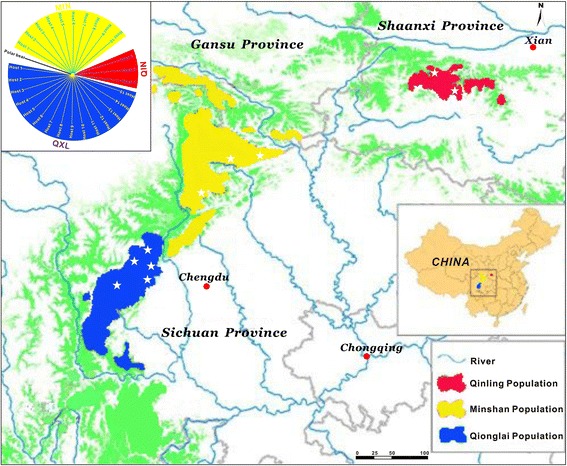
Based on previous studies, the present study further annotated the genetic variability and structure of B. schroederi populations by combining two different mtDNA markers, ATPase subunit 6 (atp6) and cytochrome c oxidase subunit I (cox1). Both sequences were completely amplified and genetically analyzed among 57 B. schroederi isolates, which were individually collected from ten geographical regions located in three important giant panda habitats in China (Minshan, Qionglai and Qinling mountain ranges).
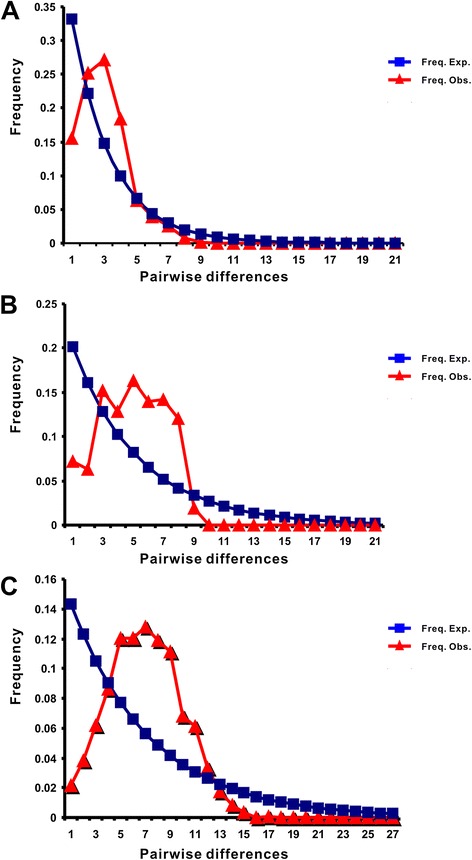
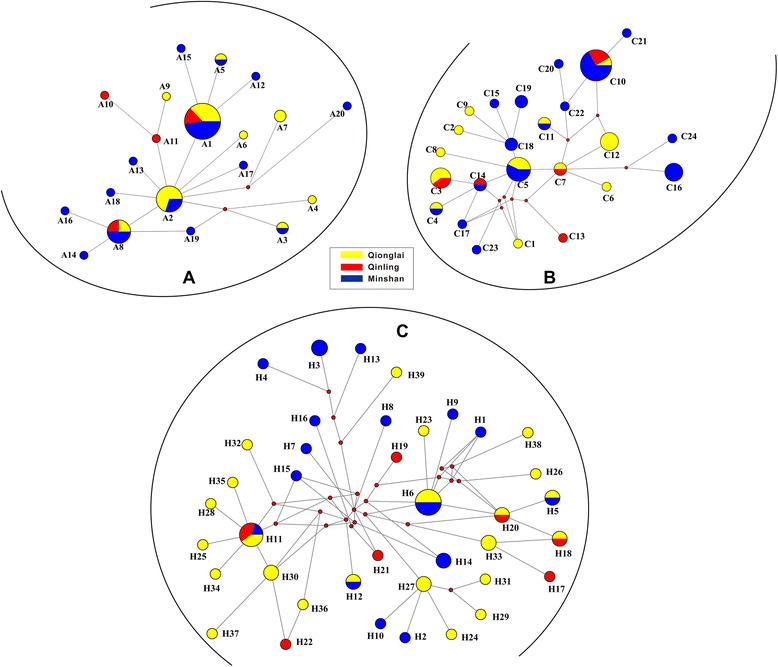
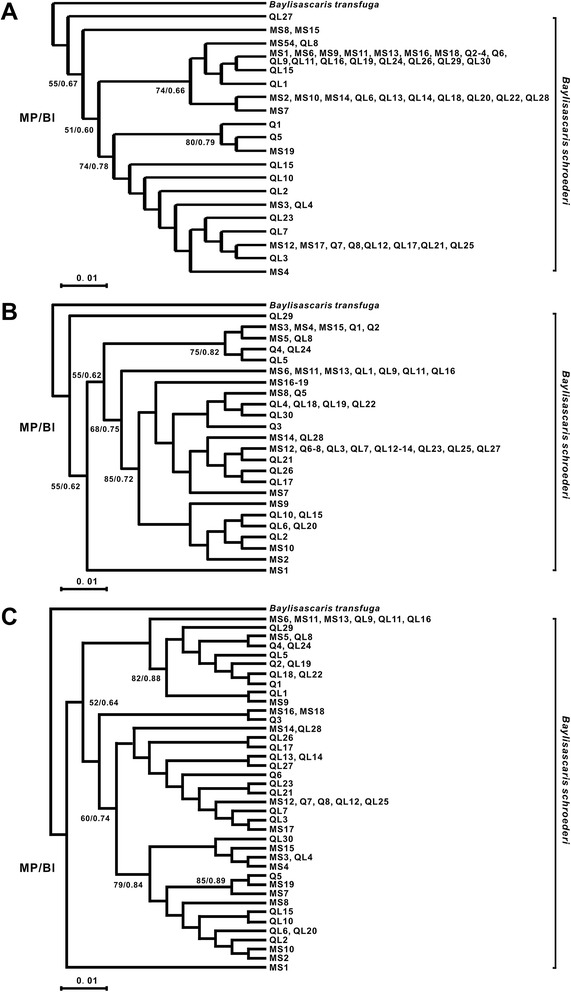
For the DNA dataset, we identified 20 haplotypes of atp6, 24 haplotypes of cox1, and 39 haplotypes of atp6 + cox1. Further haplotype network and phylogenetic analyses demonstrated that B. schroederi populations were predominantly driven by three common haplotypes, atp6 A1, cox1 C10, and atp6 + cox1 H11. However, due to low rates of gene differentiation between the three populations, both the atp6 and cox1 genes appeared not to be significantly associated with geographical divisions. In addition, high gene flow was detected among the B. schroederi populations, consistent with previous studies, suggesting that this parasite may be essentially homogenous across endemic areas. Finally, neutrality tests and mismatch analysis indicated that B. schroederi had undergone earlier demographic expansion.
These results confirmed that B. schroederi populations do not follow a pattern of isolation by distance, further revealing the possible existence of physical connections before geographic separation. This study should also contribute to an improved understanding of the population genetics and evolutionary biology of B. schroederi and assist in the control of baylisascariasis in giant pandas.
感染寄生线虫斯氏狸殖吸虫(蛔目:线虫纲)是大熊猫死亡的最重要原因之一,在2001年至2005年期间,该寄生虫导致了一半的大熊猫死亡。寄生虫的线粒体(mt)DNA序列可以揭示其遗传多样性,描绘其可能的动态进化,因此可能为寄生虫的生存、对宿主变化的反应以及寄生虫控制提供见解。
基于先前的研究,本研究通过结合两种不同的mtDNA标记,即ATP酶亚基6(atp6)和细胞色素c氧化酶亚基I(cox1),进一步注释了斯氏狸殖吸虫种群的遗传变异性和结构。对从中国三个重要大熊猫栖息地(岷山、邛崃和秦岭山脉)的十个地理区域分别采集的57个斯氏狸殖吸虫分离株,进行了这两个序列的完全扩增和遗传分析。
对于DNA数据集,我们鉴定出atp6的20个单倍型、cox1的24个单倍型以及atp6 + cox1的39个单倍型。进一步的单倍型网络和系统发育分析表明,斯氏狸殖吸虫种群主要由三种常见单倍型驱动,即atp6 A1、cox1 C10和atp6 + cox1 H11。然而,由于这三个种群之间的基因分化率较低,atp6和cox1基因似乎都与地理划分没有显著关联。此外,在斯氏狸殖吸虫种群中检测到高基因流,这与先前的研究一致,表明该寄生虫在流行地区可能基本同质。最后,中性检验和错配分析表明,斯氏狸殖吸虫经历了早期的种群扩张。
这些结果证实,斯氏狸殖吸虫种群不遵循距离隔离模式,进一步揭示了地理隔离之前可能存在的物理联系。本研究也应有助于增进对斯氏狸殖吸虫种群遗传学和进化生物学的理解,并协助控制大熊猫的斯氏狸殖吸虫病。