Ramdya Pavan, Lichocki Pawel, Cruchet Steeve, Frisch Lukas, Tse Winnie, Floreano Dario, Benton Richard
1] Center for Integrative Genomics, Faculty of Biology and Medicine, University of Lausanne, Lausanne CH-1015, Switzerland [2] Laboratory of Intelligent Systems, Institute of Microengineering, École Polytechnique Fédérale de Lausanne, Lausanne CH-1015, Switzerland.
1] Laboratory of Intelligent Systems, Institute of Microengineering, École Polytechnique Fédérale de Lausanne, Lausanne CH-1015, Switzerland [2] Department of Ecology and Evolution, University of Lausanne, Lausanne CH-1015, Switzerland.
Nature. 2015 Mar 12;519(7542):233-6. doi: 10.1038/nature14024. Epub 2014 Dec 24.
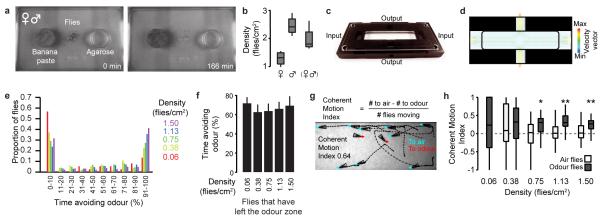
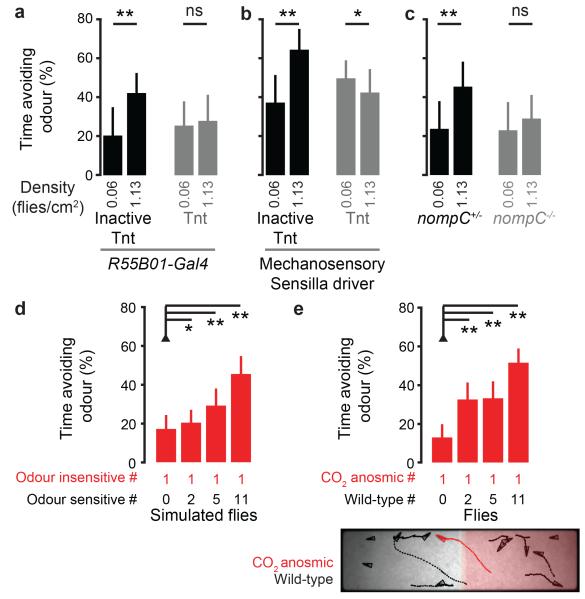
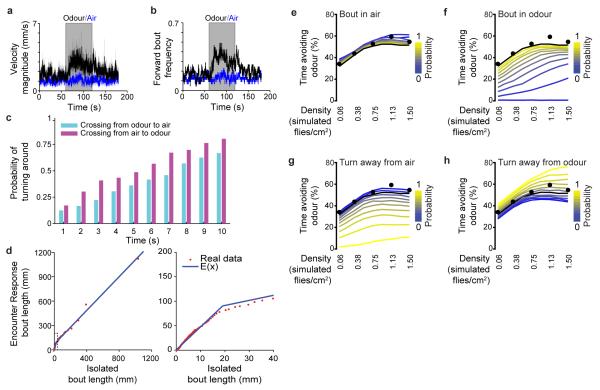
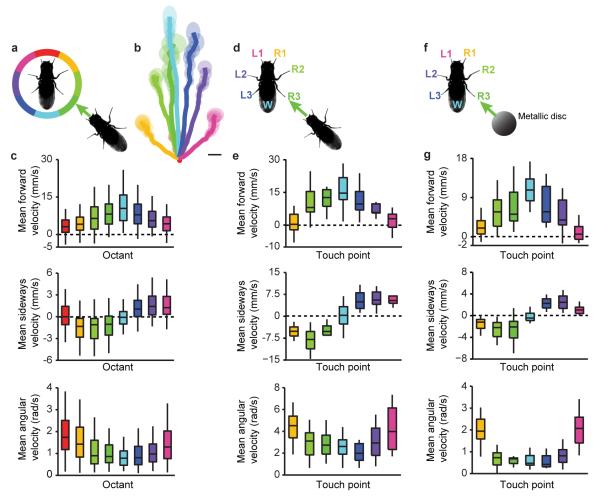
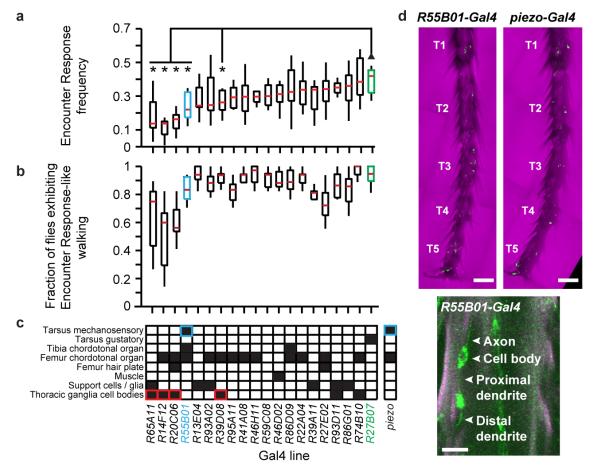
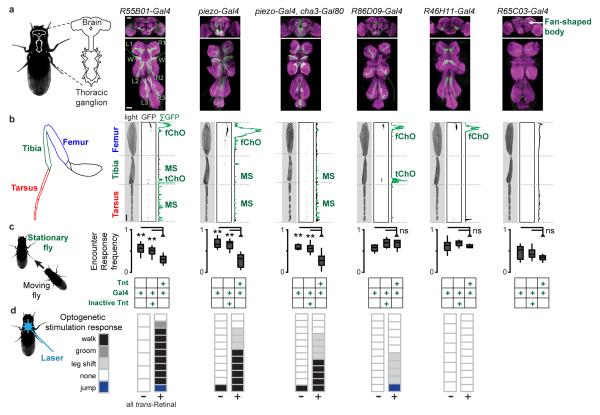
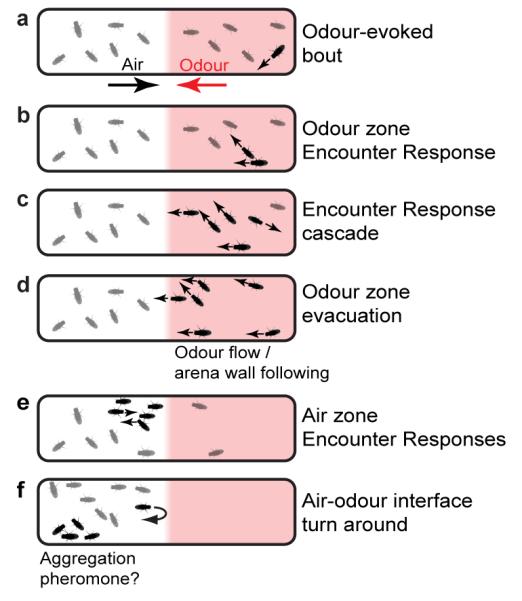
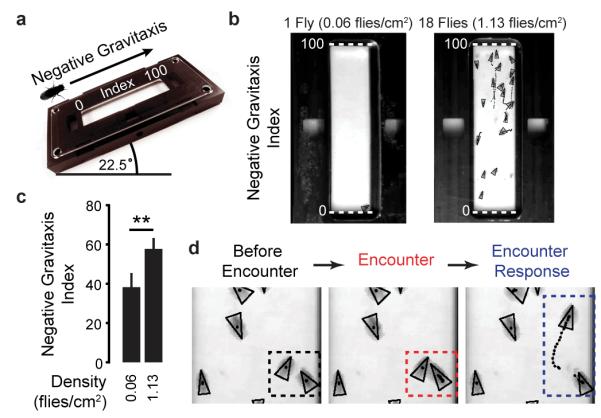
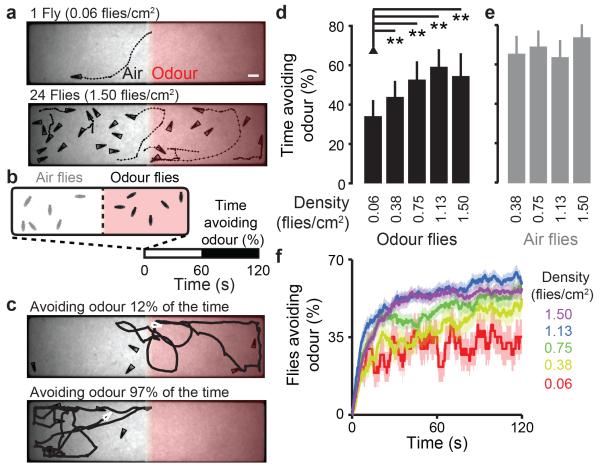
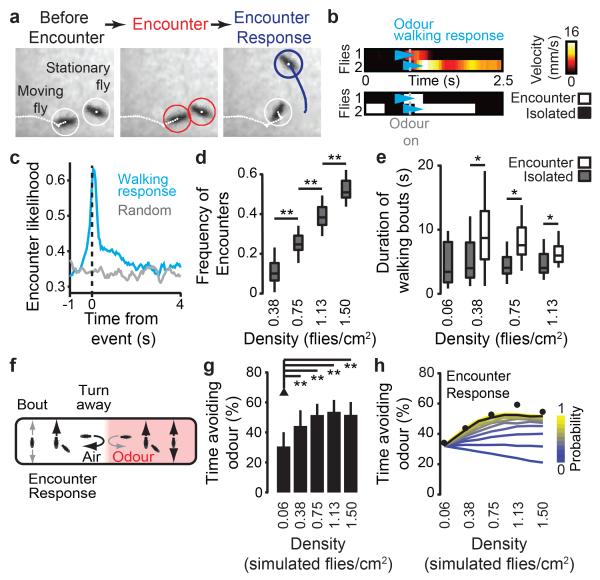
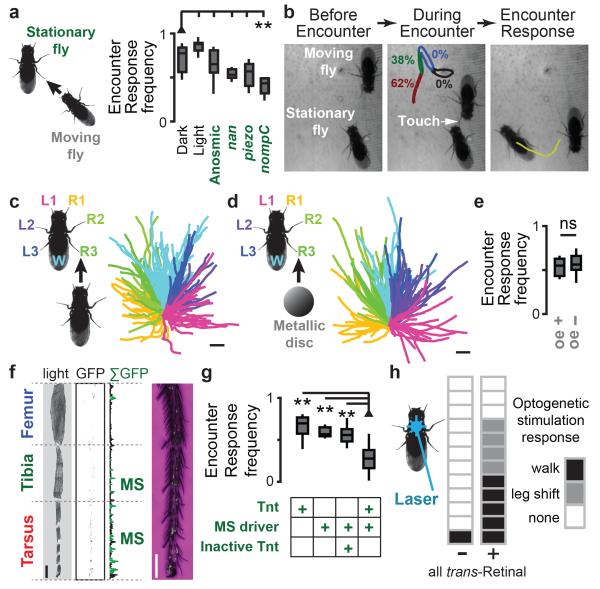
Collective behaviour enhances environmental sensing and decision-making in groups of animals. Experimental and theoretical investigations of schooling fish, flocking birds and human crowds have demonstrated that simple interactions between individuals can explain emergent group dynamics. These findings indicate the existence of neural circuits that support distributed behaviours, but the molecular and cellular identities of relevant sensory pathways are unknown. Here we show that Drosophila melanogaster exhibits collective responses to an aversive odour: individual flies weakly avoid the stimulus, but groups show enhanced escape reactions. Using high-resolution behavioural tracking, computational simulations, genetic perturbations, neural silencing and optogenetic activation we demonstrate that this collective odour avoidance arises from cascades of appendage touch interactions between pairs of flies. Inter-fly touch sensing and collective behaviour require the activity of distal leg mechanosensory sensilla neurons and the mechanosensory channel NOMPC. Remarkably, through these inter-fly encounters, wild-type flies can elicit avoidance behaviour in mutant animals that cannot sense the odour--a basic form of communication. Our data highlight the unexpected importance of social context in the sensory responses of a solitary species and open the door to a neural-circuit-level understanding of collective behaviour in animal groups.
群体行为增强了动物群体的环境感知和决策能力。对成群游动的鱼、成群飞行的鸟和人群的实验及理论研究表明,个体之间的简单互动可以解释群体动态的出现。这些发现表明存在支持分布式行为的神经回路,但相关感觉通路的分子和细胞特性尚不清楚。在这里,我们表明黑腹果蝇对厌恶气味表现出集体反应:个体果蝇对刺激的回避较弱,但群体表现出增强的逃避反应。通过高分辨率行为追踪、计算模拟、基因扰动、神经沉默和光遗传学激活,我们证明这种集体气味回避源于果蝇对之间的附肢触觉相互作用级联。果蝇间的触觉感知和集体行为需要远端腿部机械感觉刚毛神经元和机械感觉通道NOMPC的活动。值得注意的是,通过这些果蝇间的接触,野生型果蝇可以在无法感知气味的突变动物中引发回避行为——这是一种基本的交流形式。我们的数据突出了社会背景在独居物种感觉反应中的意外重要性,并为从神经回路层面理解动物群体的集体行为打开了大门。