Schmidt-Glenewinkel Hannah, Barkai Naama
Department of Molecular Genetics, Weizmann Institute of Science, Rehovot, Israel.
Department of Molecular Genetics, Weizmann Institute of Science, Rehovot, Israel
Mol Syst Biol. 2014 Dec 23;10(12):769. doi: 10.15252/msb.20145513.
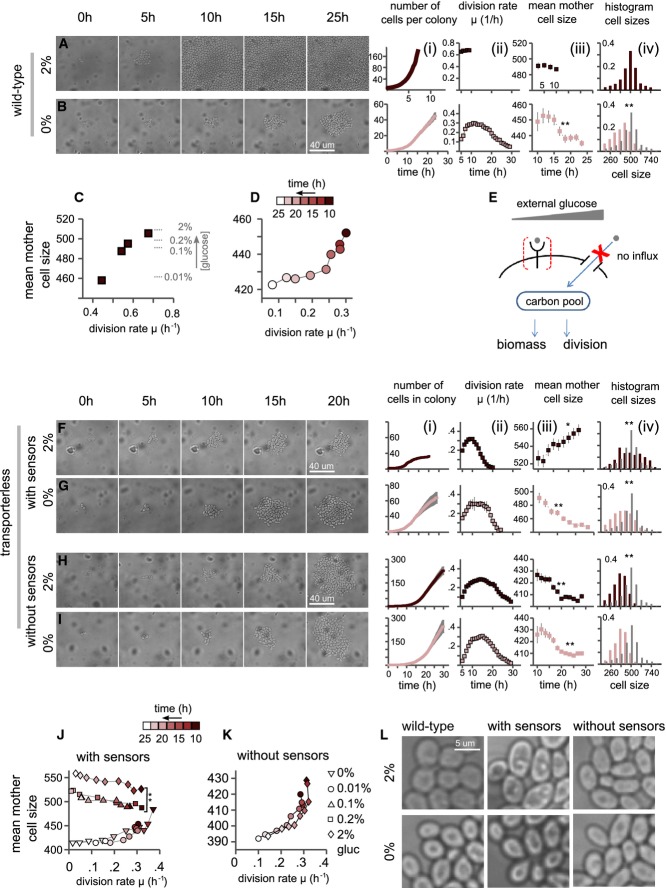
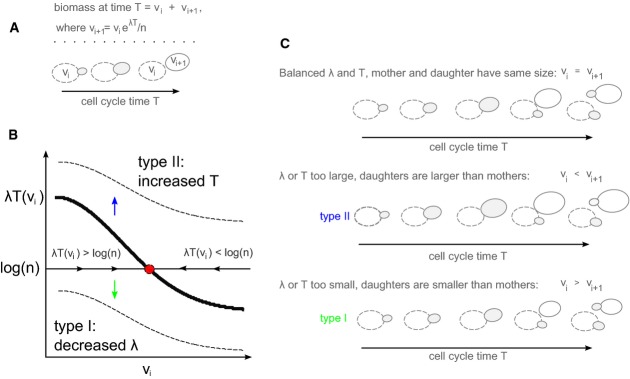
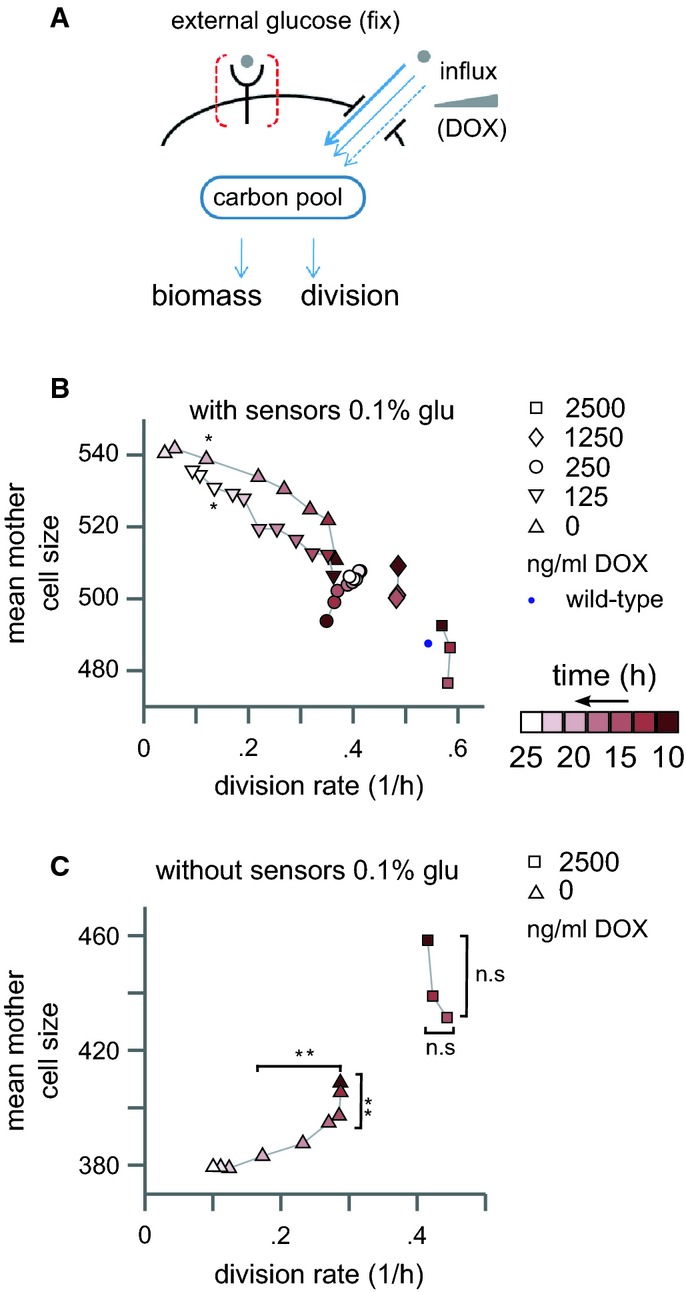
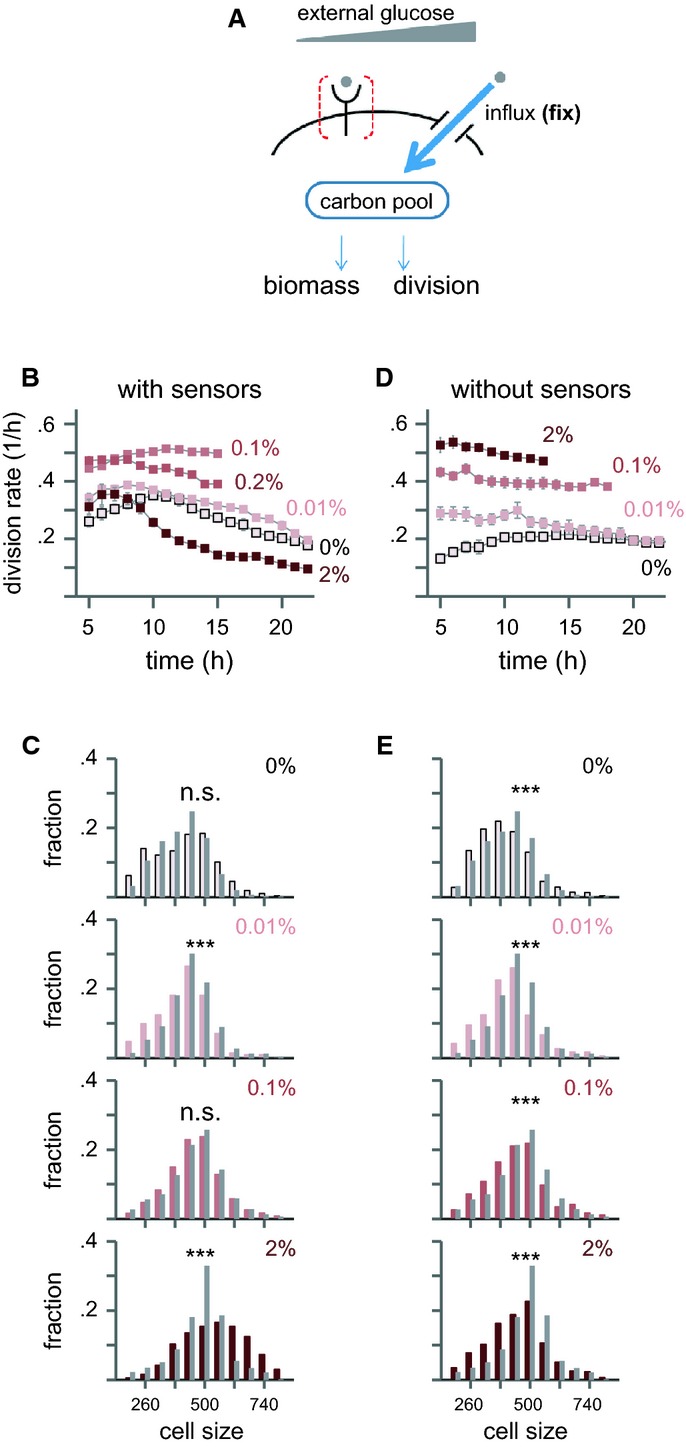
Growing cells adjust their division time with biomass accumulation to maintain growth homeostasis. Size control mechanisms, such as the size checkpoint, provide an inherent coupling of growth and division by gating certain cell cycle transitions based on cell size. We describe genetic manipulations that decouple cell division from cell size, leading to the loss of growth homeostasis, with cells becoming progressively smaller or progressively larger until arresting. This was achieved by modulating glucose influx independently of external glucose. Division rate followed glucose influx, while volume growth was largely defined by external glucose. Therefore, the coordination of size and division observed in wild-type cells reflects tuning of two parallel processes, which is only refined by an inherent feedback-dependent coupling. We present a class of size control models explaining the observed breakdowns of growth homeostasis.
正在生长的细胞会根据生物量积累来调整其分裂时间,以维持生长稳态。诸如大小检查点等大小控制机制,通过基于细胞大小控制某些细胞周期转换,实现了生长与分裂的内在耦合。我们描述了一些基因操作,这些操作使细胞分裂与细胞大小脱钩,导致生长稳态丧失,细胞会逐渐变小或逐渐变大直至停滞。这是通过独立于外部葡萄糖调节葡萄糖内流来实现的。分裂速率随葡萄糖内流而变化,而体积增长在很大程度上由外部葡萄糖决定。因此,在野生型细胞中观察到的大小与分裂的协调反映了两个平行过程的调节,而这仅通过内在的反馈依赖耦合得到优化。我们提出了一类大小控制模型来解释观察到的生长稳态破坏现象。