Sawhney Chhavi, Kaur Manpreet, Gupta Babita, Singh P M, Gupta Amit, Kumar Subodh, Misra M C
Department of Anesthesia and Critical Care, All India Institute of Medical Sciences, New Delhi, India.
Department of Surgery, All India Institute of Medical Sciences, New Delhi, India.
Saudi J Anaesth. 2014 Nov;8(Suppl 1):S29-35. doi: 10.4103/1658-354X.144065.
Solid organ (spleen and liver) injuries are dreaded by both surgeons and anesthesiologists because of associated high morbidity and mortality. The purpose of this review is to describe our experience of critical care concerns in solid organ injury, which otherwise has been poorly addressed in the literature.
Retrospective cohort of solid organ injury (spleen and liver) patients was done from January 2010 to December 2011 in tertiary level trauma Center.
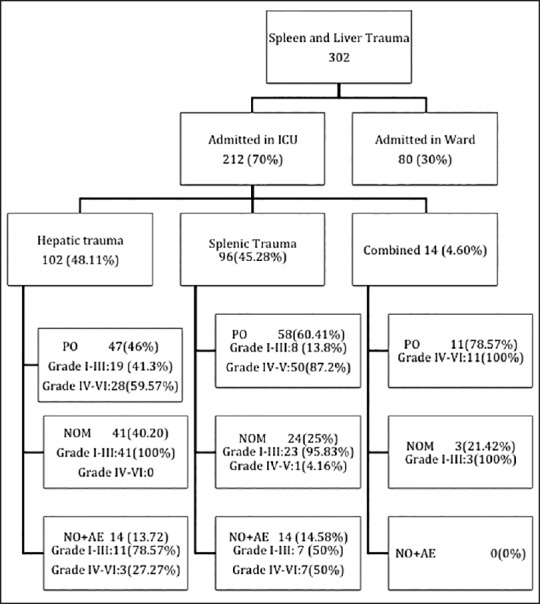
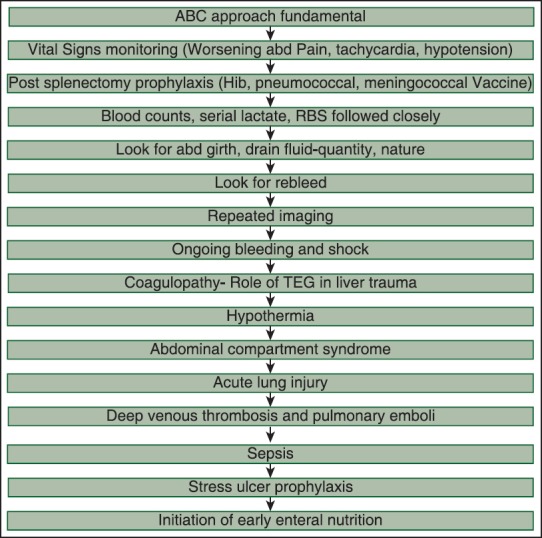
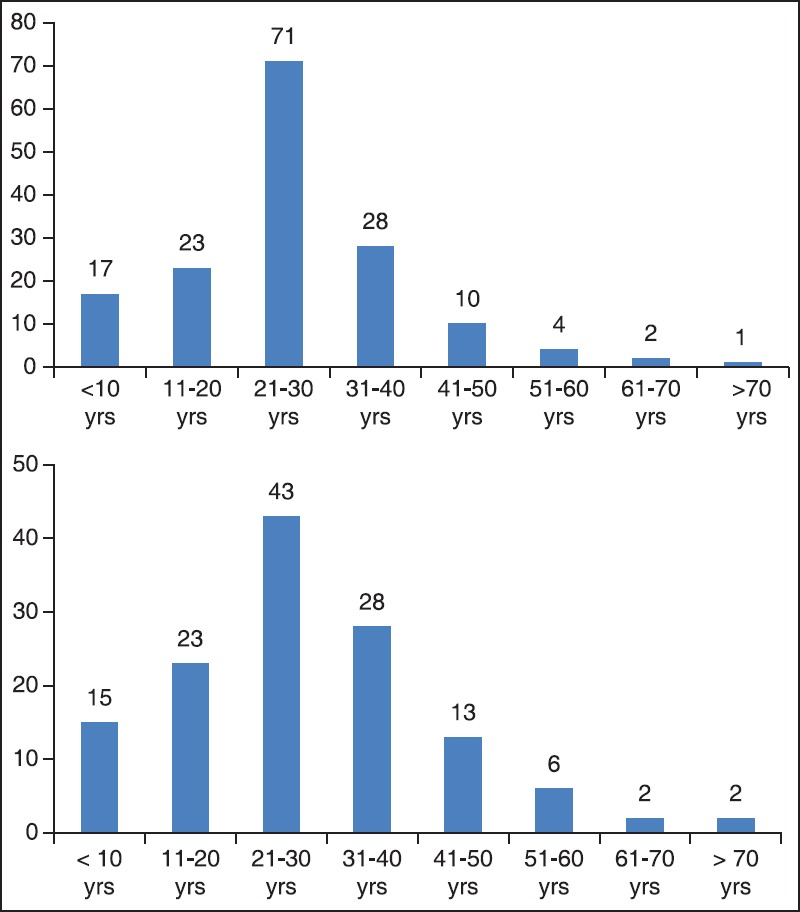
Out of 624 abdominal trauma patients, a total of 212 patients (70%) were admitted in intensive care unit (ICU). Their ages ranged from 6 to 74 years (median 24 years). Nearly 89% patients in liver trauma and 84% patients in splenic trauma were male. Mechanism of injury was blunt abdominal trauma in 96% patients and the most common associated injury was chest trauma. Average injury severity score, sequential organ failure assessment, lactate on admission was 16.84, 4.34 and 3.42 mmol/L and that of dying patient were 29.70, 7.73 and 5.09 mmol/L, respectively. Overall mortality of ICU admitted solid organ injury was 15.55%. Major issues of concern in splenic injury were hemorrhagic shock, overwhelming post-splenectomy infection and post-splenectomy vaccination. Issues raised in liver injury are damage control surgery, deadly triad, thromboelastography guided transfusion protocols and hemostatic agents.
A protocol-based and multidisciplinary approach in high dependency unit can significantly reduce morbidity and mortality in patients with solid organ injury.
实体器官(脾脏和肝脏)损伤因相关的高发病率和死亡率而令外科医生和麻醉医生都感到恐惧。本综述的目的是描述我们在实体器官损伤的重症监护方面的经验,而这在文献中并未得到充分探讨。
对2010年1月至2011年12月在三级创伤中心的实体器官(脾脏和肝脏)损伤患者进行回顾性队列研究。
在624例腹部创伤患者中,共有212例(70%)被收入重症监护病房(ICU)。他们的年龄在6岁至74岁之间(中位数为24岁)。肝外伤患者中近89%为男性,脾外伤患者中84%为男性。96%的患者损伤机制为钝性腹部创伤,最常见的合并伤是胸部创伤。入院时平均损伤严重程度评分、序贯器官衰竭评估、乳酸水平分别为16.84、4.34和3.42 mmol/L,死亡患者的相应值分别为29.70、7.73和5.09 mmol/L。入住ICU的实体器官损伤患者的总体死亡率为15.55%。脾损伤中主要关注的问题是失血性休克、脾切除术后暴发性感染和脾切除术后疫苗接种。肝损伤中出现的问题包括损伤控制手术、致死三联征、血栓弹力图指导的输血方案和止血剂。
在高依赖病房采用基于方案的多学科方法可显著降低实体器官损伤患者的发病率和死亡率。