Information Engineering, Johannes Kepler Universität Linz , Linz, Austria ; Neural Mechanisms of Human Communication, Max Planck Institute for Cognitive and Brain Sciences , Leipzig, Germany.
Front Psychol. 2014 Dec 9;5:1467. doi: 10.3389/fpsyg.2014.01467. eCollection 2014.
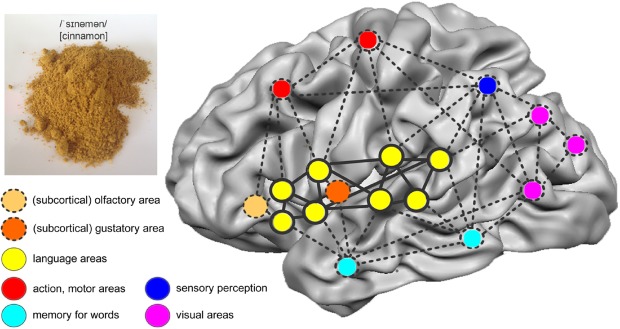
Foreign language education in the twenty-first century still teaches vocabulary mainly through reading and listening activities. This is due to the link between teaching practice and traditional philosophy of language, where language is considered to be an abstract phenomenon of the mind. However, a number of studies have shown that accompanying words or phrases of a foreign language with gestures leads to better memory results. In this paper, I review behavioral research on the positive effects of gestures on memory. Then I move to the factors that have been addressed as contributing to the effect, and I embed the reviewed evidence in the theoretical framework of embodiment. Finally, I argue that gestures accompanying foreign language vocabulary learning create embodied representations of those words. I conclude by advocating the use of gestures in future language education as a learning tool that enhances the mind.
二十一世纪的外语教育仍然主要通过阅读和听力活动教授词汇。这是由于教学实践与语言传统哲学之间的联系,语言被认为是一种抽象的心理现象。然而,许多研究表明,用手势来配合外语单词或短语会产生更好的记忆效果。在本文中,我回顾了关于手势对记忆积极影响的行为研究。然后我转向了被认为有助于产生这种效果的因素,并将所回顾的证据嵌入到体现论的理论框架中。最后,我认为伴随外语词汇学习的手势会为这些单词创造出具体的表现形式。最后我主张在未来的语言教育中使用手势作为一种增强思维的学习工具。