Mehrabani Sanaz, Salehi-Abargouei Amin, Asemi Mehdi, Mehrabani Sepideh, Feizi Awat, Safavi Seyyed Morteza
Food Security Research Center, Isfahan University of Medical Sciences, Isfahan, Iran ; Department of Clinical Nutrition, School of Nutrition and Food Science, Isfahan University of Medical Sciences, Isfahan, Iran.
Nutrition and Food Security Research Center, Shahid Sadoughi University of Medical Sciences, Yazd, Iran ; Department of Nutrition, Faculty of Health, Shahid Sadoughi University of Medical Sciences, Yazd, Iran.
Int J Prev Med. 2014 Nov;5(11):1405-11.
Appetite lowering characteristics of dairy have attracted scientists to look for its effect on energy intake particularly among children. In the present study, we tried to assess the effect of low-fat milk on total and short-term energy intake among obese boys in a randomized three-way cross-over clinical trial.
A total of 34 obese 10-12-year-old boys were randomized to consume three beverages (low-fat milk, apple juice, or water) with a fixed energy breakfast for two consecutive days, 1 week apart. Ad libitum lunch was provided for subjects 5 h later. The energy intake from breakfast till lunch and total energy intake on intervention days, and 2 days after intervention were compared. Generalized linear model repeated measures procedure in which test beverages were considered as repeated factors.
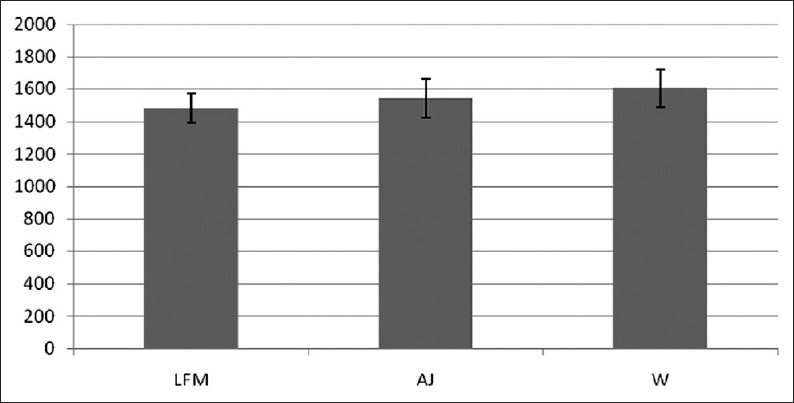
Energy intake from breakfast till lunch was lower when low-fat milk consumption was included in the breakfast compared with water and apple juice (adjusted mean ± standard error: Low-fat milk = 1484.33 ± 15.30 Kcal, apple juice = 1543.39 ± 20.70 Kcal, water = 1606.6 ± 19.94 Kcal; P < 0.05). The energy intake on a day before interventions, total energy intake on intervention days, and 2 days after intervention was not statistically different between intervention periods (P > 0.05).
One serving of low-fat milk might affect the energy intake in a short-term period. The possible effect of frequent consumption of dairy products on long-term energy intake among children is needed to be examined.
乳制品的食欲降低特性吸引科学家研究其对能量摄入的影响,尤其是对儿童的影响。在本研究中,我们试图在一项随机三向交叉临床试验中评估低脂牛奶对肥胖男孩总能量摄入和短期能量摄入的影响。
总共34名10 - 12岁的肥胖男孩被随机分组,连续两天在固定能量早餐中饮用三种饮品(低脂牛奶、苹果汁或水),每次间隔1周。5小时后为受试者提供随意进食的午餐。比较早餐至午餐的能量摄入量以及干预日和干预后两天的总能量摄入量。采用广义线性模型重复测量程序,将测试饮品视为重复因素。
与水和苹果汁相比,早餐中包含低脂牛奶时,早餐至午餐的能量摄入量较低(调整后均值±标准误:低脂牛奶 = 1484.33 ± 15.30千卡,苹果汁 = 1543. .39 ± 20.70千卡,水 = 1606.6 ± 19.94千卡;P < 0.05)。干预前一天的能量摄入量、干预日的总能量摄入量以及干预后两天的能量摄入量在各干预期之间无统计学差异(P > 0.05)。
一份低脂牛奶可能在短期内影响能量摄入。需要研究频繁食用乳制品对儿童长期能量摄入的可能影响。