Bassi Maria R, Kongsgaard Michael, Steffensen Maria A, Fenger Christina, Rasmussen Michael, Skjødt Karsten, Finsen Bente, Stryhn Anette, Buus Søren, Christensen Jan P, Thomsen Allan R
Department of International Health, Immunology and Microbiology, University of Copenhagen, DK-2200 Copenhagen N, Denmark;
Neurobiology Research, Institute of Molecular Medicine, University of Southern Denmark, DK-5000 Odense, Denmark; and.
J Immunol. 2015 Feb 1;194(3):1141-53. doi: 10.4049/jimmunol.1402605. Epub 2014 Dec 24.
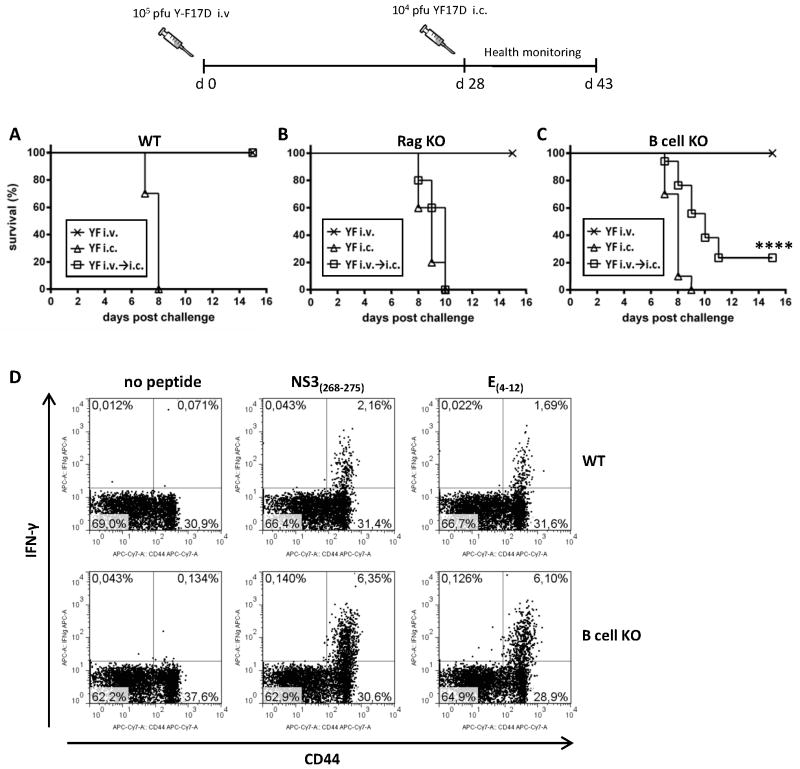
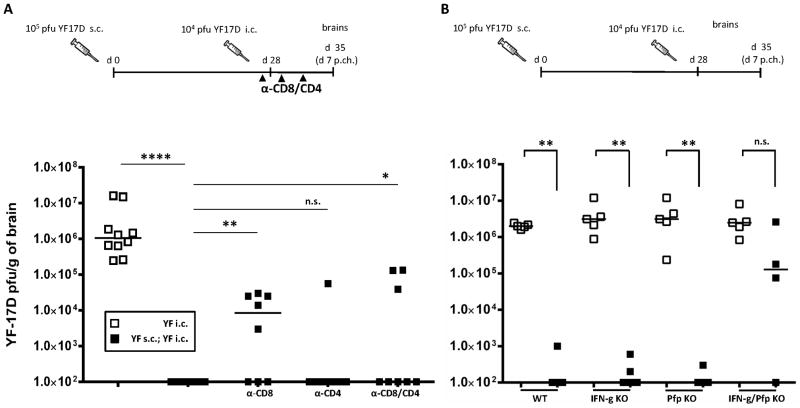
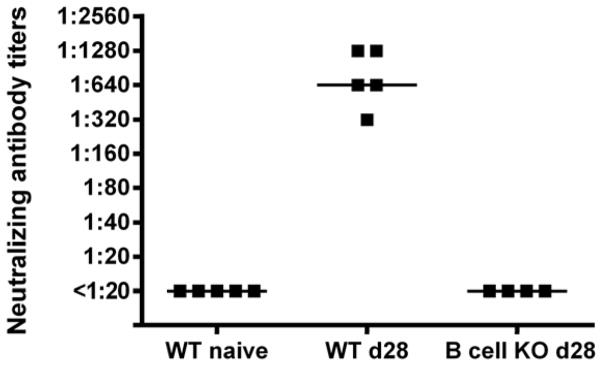
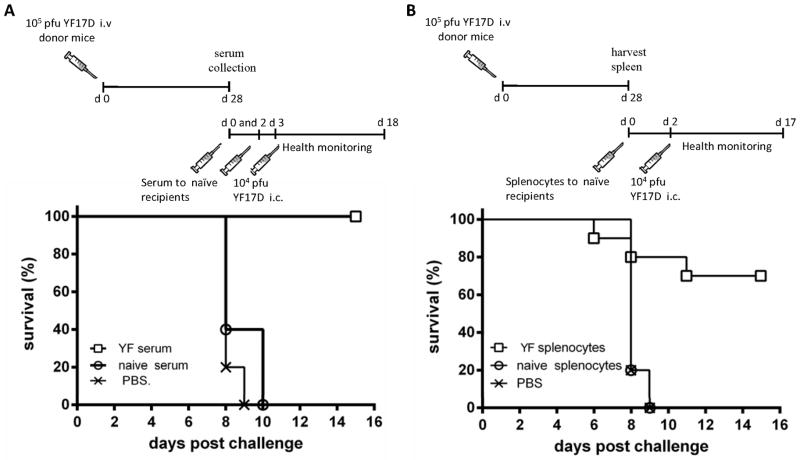
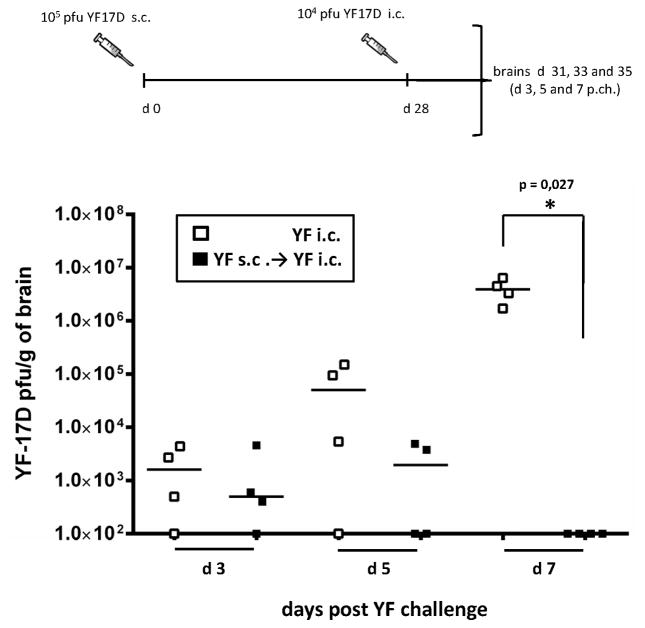
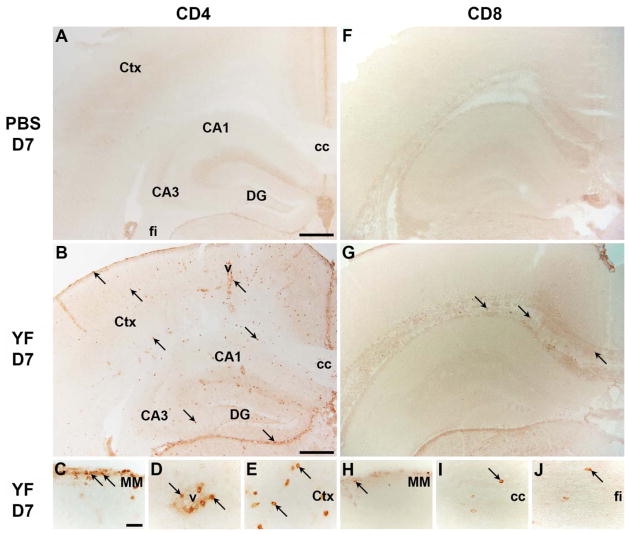
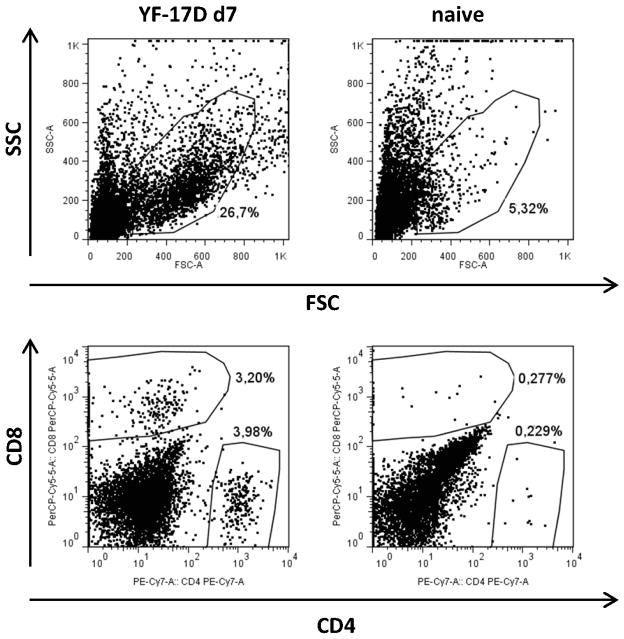
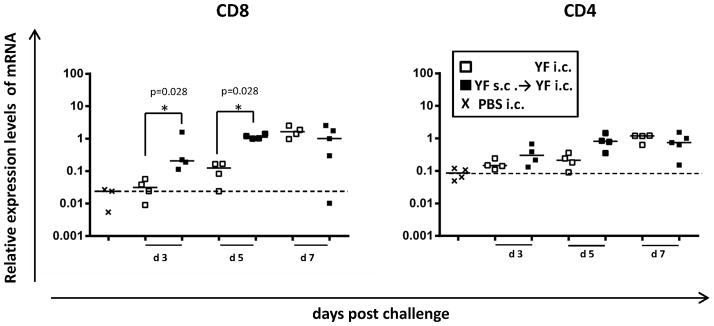
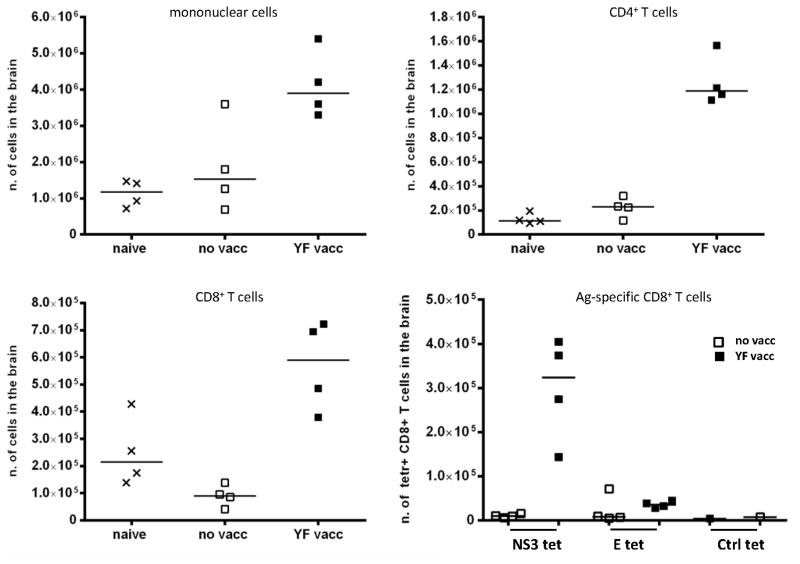
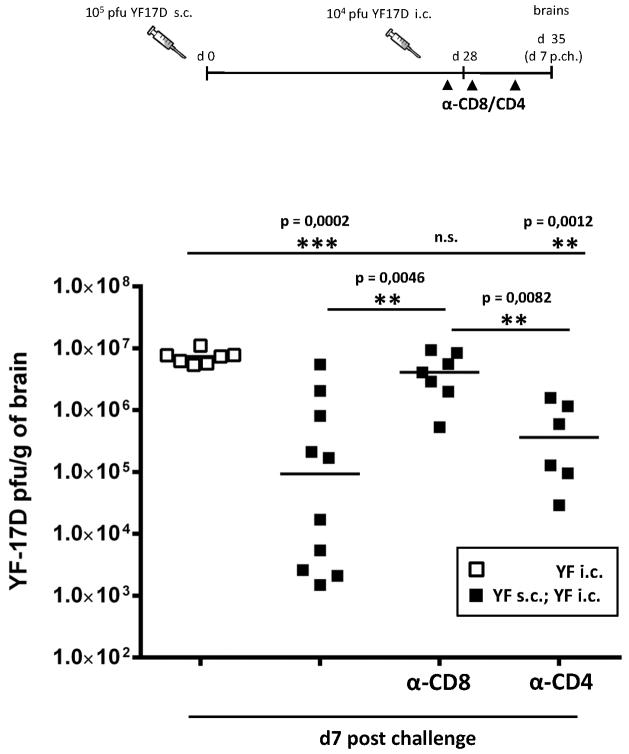
The attenuated yellow fever (YF) vaccine (YF-17D) was developed in the 1930s, yet little is known about the protective mechanisms underlying its efficiency. In this study, we analyzed the relative contribution of cell-mediated and humoral immunity to the vaccine-induced protection in a murine model of YF-17D infection. Using different strains of knockout mice, we found that CD4(+) T cells, B cells, and Abs are required for full clinical protection of vaccinated mice, whereas CD8(+) T cells are dispensable for long-term survival after intracerebral challenge. However, by analyzing the immune response inside the infected CNS, we observed an accelerated T cell influx into the brain after intracerebral challenge of vaccinated mice, and this T cell recruitment correlated with improved virus control in the brain. Using mice deficient in B cells we found that, in the absence of Abs, YF vaccination can still induce some antiviral protection, and in vivo depletion of CD8(+) T cells from these animals revealed a pivotal role for CD8(+) T cells in controlling virus replication in the absence of a humoral response. Finally, we demonstrated that effector CD8(+) T cells also contribute to viral control in the presence of circulating YF-specific Abs. To our knowledge, this is the first time that YF-specific CD8(+) T cells have been demonstrated to possess antiviral activity in vivo.
减毒黄热病(YF)疫苗(YF-17D)于20世纪30年代研发,但对其高效保护机制知之甚少。在本研究中,我们在YF-17D感染的小鼠模型中分析了细胞介导免疫和体液免疫对疫苗诱导保护的相对贡献。使用不同品系的基因敲除小鼠,我们发现CD4(+) T细胞、B细胞和抗体是疫苗接种小鼠获得完全临床保护所必需的,而CD8(+) T细胞对于脑内攻击后的长期存活并非必需。然而,通过分析感染的中枢神经系统内的免疫反应,我们观察到疫苗接种小鼠脑内攻击后T细胞加速流入大脑,且这种T细胞募集与大脑中病毒控制的改善相关。使用B细胞缺陷小鼠,我们发现,在没有抗体的情况下,YF疫苗接种仍可诱导一定的抗病毒保护,并且对这些动物体内的CD8(+) T细胞进行耗竭显示,在没有体液反应的情况下,CD8(+) T细胞在控制病毒复制中起关键作用。最后,我们证明,在存在循环YF特异性抗体的情况下,效应性CD8(+) T细胞也有助于病毒控制。据我们所知,这是首次证明YF特异性CD8(+) T细胞在体内具有抗病毒活性。