Rasmussen Amanda, Hosseini Seyed Abdollah, Hajirezaei Mohammed-Reza, Druege Uwe, Geelen Danny
Plant Production, Faculty of Bioscience Engineering, Ghent University, Coupure links 653, Ghent 9000, Belgium Plant and Crop Sciences, The University of Nottingham, Sutton Bonington LE12 5RD, UK
Leibniz Institute of Plant Genetics and Crop Plant Research, Correnstrasse 3, 06466 Gatersleben, Germany.
J Exp Bot. 2015 Mar;66(5):1437-52. doi: 10.1093/jxb/eru499. Epub 2014 Dec 24.
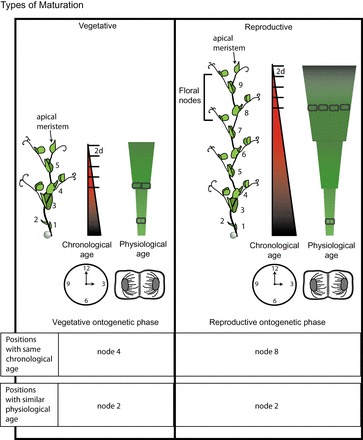
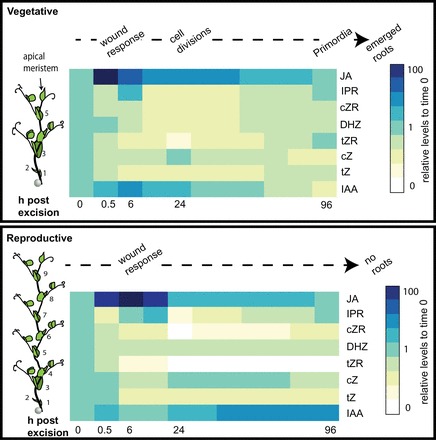
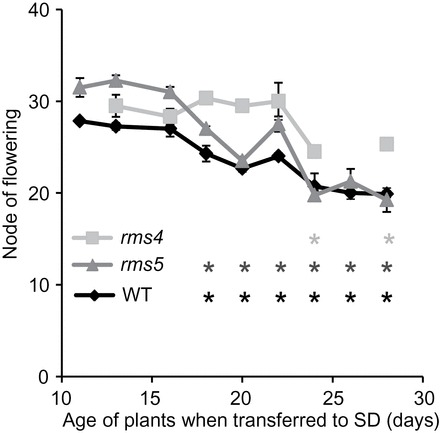
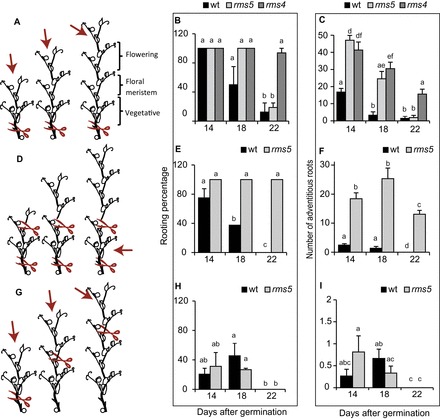
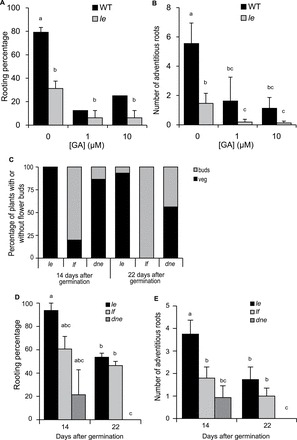
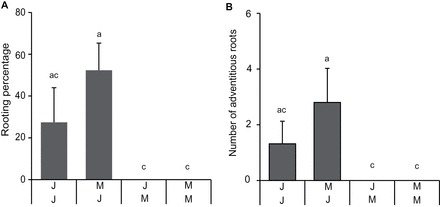
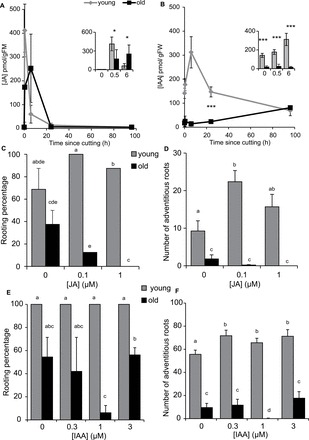
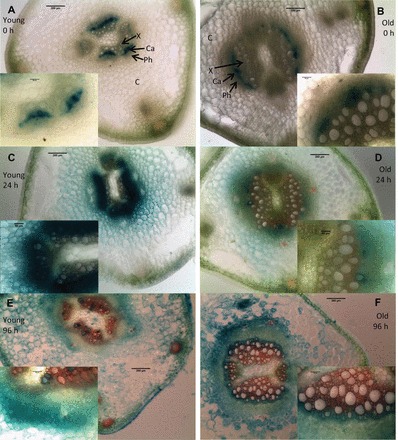
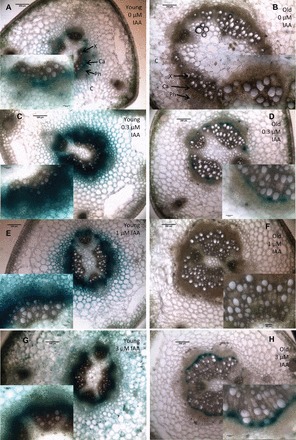
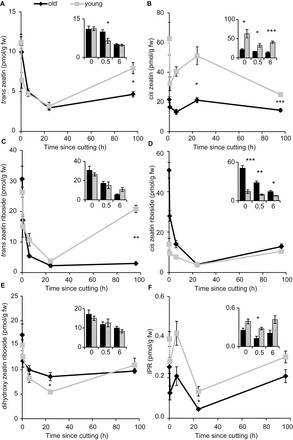
Adventitious rooting, whereby roots form from non-root tissues, is critical to the forestry and horticultural industries that depend on propagating plants from cuttings. A major problem is that age of the tissue affects the ability of the cutting to form adventitious roots. Here, a model system has been developed using Pisum sativum to differentiate between different interpretations of ageing. It is shown that the decline in adventitious rooting is linked to the ontogenetic switch from vegetative to floral and is mainly attributed to the cutting base. Using rms mutants it is demonstrated that the decline is not a result of increased strigolactones inhibiting adventitious root formation. Monitoring endogenous levels of a range of other hormones including a range of cytokinins in the rooting zone revealed that a peak in jasmonic acid is delayed in cuttings from floral plants. Additionally, there is an early peak in indole-3-acetic acid levels 6h post excision in cuttings from vegetative plants, which is absent in cuttings from floral plants. These results were confirmed using DR5:GUS expression. Exogenous supplementation of young cuttings with either jasmonic acid or indole-3-acetic acid promoted adventitious rooting, but neither of these hormones was able to promote adventitious rooting in mature cuttings. DR5:GUS expression was observed to increase in juvenile cuttings with increasing auxin treatment but not in the mature cuttings. Therefore, it seems the vegetative to floral ontogenetic switch involves an alteration in the tissue's auxin homeostasis that significantly reduces the indole-3-acetic acid pool and ultimately results in a decline in adventitious root formation.
不定根形成是指根从非根组织中生长出来,这对于依赖扦插繁殖植物的林业和园艺产业至关重要。一个主要问题是组织的年龄会影响插条形成不定根的能力。在此,利用豌豆建立了一个模型系统,以区分对衰老的不同解释。结果表明,不定根形成能力的下降与从营养生长到生殖生长的个体发育转变有关,且主要归因于插条基部。利用rms突变体证明,这种下降不是由于独脚金内酯增加抑制不定根形成所致。监测生根区一系列其他激素的内源水平,包括一系列细胞分裂素,发现开花植物插条中茉莉酸的峰值出现延迟。此外,营养生长植物的插条在切除后6小时吲哚 - 3 - 乙酸水平出现早期峰值,而开花植物的插条中则没有。这些结果通过DR5:GUS表达得到证实。用茉莉酸或吲哚 - 3 - 乙酸对外源幼嫩插条进行补充可促进不定根形成,但这两种激素均不能促进成熟插条的不定根形成。随着生长素处理增加,在幼嫩插条中观察到DR5:GUS表达增加,而在成熟插条中则未观察到。因此,从营养生长到生殖生长的个体发育转变似乎涉及组织生长素稳态的改变,这显著减少了吲哚 - 3 - 乙酸库,最终导致不定根形成能力下降。