Centre for Situated Action and Communication, Department of Psychology, University of Portsmouth Portsmouth, UK.
Cognition and Action Lab, Centre for Neuroscience Studies, Queen's University Kingston, ON, Canada.
Front Psychol. 2014 Dec 10;5:1390. doi: 10.3389/fpsyg.2014.01390. eCollection 2014.
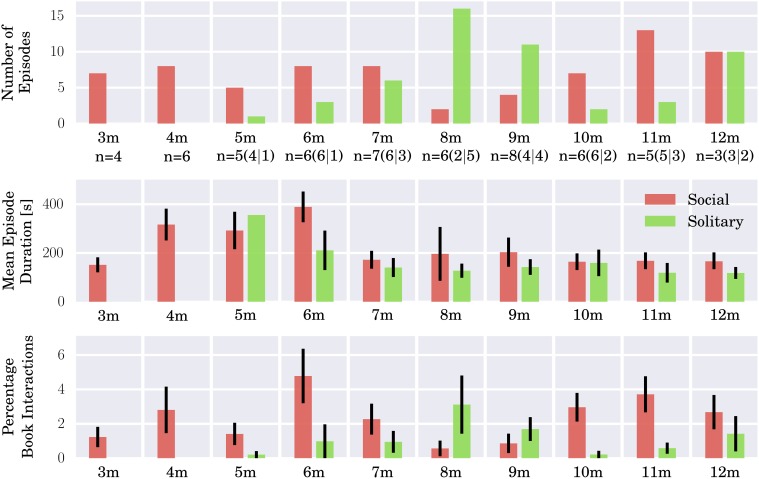
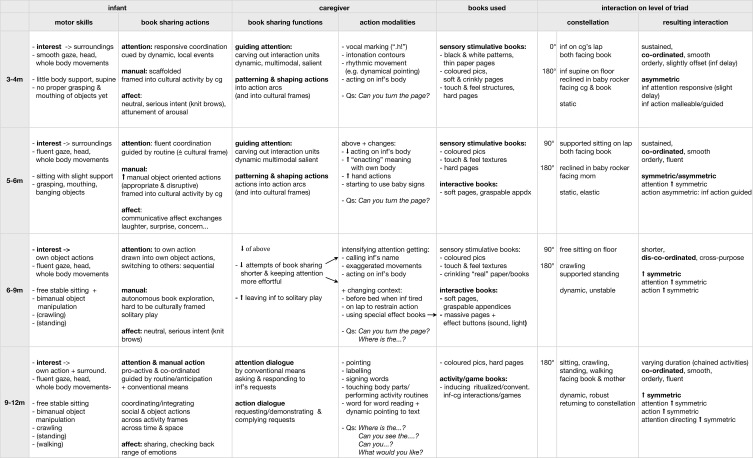
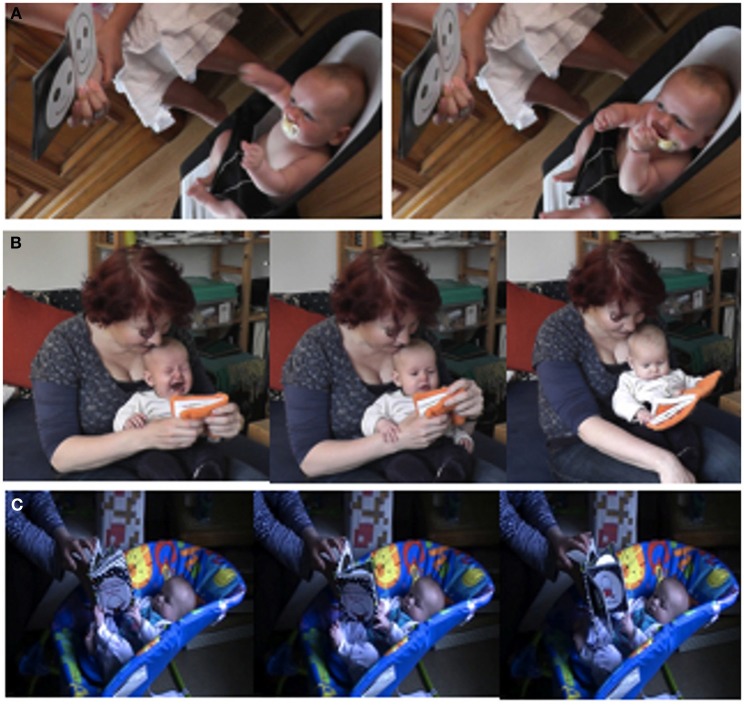
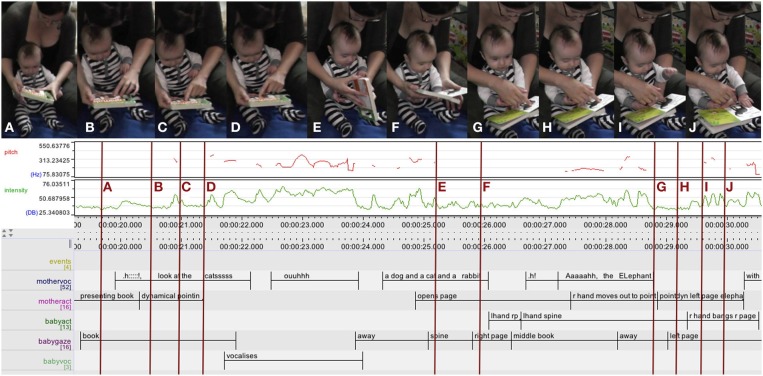
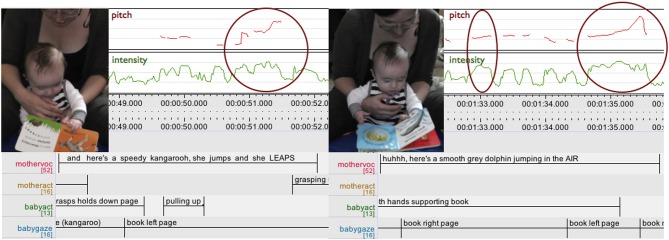
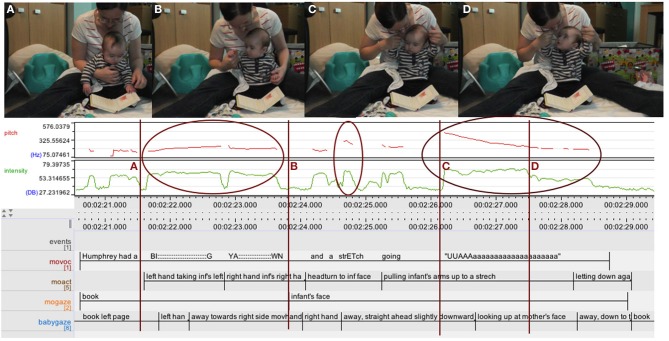
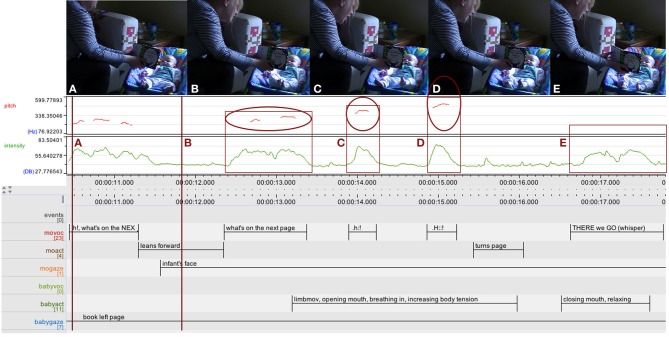
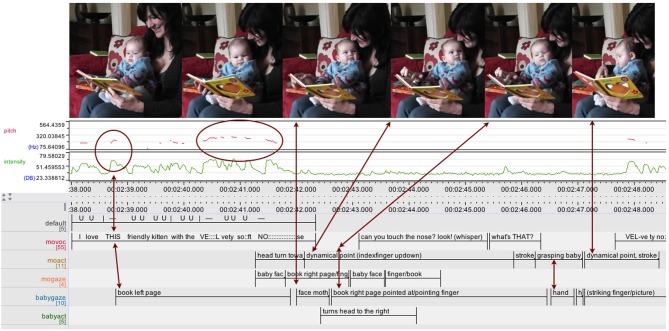
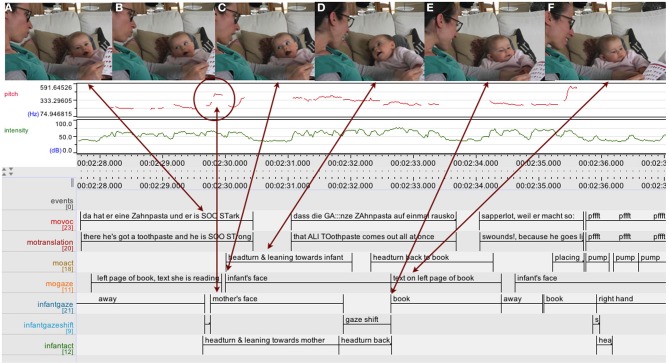
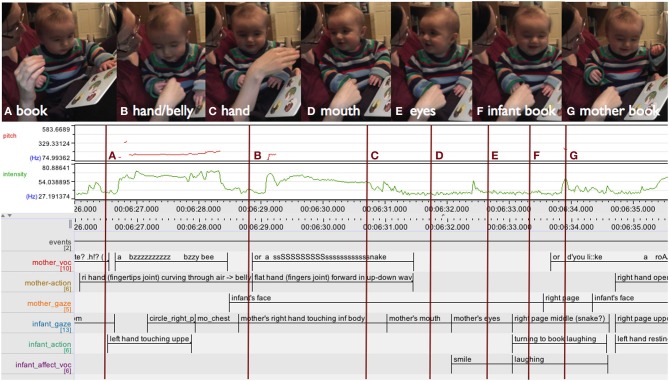
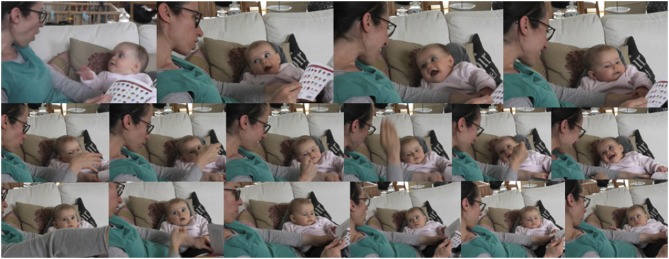
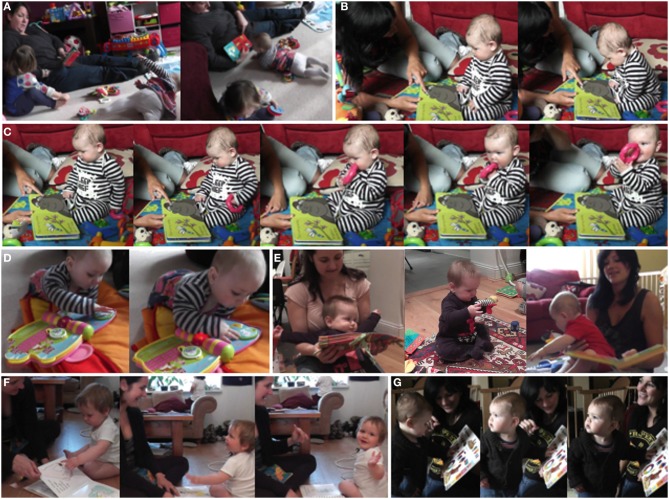
This study explores the emergence of triadic interactions through the example of book sharing. As part of a naturalistic study, 10 infants were visited in their homes from 3-12 months. We report that (1) book sharing as a form of infant-caregiver-object interaction occurred from as early as 3 months. Using qualitative video analysis at a micro-level adapting methodologies from conversation and interaction analysis, we demonstrate that caregivers and infants practiced book sharing in a highly co-ordinated way, with caregivers carving out interaction units and shaping actions into action arcs and infants actively participating and co-ordinating their attention between mother and object from the beginning. We also (2) sketch a developmental trajectory of book sharing over the first year and show that the quality and dynamics of book sharing interactions underwent considerable change as the ecological situation was transformed in parallel with the infants' development of attention and motor skills. Social book sharing interactions reached an early peak at 6 months with the infants becoming more active in the coordination of attention between caregiver and book. From 7 to 9 months, the infants shifted their interest largely to solitary object exploration, in parallel with newly emerging postural and object manipulation skills, disrupting the social coordination and the cultural frame of book sharing. In the period from 9 to 12 months, social book interactions resurfaced, as infants began to effectively integrate manual object actions within the socially shared activity. In conclusion, to fully understand the development and qualities of triadic cultural activities such as book sharing, we need to look especially at the hitherto overlooked early period from 4 to 6 months, and investigate how shared spaces of meaning and action are structured together in and through interaction, creating the substrate for continuing cooperation and cultural learning.
本研究以图书分享为例,探讨了三元互动的出现。作为一项自然主义研究的一部分,我们对 10 名 3-12 个月大的婴儿进行了家访。我们报告说:(1)作为一种婴儿-照顾者-物体互动的形式,图书分享早在 3 个月时就已经出现。通过使用从会话和互动分析中借鉴的微观层面的定性视频分析方法,我们展示了照顾者和婴儿以高度协调的方式练习图书分享,照顾者划出互动单元,并将动作塑造成动作弧,而婴儿从一开始就积极参与并协调他们在母亲和物体之间的注意力。我们还(2)描绘了婴儿第一年图书分享的发展轨迹,并表明随着生态环境的变化与婴儿注意力和运动技能的发展平行进行,图书分享互动的质量和动态发生了相当大的变化。社会图书分享互动在 6 个月时达到早期高峰,婴儿在协调照顾者和书本之间的注意力方面变得更加积极。从 7 个月到 9 个月,婴儿的兴趣主要转向单独的物体探索,同时出现新的姿势和物体操作技能,破坏了社会协调和图书分享的文化框架。在 9 个月到 12 个月的期间,社会图书互动再次出现,因为婴儿开始在社会共享活动中有效地整合手动物体动作。总之,要全面理解图书分享等三元文化活动的发展和质量,我们需要特别关注迄今为止被忽视的 4 至 6 个月的早期阶段,并调查意义和行动的共享空间是如何在互动中共同构建的,为持续合作和文化学习创造基础。