Bernelot Moens Sophie J, Mooij Hans L, Hassing H Carlijne, Kruit Janine K, Witjes Julia J, van de Sande Michiel A J, Nederveen Aart J, Xu Ding, Dallinga-Thie Geesje M, Esko Jeffrey D, Stroes Erik S G, Nieuwdorp Max
Department of Vascular Medicine, Academic Medical Center, Amsterdam, the Netherlands.
Department of Paediatrics, University of Groningen, University Medical Center Groningen, Groningen, the Netherlands.
PLoS One. 2014 Dec 26;9(12):e115662. doi: 10.1371/journal.pone.0115662. eCollection 2014.
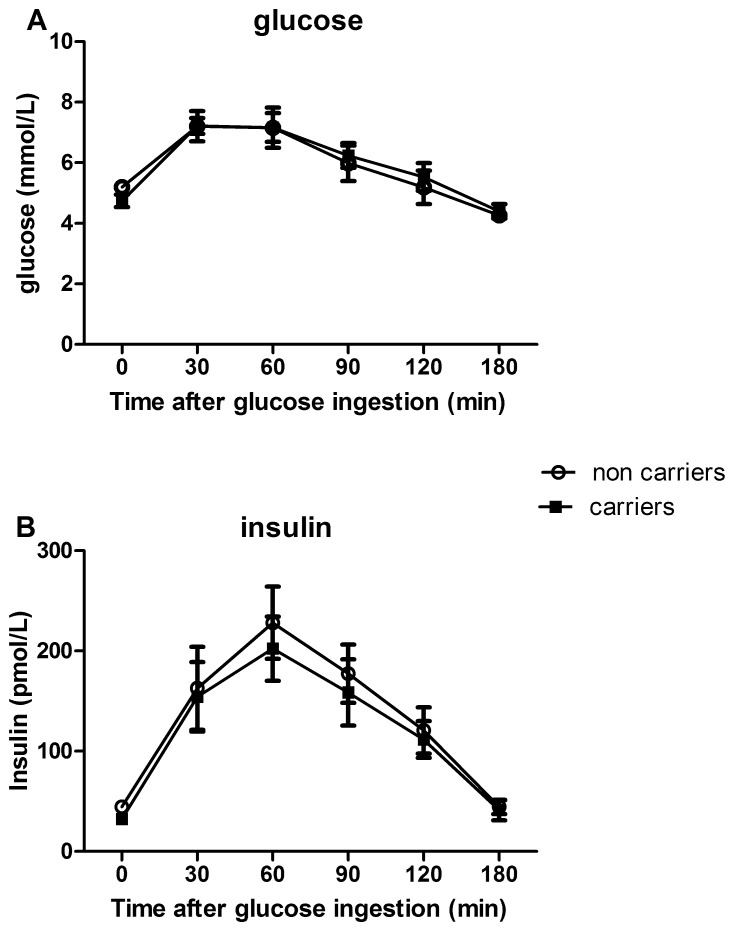
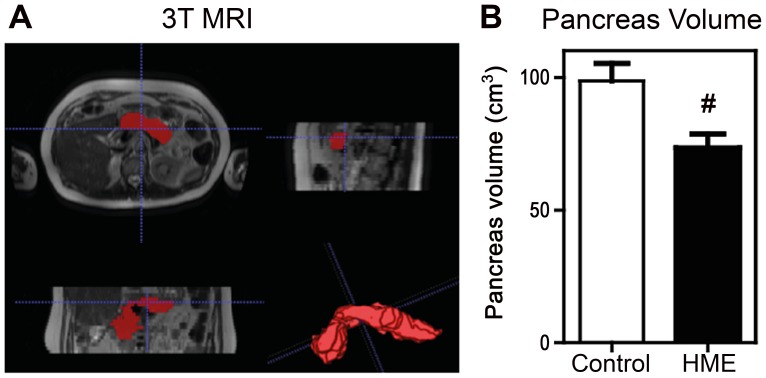
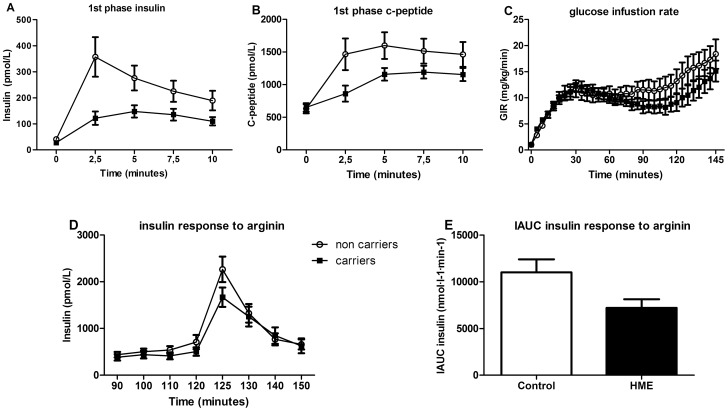
Exotosin (EXT) proteins are involved in the chain elongation step of heparan sulfate (HS) biosynthesis, which is intricately involved in organ development. Loss of function mutations (LOF) in EXT1 and EXT2 result in hereditary exostoses (HME). Interestingly, HS plays a role in pancreas development and beta-cell function, and genetic variations in EXT2 are associated with an increased risk for type 2 diabetes mellitus. We hypothesized that loss of function of EXT1 or EXT2 in subjects with hereditary multiple exostoses (HME) affects pancreatic insulin secretion capacity and development. We performed an oral glucose tolerance test (OGTT) followed by hyperglycemic clamps to investigate first-phase glucose-stimulated insulin secretion (GSIS) in HME patients and age and gender matched non-affected relatives. Pancreas volume was assessed with magnetic resonance imaging (MRI). OGTT did not reveal significant differences in glucose disposal, but there was a markedly lower GSIS in HME subjects during hyperglycemic clamp (iAUC HME: 0.72 [0.46-1.16] vs. controls 1.53 [0.69-3.36] nmol·l-1·min-1, p<0.05). Maximal insulin response following arginine challenge was also significantly attenuated (iAUC HME: 7.14 [4.22-10.5] vs. controls 10.2 [7.91-12.70] nmol·l-1·min-1 p<0.05), indicative of an impaired beta-cell reserve. MRI revealed a significantly smaller pancreatic volume in HME subjects (HME: 72.0±15.8 vs. controls 96.5±26.0 cm3 p = 0.04). In conclusion, loss of function of EXT proteins may affect beta-cell mass and insulin secretion capacity in humans, and render subjects at a higher risk of developing type 2 diabetes when exposed to environmental risk factors.
外生骨疣蛋白(EXT)参与硫酸乙酰肝素(HS)生物合成的链延长步骤,而这一过程与器官发育密切相关。EXT1和EXT2的功能丧失突变(LOF)会导致遗传性外生骨疣(HME)。有趣的是,HS在胰腺发育和β细胞功能中发挥作用,并且EXT2的基因变异与2型糖尿病风险增加相关。我们推测,遗传性多发性外生骨疣(HME)患者中EXT1或EXT2功能丧失会影响胰腺胰岛素分泌能力和发育。我们进行了口服葡萄糖耐量试验(OGTT),随后进行高血糖钳夹试验,以研究HME患者以及年龄和性别匹配的未受影响亲属的第一相葡萄糖刺激胰岛素分泌(GSIS)。用磁共振成像(MRI)评估胰腺体积。OGTT未显示葡萄糖处置方面的显著差异,但在高血糖钳夹期间,HME受试者的GSIS明显较低(HME组的胰岛素分泌曲线下面积:0.72 [0.46 - 1.16] 对比对照组1.53 [0.69 - 3.36] nmol·l-1·min-1,p < 0.05)。精氨酸刺激后的最大胰岛素反应也显著减弱(HME组的胰岛素分泌曲线下面积:7.14 [4.22 - 10.5] 对比对照组10.2 [7.91 - 12.70] nmol·l-1·min-1,p < 0.05),表明β细胞储备受损。MRI显示HME受试者的胰腺体积明显较小(HME组:72.0 ± 15.8对比对照组96.5 ± 26.0 cm3,p = 0.04)。总之,EXT蛋白功能丧失可能会影响人类的β细胞量和胰岛素分泌能力,并使个体在暴露于环境风险因素时患2型糖尿病的风险更高。