Yue Shijing, Mu Wei, Erb Ulrike, Zöller Margot
Department of Tumor Cell Biology, University Hospital of Surgery, Heidelberg, Germany.
Oncotarget. 2015 Feb 10;6(4):2366-84. doi: 10.18632/oncotarget.2958.
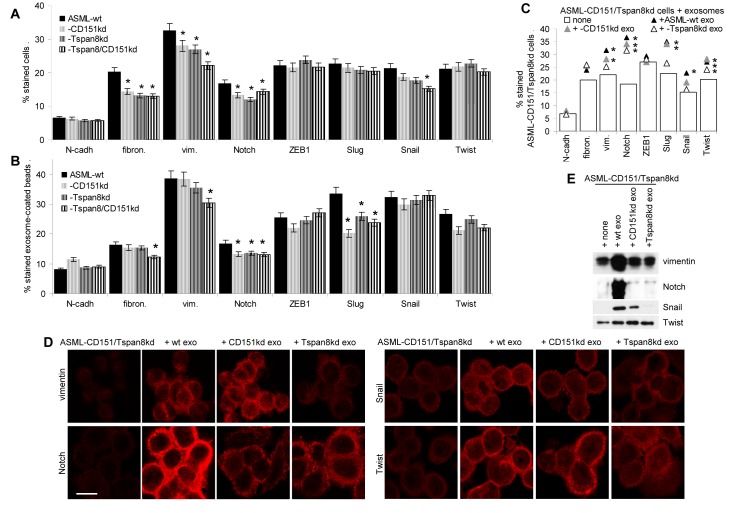
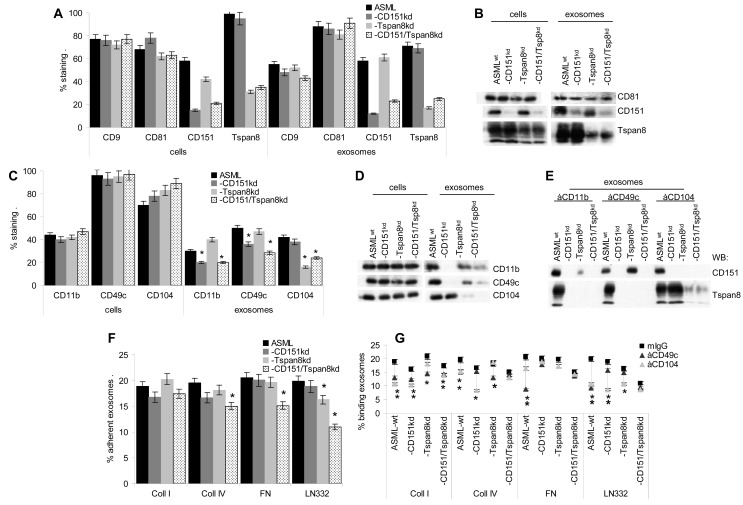
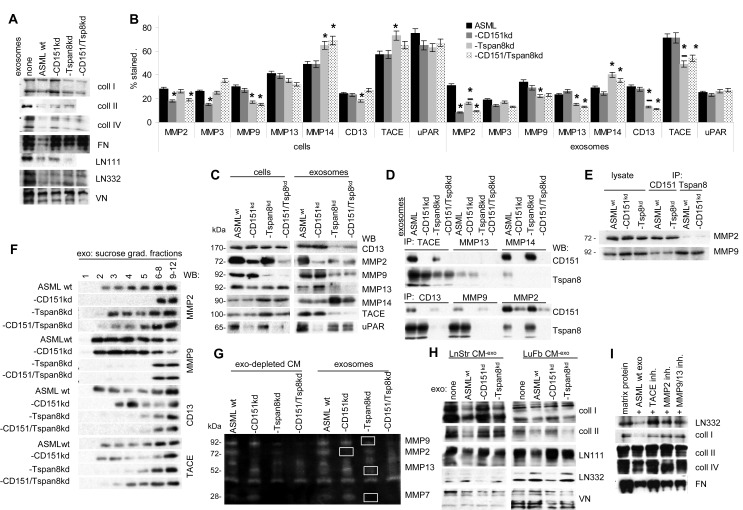
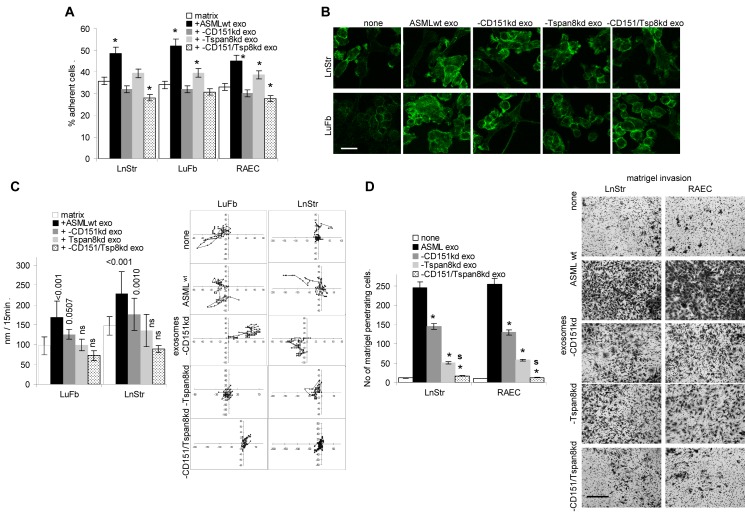
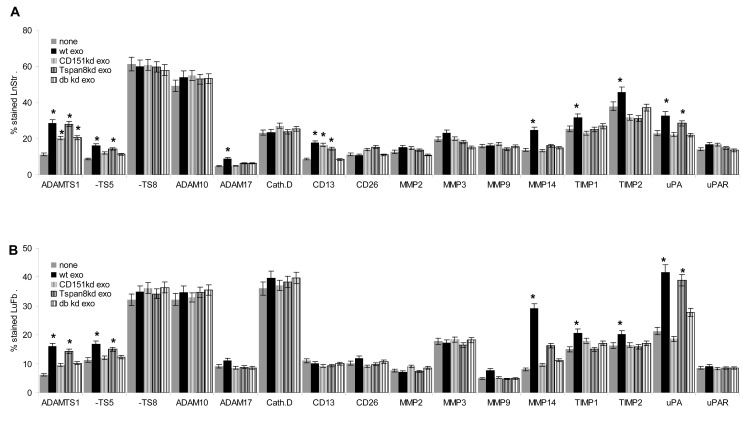
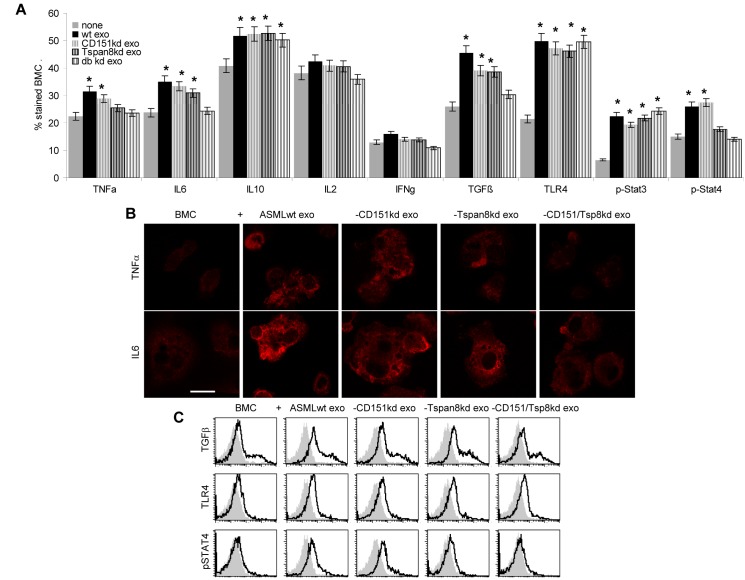
Tspan8 and CD151 are metastasis-promoting tetraspanins and a knockdown (kd) of Tspan8 or CD151 and most pronounced of both tetraspanins affects the metastatic potential of the rat pancreatic adenocarcinoma line ASML. Approaching to elaborate the underlying mechanism, we compared ASMLwt, -CD151kd and/or Tspan8kd clones. We focused on tumor exosomes, as exosomes play a major role in tumor progression and tetraspanins are suggested to be engaged in exosome targeting. ASML-CD151/Tspan8kd cells poorly metastasize, but regain metastatic capacity, when rats are pretreated with ASMLwt, but not ASML-CD151kd and/or -Tspan8kd exosomes. Both exosomal CD151 and Tspan8 contribute to host matrix remodelling due to exosomal tetraspanin-integrin and tetraspanin-protease associations. ASMLwt exosomes also support stroma cell activation with upregulation of cytokines, cytokine receptors and proteases and promote inflammatory cytokine expression in hematopoietic cells. Finally, CD151-/Tspan8-competent exosomes support EMT gene expression in poorly-metastatic ASML-CD151/Tspan8kd cells. These effects are not seen or are weakened using ASML-CD151kd or -Tspan8kd exosomes, which is at least partly due to reduced binding/uptake of CD151- and/or Tspan8-deficient exosomes. Thus, CD151- and Tspan8-competent tumor exosomes support matrix degradation, reprogram stroma and hematopoietic cells and drive non-metastatic ASML-CD151/Tspan8kd cells towards a motile phenotype.
Tspan8和CD151是促进转移的四跨膜蛋白,敲低(kd)Tspan8或CD151,尤其是同时敲低这两种四跨膜蛋白,会影响大鼠胰腺腺癌ASML细胞系的转移潜能。为了详细阐述其潜在机制,我们比较了ASMLwt、-CD151kd和/或-Tspan8kd克隆。我们聚焦于肿瘤外泌体,因为外泌体在肿瘤进展中起主要作用,且四跨膜蛋白被认为参与外泌体靶向。ASML-CD151/Tspan8kd细胞转移能力差,但在用ASMLwt而非ASML-CD151kd和/或-Tspan8kd外泌体预处理大鼠后,其转移能力得以恢复。由于外泌体四跨膜蛋白-整合素和四跨膜蛋白-蛋白酶的相互作用,外泌体中的CD151和Tspan8都有助于宿主基质重塑。ASMLwt外泌体还通过上调细胞因子、细胞因子受体和蛋白酶来支持基质细胞活化,并促进造血细胞中炎性细胞因子的表达。最后,具有CD151-/Tspan8功能的外泌体支持低转移能力的ASML-CD151/Tspan8kd细胞中EMT基因的表达。使用ASML-CD151kd或-Tspan8kd外泌体时,这些效应未出现或减弱,这至少部分是由于CD151和/或Tspan8缺陷外泌体的结合/摄取减少。因此,具有CD151和Tspan8功能的肿瘤外泌体支持基质降解、重编程基质和造血细胞,并驱使非转移性的ASML-CD151/Tspan8kd细胞向运动表型转变。