Sen Sonia, Cao Deshou, Choudhary Ramveer, Biagini Silvia, Wang Jing W, Reichert Heinrich, VijayRaghavan K
Department of Developmental Biology and Genetics, National Centre for Biological Sciences, Tata Institute for Fundamental Research, Bangalore, India.
Division of Biological Sciences, University of California, San Diego, San Diego, United States.
Elife. 2014 Dec 29;3:e04407. doi: 10.7554/eLife.04407.
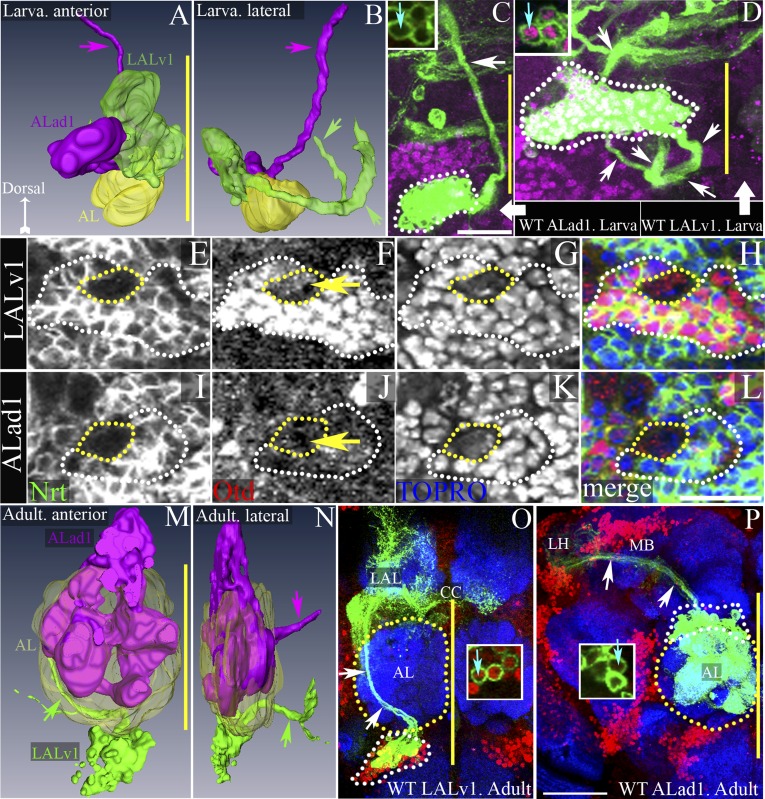
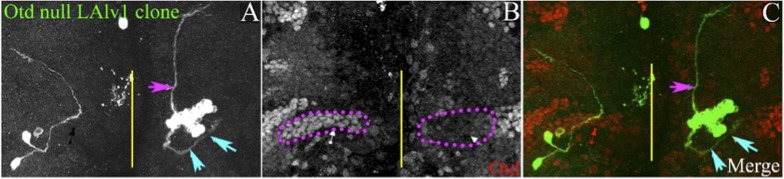
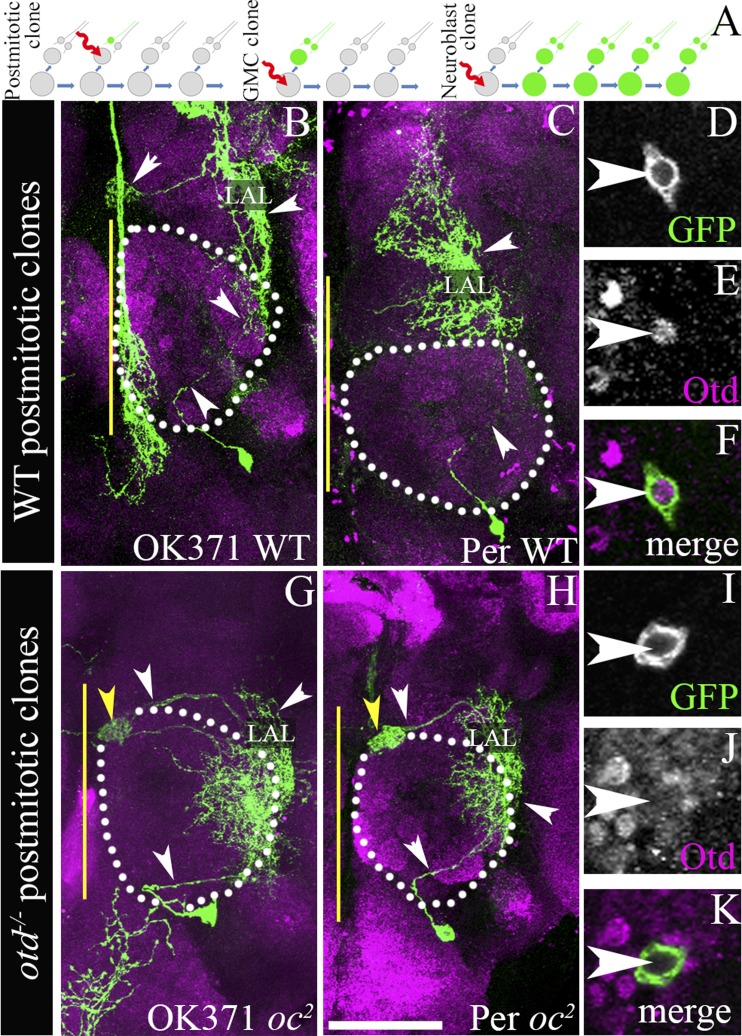
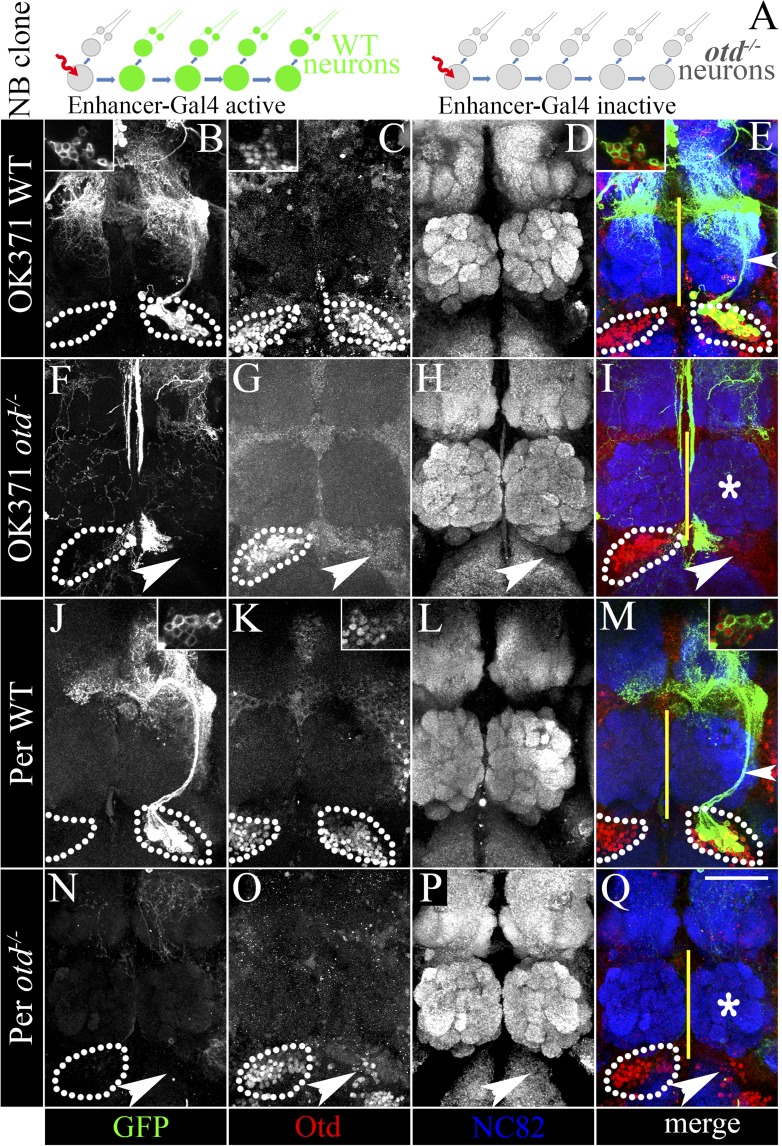
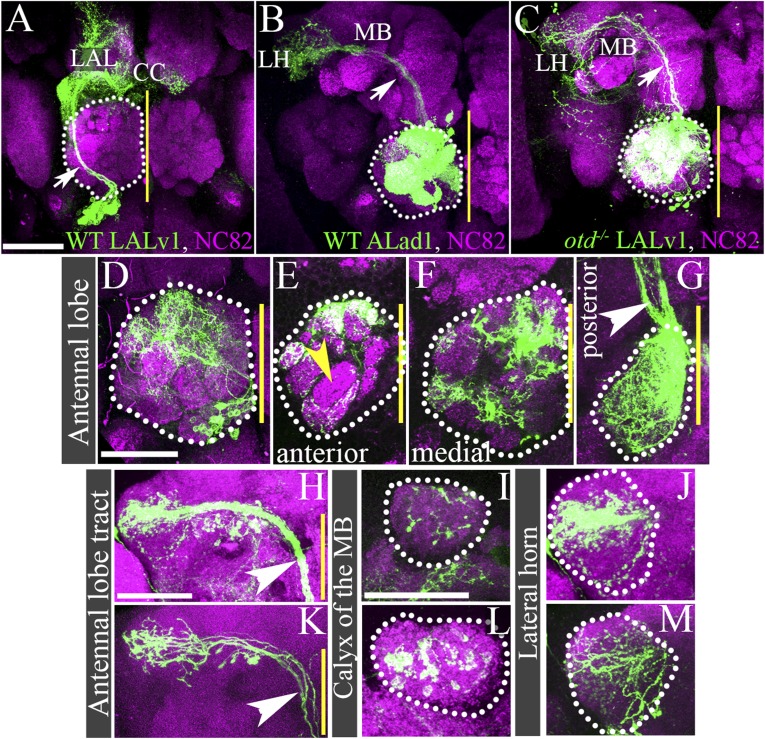
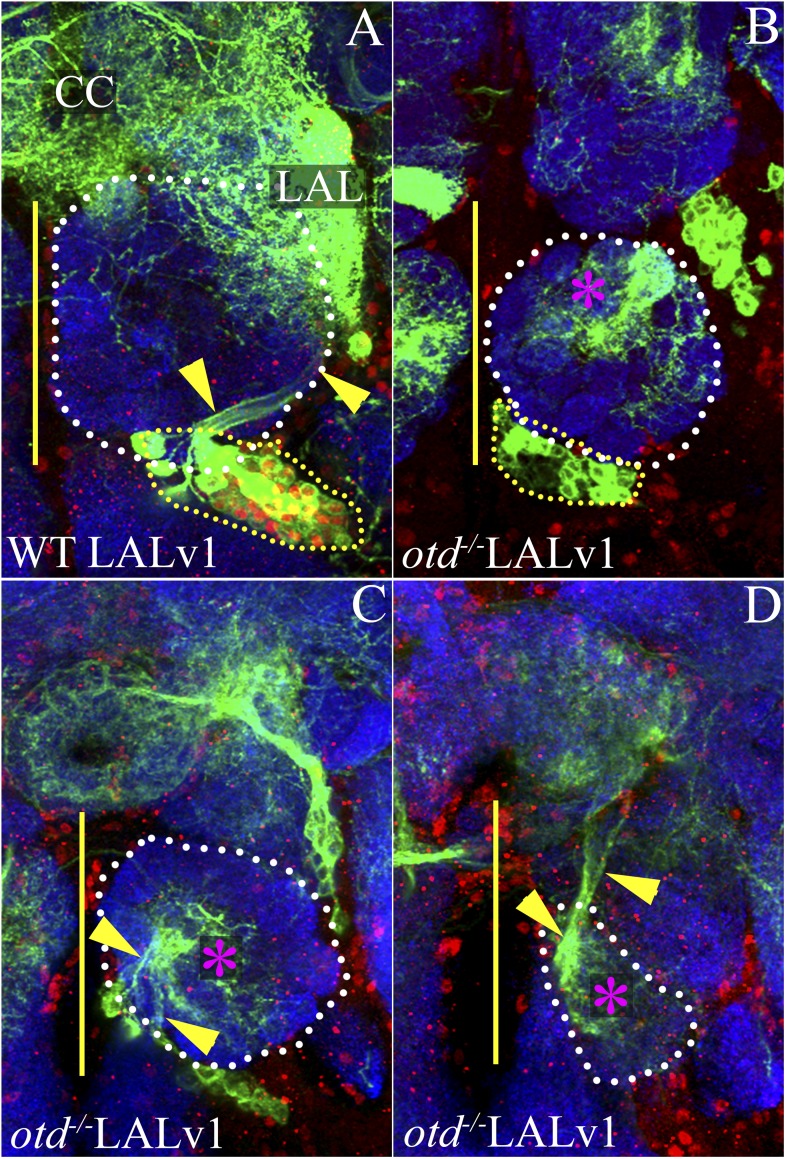
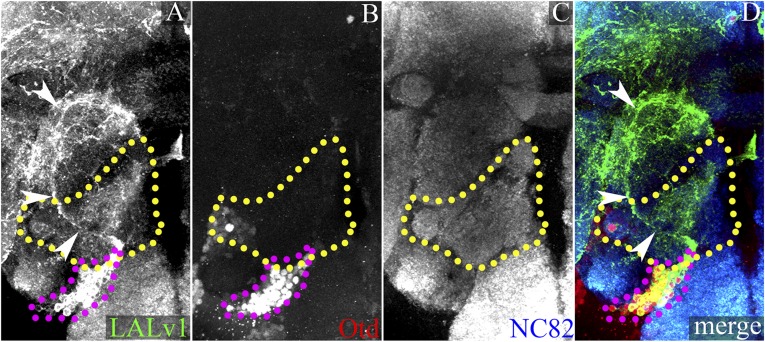
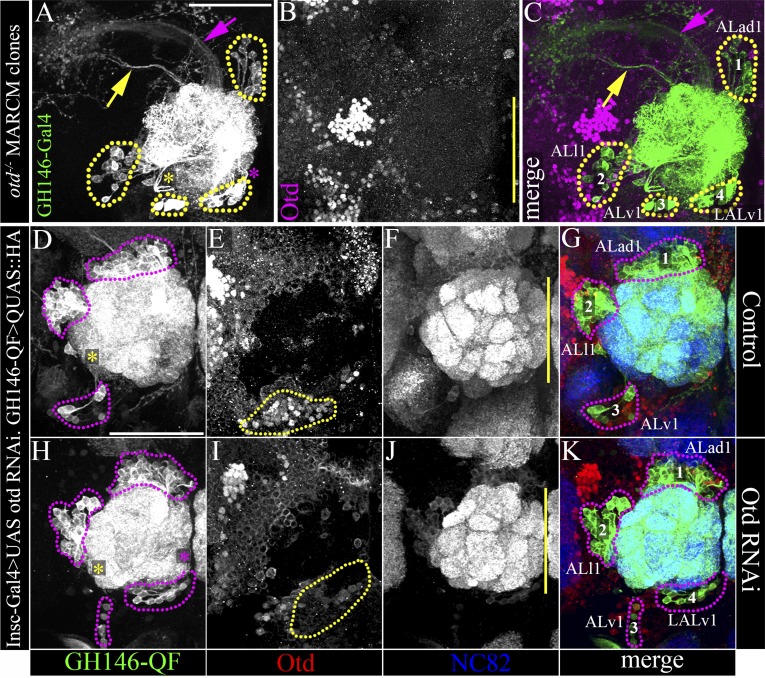
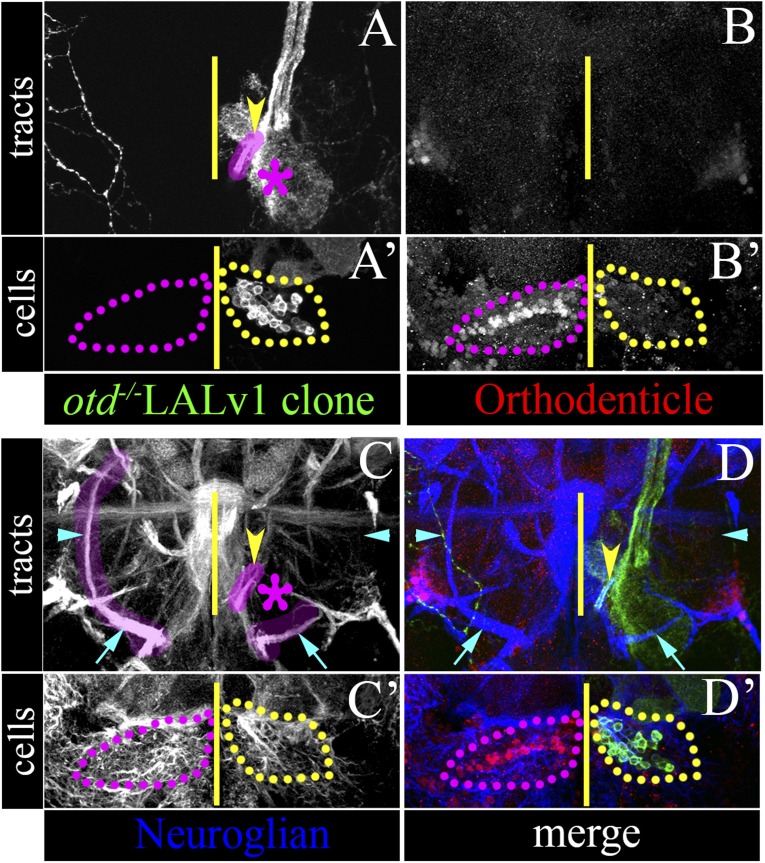
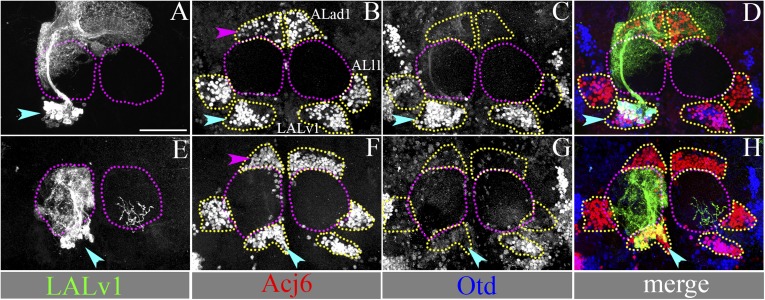
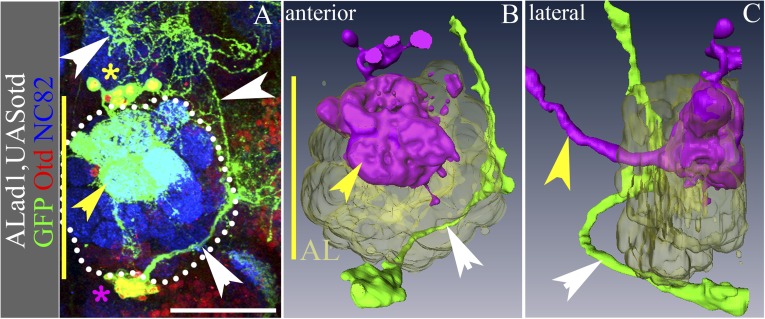
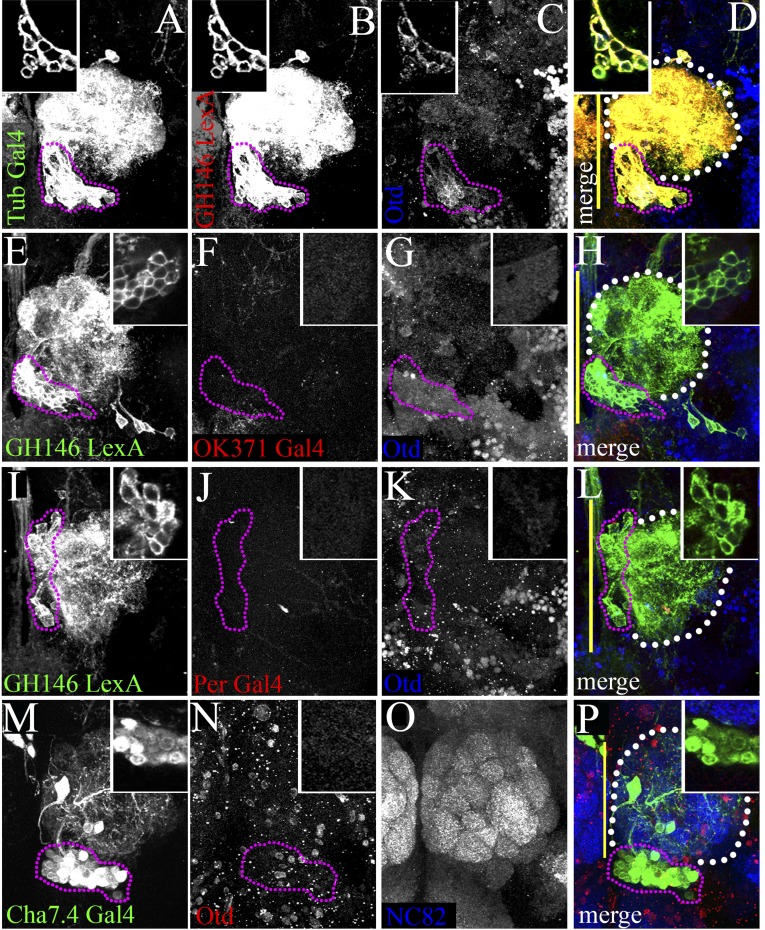
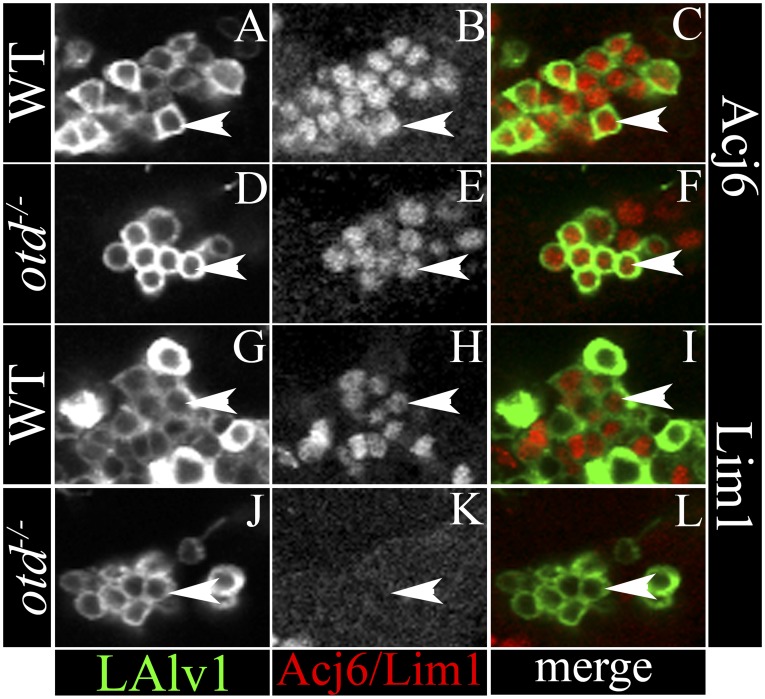
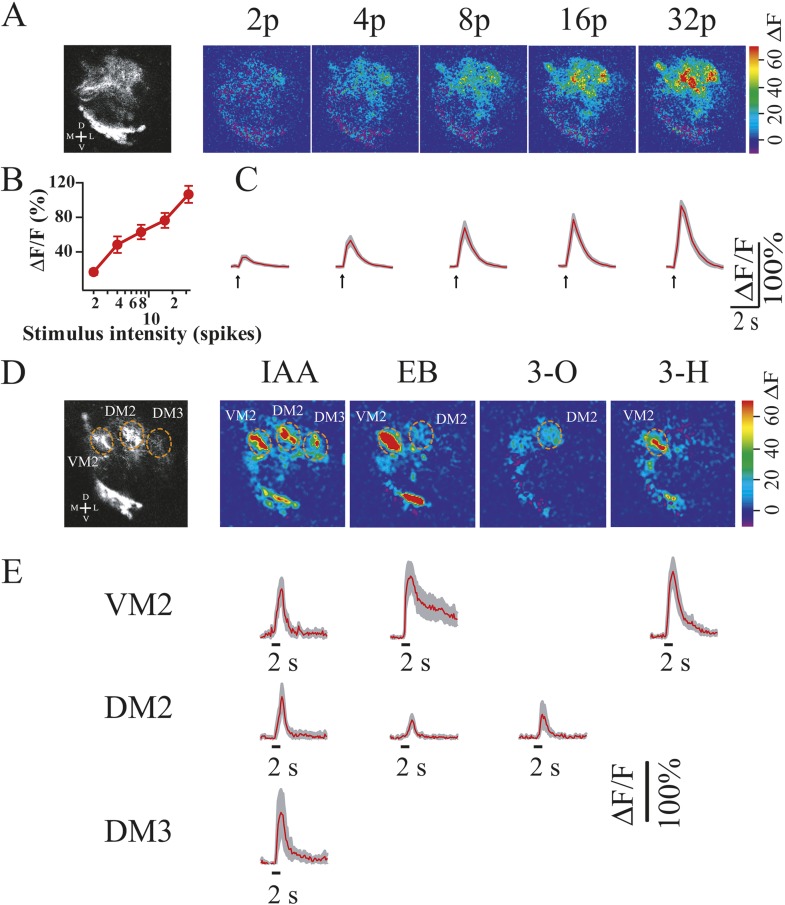
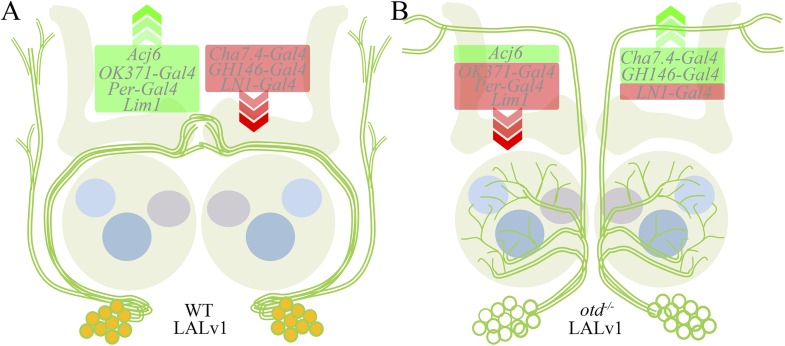
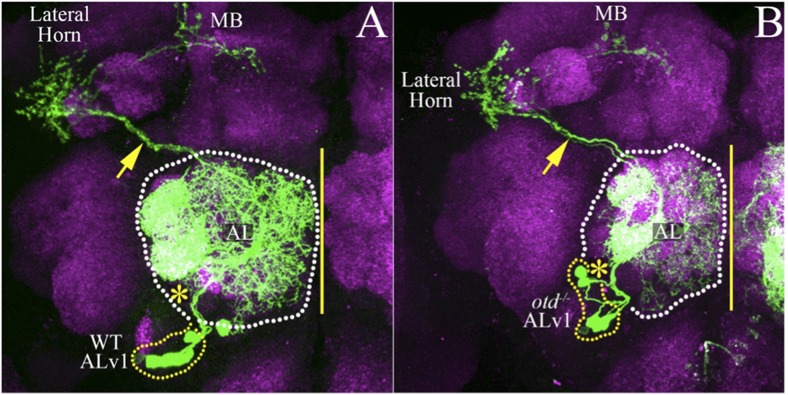
Acquisition of distinct neuronal identities during development is critical for the assembly of diverse functional neural circuits in the brain. In both vertebrates and invertebrates, intrinsic determinants are thought to act in neural progenitors to specify their identity and the identity of their neuronal progeny. However, the extent to which individual factors can contribute to this is poorly understood. We investigate the role of orthodenticle in the specification of an identified neuroblast (neuronal progenitor) lineage in the Drosophila brain. Loss of orthodenticle from this neuroblast affects molecular properties, neuroanatomical features, and functional inputs of progeny neurons, such that an entire central complex lineage transforms into a functional olfactory projection neuron lineage. This ability to change functional macrocircuitry of the brain through changes in gene expression in a single neuroblast reveals a surprising capacity for novel circuit formation in the brain and provides a paradigm for large-scale evolutionary modification of circuitry.
在发育过程中获得独特的神经元身份对于大脑中多样功能神经回路的组装至关重要。在脊椎动物和无脊椎动物中,内在决定因素被认为在神经祖细胞中起作用,以指定它们自身及其神经元后代的身份。然而,单个因素对此的贡献程度却知之甚少。我们研究了正齿蛋白在果蝇大脑中一个已鉴定的神经母细胞(神经元祖细胞)谱系特化中的作用。这个神经母细胞中正齿蛋白的缺失会影响后代神经元的分子特性、神经解剖学特征和功能输入,从而使整个中央复合体谱系转变为功能性嗅觉投射神经元谱系。通过单个神经母细胞中基因表达的变化来改变大脑功能宏观回路的这种能力,揭示了大脑中形成新回路的惊人能力,并为回路的大规模进化修饰提供了一个范例。