Yang Eun Sun, Bae Jin Young, Kim Tae Heon, Kim Yun Sook, Suk Kyoungho, Bae Yong Chul
Department of Anatomy and Neurobiology, School of Dentistry, Kyungpook National University, Daegu 700-412, Korea.
Department of Pharmacology, Brain Science & Engineering Institute, BK21 Plus KNU Biomedical Convergence Program, Kyungpook National University School of Medicine, Daegu 700-422, Korea.
Exp Neurobiol. 2014 Dec;23(4):372-80. doi: 10.5607/en.2014.23.4.372. Epub 2014 Dec 12.
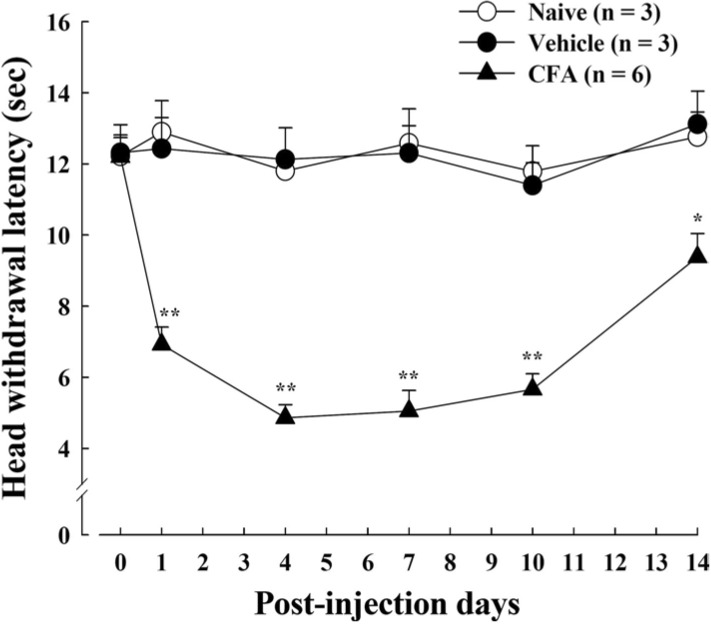
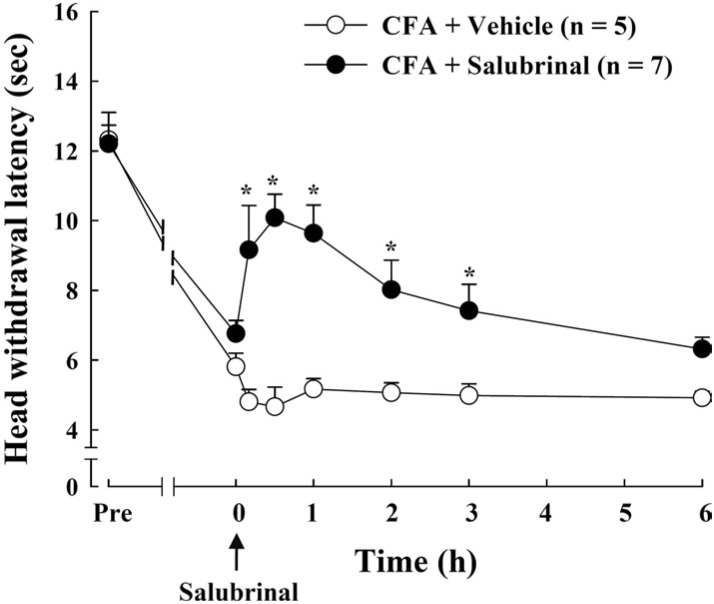
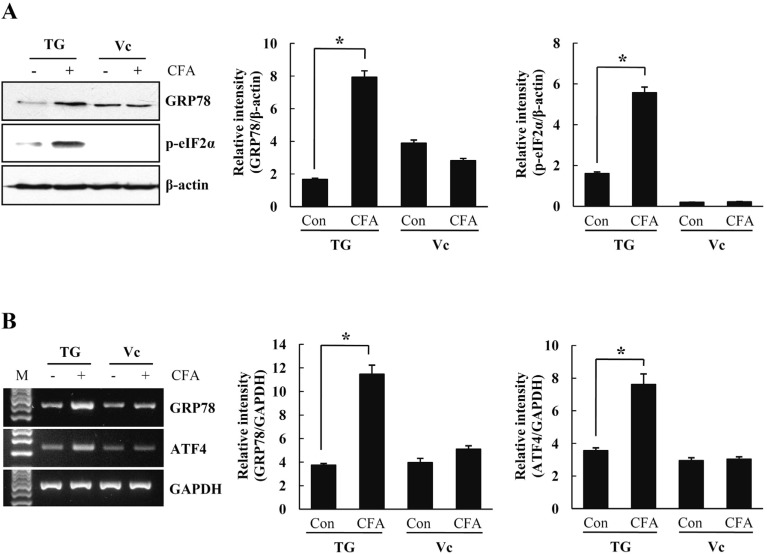
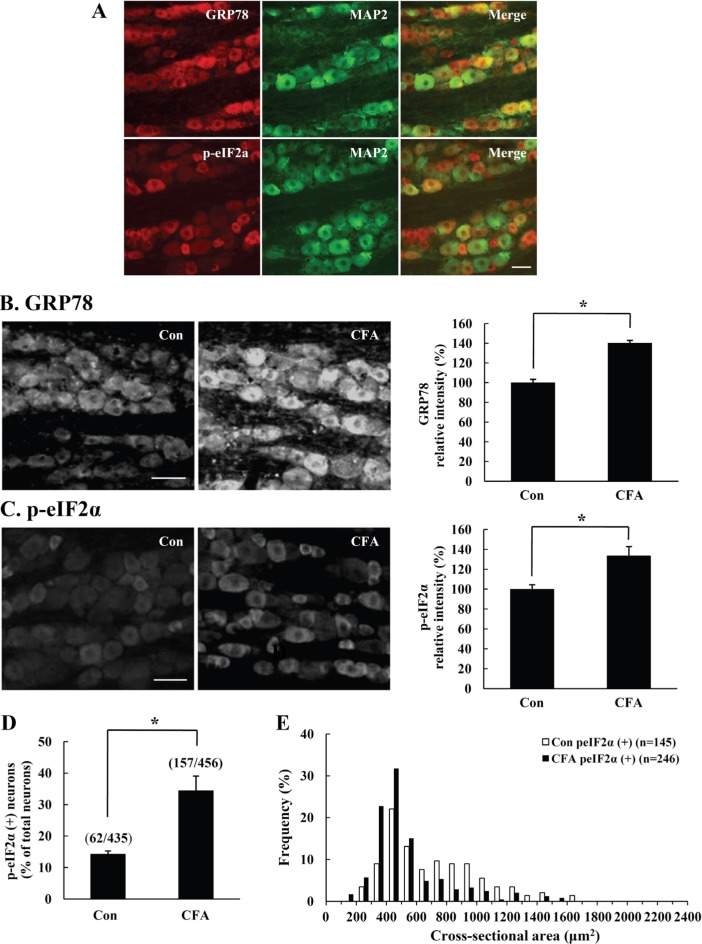
Endoplasmic reticulum (ER) stress is involved in many neurological diseases and inflammatory responses. Inflammatory mediators induce neuronal damage and trigger the neuropathic or inflammatory pain. But there is very little data on the role of the ER stress response in pain mechanisms. In this study, we explored whether the ER stress response is involved in orofacial inflammatory pain by using a complete Freund's adjuvant (CFA)-injected rat model. The thermal pain hypersensitivity increased significantly after CFA injection. We found that the protein and mRNA levels of ER stress response genes, GRP78/Bip and p-eIF2α, increased significantly in trigeminal ganglion (TG) of CFA-injected rats compared to control animals. In immunofluorescence analysis, a significant increase of GRP78 and p-eIF2α immunopositive neurons was observed in CFA-injected TG compared to control TG. When we administered an ER stress modulator, salubrinal, CFA-induced thermal pain hypersensitivity was temporally reduced. Thus, our study suggests that ER stress responses in TG neurons contribute to CFA-induced inflammatory pain, and may comprise an important molecular mechanism underlying the orofacial inflammatory pain pathway.
内质网(ER)应激与多种神经疾病和炎症反应有关。炎症介质会导致神经元损伤并引发神经性或炎性疼痛。但关于内质网应激反应在疼痛机制中的作用,相关数据非常少。在本研究中,我们通过使用完全弗氏佐剂(CFA)注射大鼠模型,探究内质网应激反应是否参与口腔面部炎性疼痛。注射CFA后,热痛超敏反应显著增强。我们发现,与对照动物相比,注射CFA的大鼠三叉神经节(TG)中内质网应激反应基因GRP78/Bip和p-eIF2α的蛋白质和mRNA水平显著升高。在免疫荧光分析中,与对照TG相比,注射CFA的TG中GRP78和p-eIF2α免疫阳性神经元显著增加。当我们给予内质网应激调节剂salubrinal时,CFA诱导的热痛超敏反应暂时减轻。因此,我们的研究表明,TG神经元中的内质网应激反应导致CFA诱导的炎性疼痛,可能是口腔面部炎性疼痛通路的重要分子机制。