Bancos Simona, Stevens David L, Tyner Katherine M
Center for Drug Evaluation and Research, Food and Drug Administration, Silver Spring, MD, USA.
Int J Nanomedicine. 2014 Dec 24;10:183-206. doi: 10.2147/IJN.S72580. eCollection 2015.
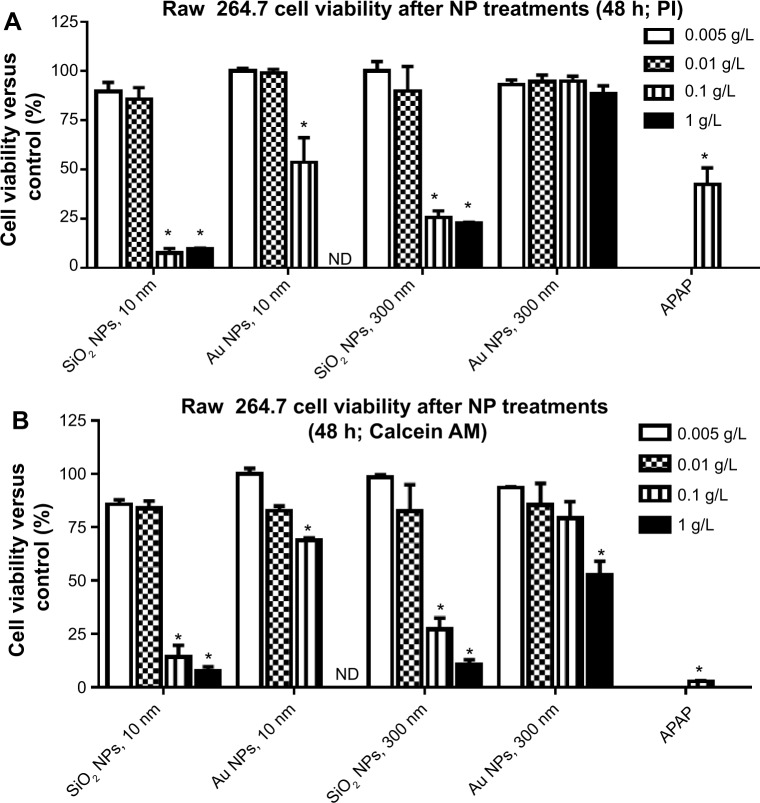
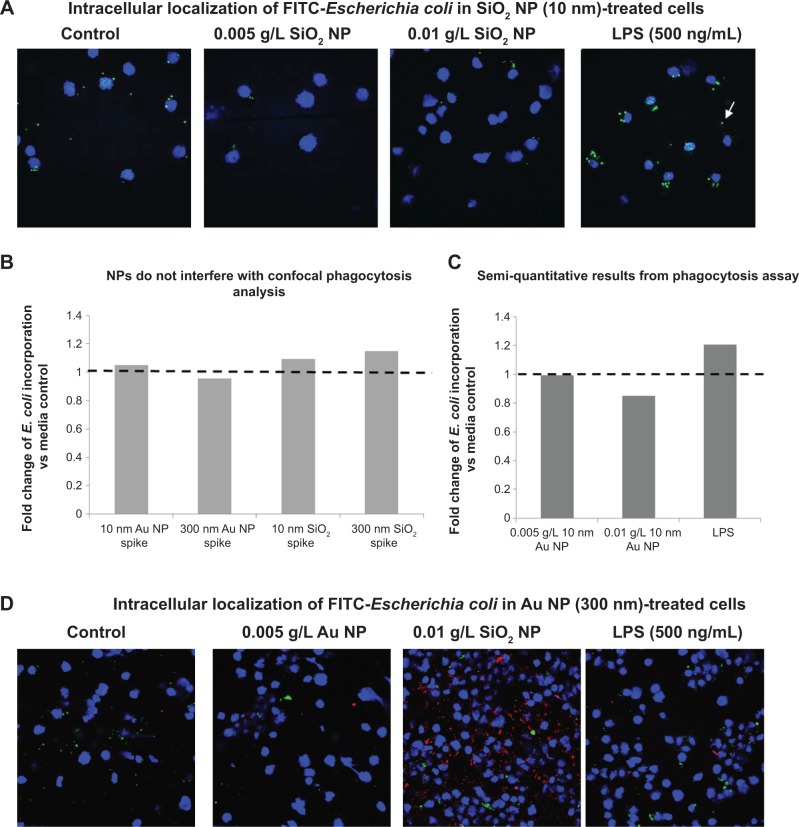
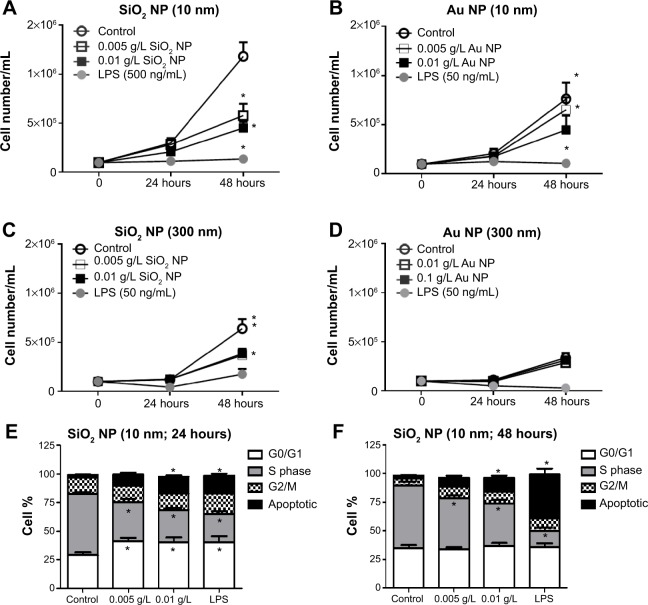
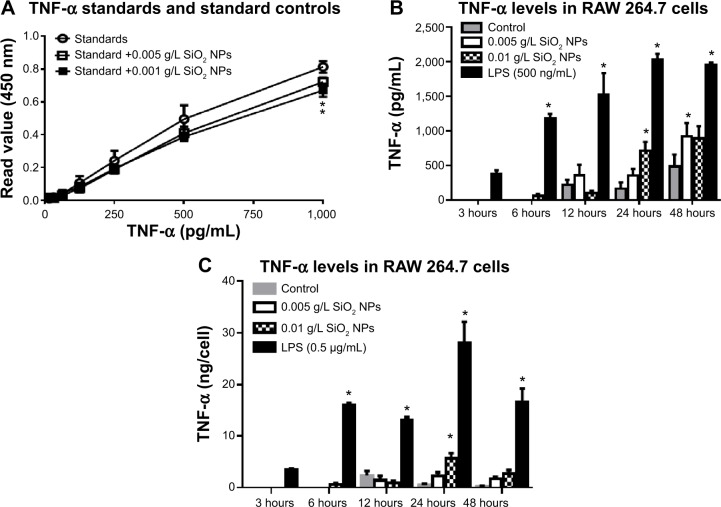
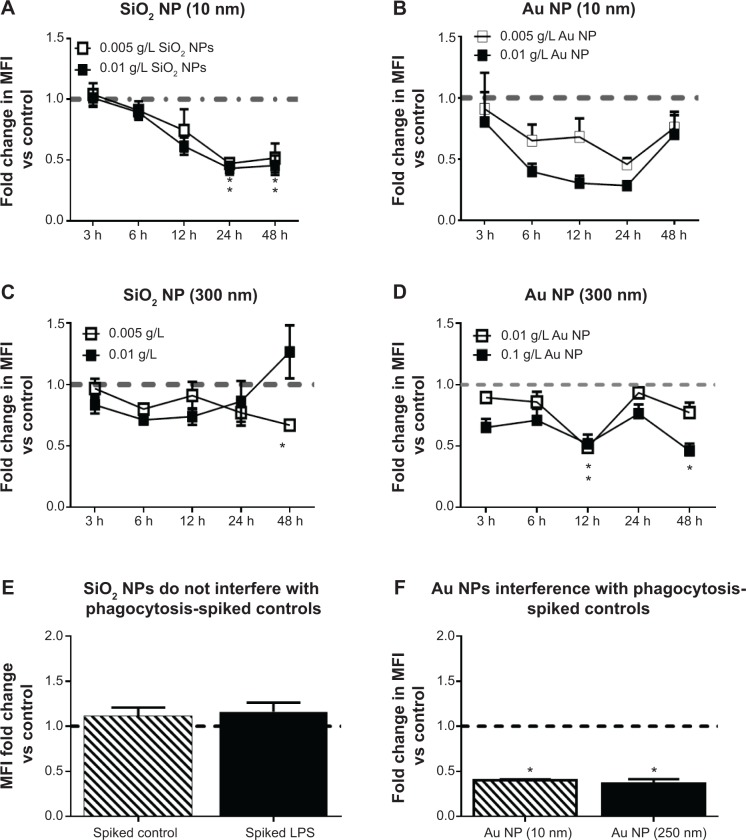
The accumulation of durable nanoparticles (NPs) in macrophages following systemic administration is well described. The ultimate biological impact of this accumulation on macrophage function, however, is not fully understood. In this study, nontoxic doses of two durable NPs, SiO2 and Au, at particle sizes of ~10 nm and 300 nm were used to evaluate the effect of bioaccumulation on macrophage function in vitro using RAW 264.7 mouse macrophage-like cells as a model system. Cell proliferation, cell cycle, cytokine production, surface marker activation, and phagocytosis responses were evaluated through a panel of assays using flow cytometry and confocal microscopy. The most dramatic change in RAW 264.7 cell function was a reduction in phagocytosis as monitored by the uptake of Escherichia coli. Cells exposed to both 10 nm Au NPs and 10 nm SiO2 NPs showed ~50% decrease in phagocytosis, while the larger NPs caused a less dramatic reduction. In addition to modifying phagocytosis profiles, 10 nm SiO2 NPs caused changes in proliferation, cell cycle, and cell morphology. Au NPs had no effect on cell cycle, cytokine production, or surface markers and caused interference in phagocytosis in the form of quenching when the assay was performed via flow cytometry. Confocal microscopy analysis was used to minimize this interference and demonstrated that both sizes of Au NPs decreased the phagocytosis of E. coli. Overall, our results demonstrate that Au and SiO2 NP uptake by macrophages can influence macrophage phagocytosis in vitro without altering surface markers and cytokine production in vitro. While the biological impact of these findings remains unclear, our results indicate that bioaccumulation of durable NPs within the macrophages may lead to a suppression of bacterial uptake and possibly impair bactericidal activity.
全身给药后巨噬细胞中持久性纳米颗粒(NPs)的积累已有充分描述。然而,这种积累对巨噬细胞功能的最终生物学影响尚未完全了解。在本研究中,使用无毒剂量的两种持久性NPs(SiO2和Au),粒径分别约为10 nm和300 nm,以RAW 264.7小鼠巨噬细胞样细胞作为模型系统,评估生物积累对巨噬细胞功能的体外影响。通过一系列使用流式细胞术和共聚焦显微镜的检测方法,评估细胞增殖、细胞周期、细胞因子产生、表面标志物激活和吞噬反应。RAW 264.7细胞功能最显著的变化是吞噬作用的降低,通过大肠杆菌的摄取来监测。暴露于10 nm Au NPs和10 nm SiO2 NPs的细胞吞噬作用降低了约50%,而较大粒径的NPs导致的降低幅度较小。除了改变吞噬作用特征外,10 nm SiO2 NPs还引起了增殖、细胞周期和细胞形态的变化。Au NPs对细胞周期、细胞因子产生或表面标志物没有影响,并且在通过流式细胞术进行检测时,以淬灭的形式干扰吞噬作用。共聚焦显微镜分析用于最小化这种干扰,并证明两种粒径的Au NPs均降低了大肠杆菌的吞噬作用。总体而言,我们的结果表明,巨噬细胞摄取Au和SiO2 NPs可在体外影响巨噬细胞吞噬作用,而不改变体外表面标志物和细胞因子的产生。虽然这些发现的生物学影响尚不清楚,但我们的结果表明,持久性NPs在巨噬细胞内的生物积累可能导致细菌摄取的抑制,并可能损害杀菌活性。