Ross Kathleen A, Loyd Hyelee, Wu Wuwei, Huntimer Lucas, Ahmed Shaheen, Sambol Anthony, Broderick Scott, Flickinger Zachary, Rajan Krishna, Bronich Tatiana, Mallapragada Surya, Wannemuehler Michael J, Carpenter Susan, Narasimhan Balaji
Chemical and Biological Engineering, Iowa State University, Ames, IA, USA.
Animal Science, Iowa State University, Ames, IA, USA.
Int J Nanomedicine. 2014 Dec 30;10:229-43. doi: 10.2147/IJN.S72264. eCollection 2015.
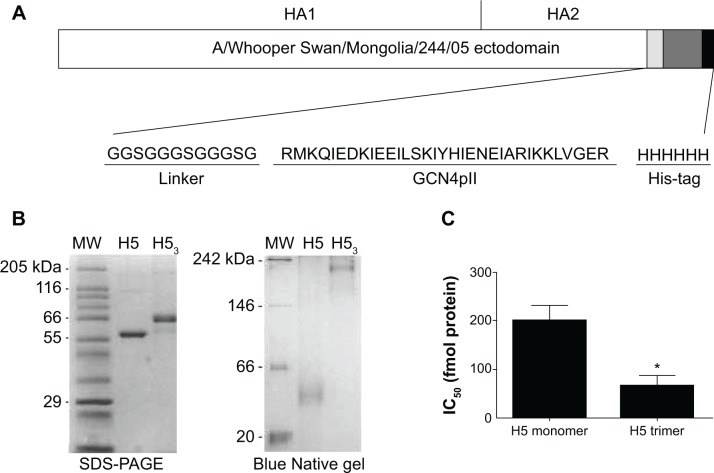
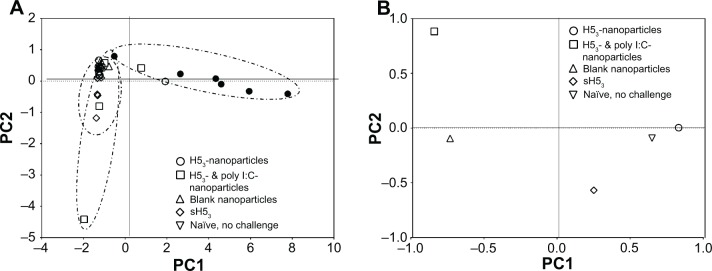
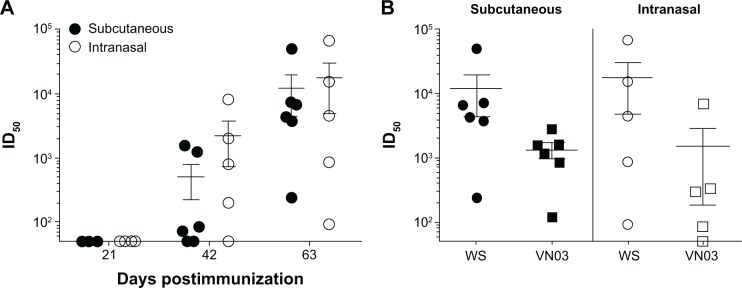
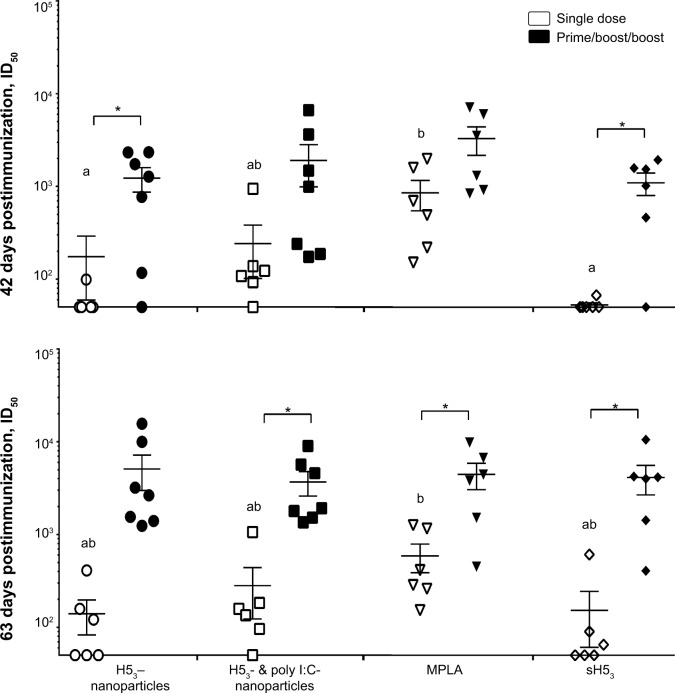
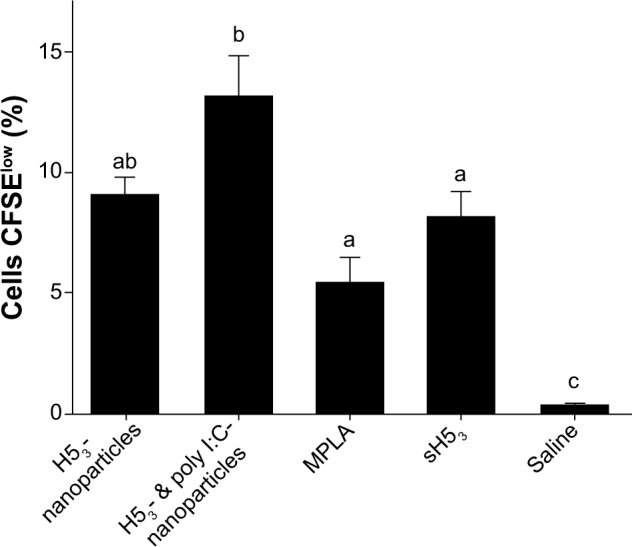
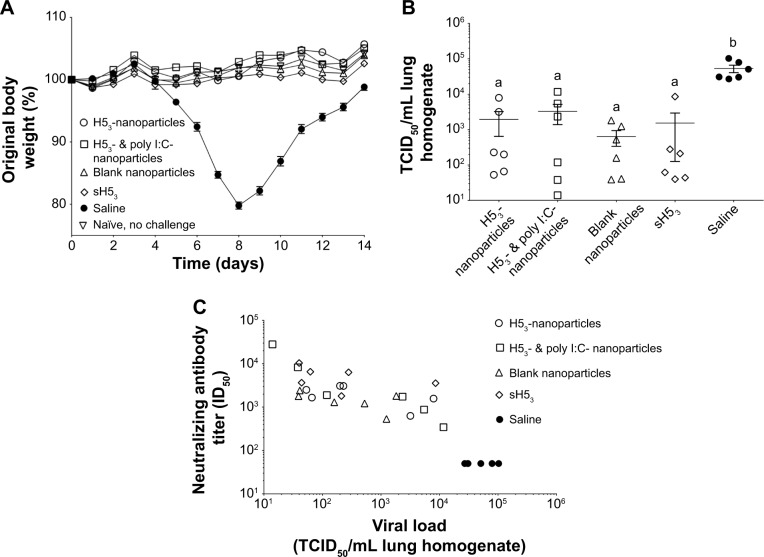
H5N1 avian influenza is a significant global concern with the potential to become the next pandemic threat. Recombinant subunit vaccines are an attractive alternative for pandemic vaccines compared to traditional vaccine technologies. In particular, polyanhydride nanoparticles encapsulating subunit proteins have been shown to enhance humoral and cell-mediated immunity and provide protection upon lethal challenge. In this work, a recombinant H5 hemagglutinin trimer (H5₃) was produced and encapsulated into polyanhydride nanoparticles. The studies performed indicated that the recombinant H5₃ antigen was a robust immunogen. Immunizing mice with H5₃ encapsulated into polyanhydride nanoparticles induced high neutralizing antibody titers and enhanced CD4(+) T cell recall responses in mice. Finally, the H5₃-based polyanhydride nanovaccine induced protective immunity against a low-pathogenic H5N1 viral challenge. Informatics analyses indicated that mice receiving the nanovaccine formulations and subsequently challenged with virus were similar to naïve mice that were not challenged. The current studies provide a basis to further exploit the advantages of polyanhydride nanovaccines in pandemic scenarios.
H5N1禽流感是一个重大的全球关注点,有可能成为下一个大流行威胁。与传统疫苗技术相比,重组亚单位疫苗是大流行疫苗的一个有吸引力的替代方案。特别是,包裹亚单位蛋白的聚酸酐纳米颗粒已被证明可增强体液免疫和细胞介导的免疫,并在致死性攻击时提供保护。在这项工作中,制备了重组H5血凝素三聚体(H5₃)并将其封装到聚酸酐纳米颗粒中。所进行的研究表明,重组H5₃抗原是一种强大的免疫原。用封装在聚酸酐纳米颗粒中的H5₃免疫小鼠可诱导高中和抗体滴度,并增强小鼠体内CD4(+) T细胞的回忆反应。最后,基于H5₃的聚酸酐纳米疫苗诱导了针对低致病性H5N1病毒攻击的保护性免疫。信息学分析表明,接受纳米疫苗制剂并随后受到病毒攻击的小鼠与未受到攻击的未感染小鼠相似。目前的研究为进一步利用聚酸酐纳米疫苗在大流行情况下的优势提供了基础。