Joukes Jeroen, Hartmann Till S, Krekelberg Bart
Center for Molecular and Behavioral Neuroscience, Rutgers University Newark, NJ, USA.
Front Syst Neurosci. 2014 Dec 23;8:239. doi: 10.3389/fnsys.2014.00239. eCollection 2014.
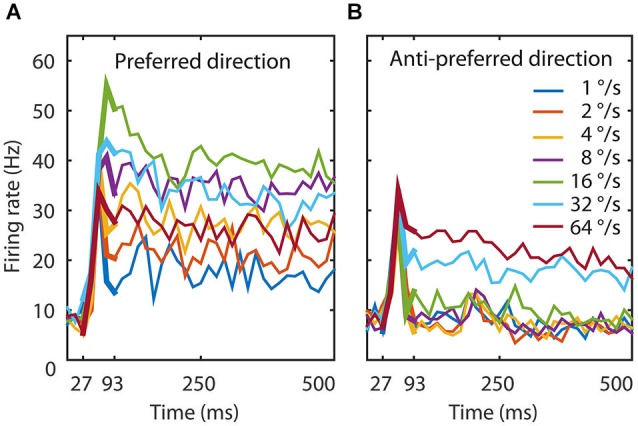
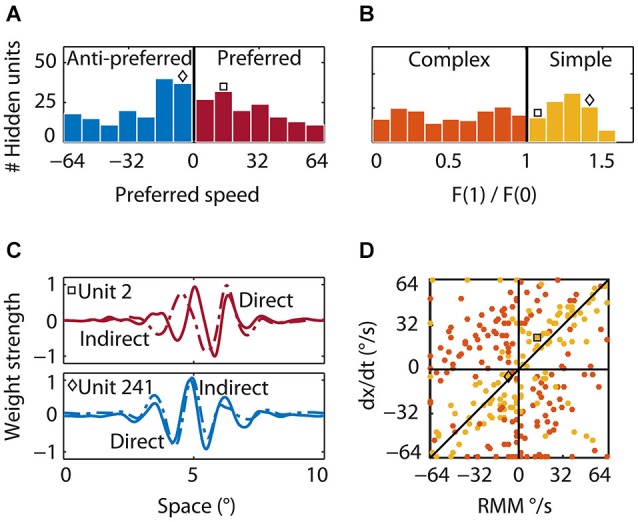
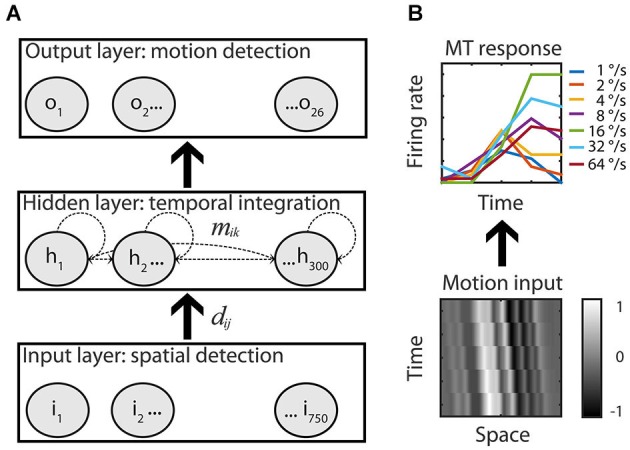
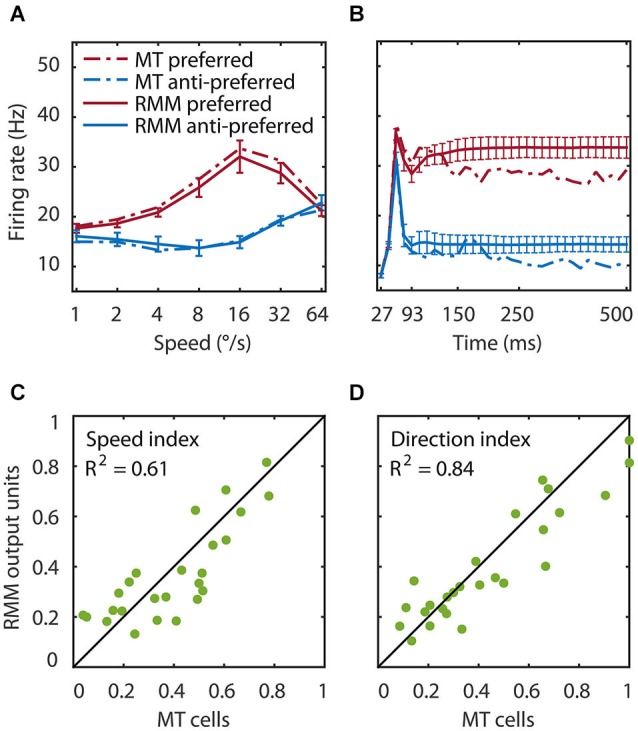
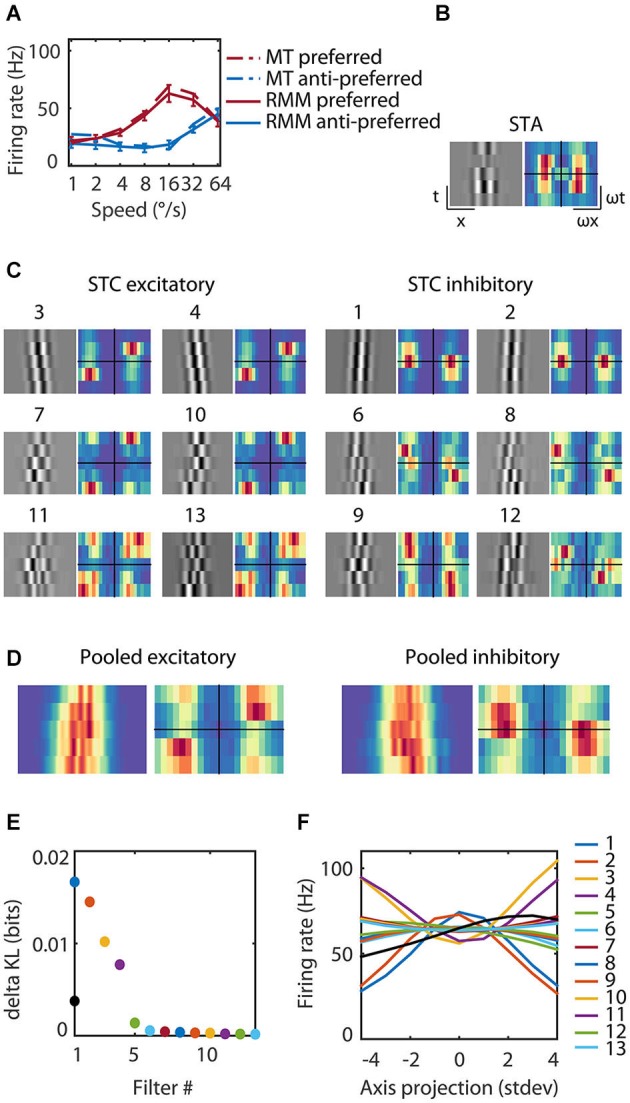
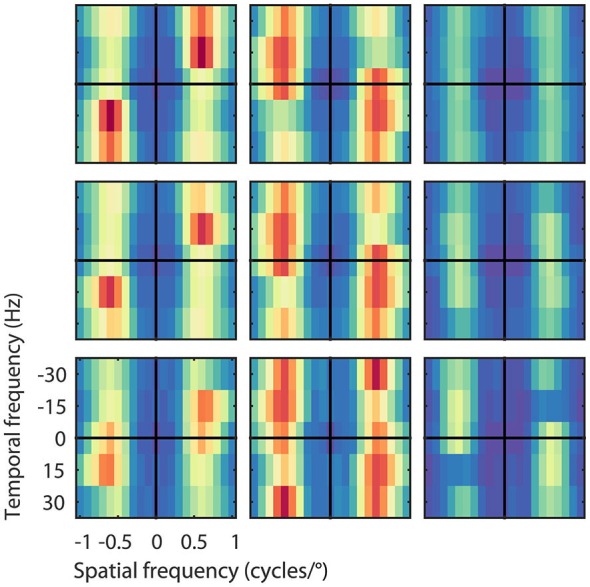
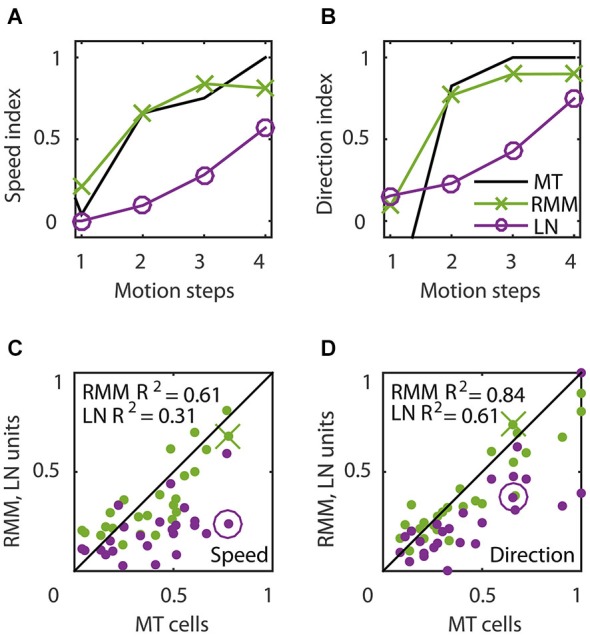
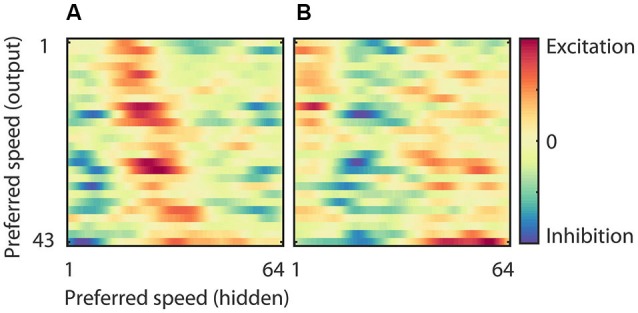
The detection of visual motion requires temporal delays to compare current with earlier visual input. Models of motion detection assume that these delays reside in separate classes of slow and fast thalamic cells, or slow and fast synaptic transmission. We used a data-driven modeling approach to generate a model that instead uses recurrent network dynamics with a single, fixed temporal integration window to implement the velocity computation. This model successfully reproduced the temporal response dynamics of a population of motion sensitive neurons in macaque middle temporal area (MT) and its constituent parts matched many of the properties found in the motion processing pathway (e.g., Gabor-like receptive fields (RFs), simple and complex cells, spatially asymmetric excitation and inhibition). Reverse correlation analysis revealed that a simplified network based on first and second order space-time correlations of the recurrent model behaved much like a feedforward motion energy (ME) model. The feedforward model, however, failed to capture the full speed tuning and direction selectivity properties based on higher than second order space-time correlations typically found in MT. These findings support the idea that recurrent network connectivity can create temporal delays to compute velocity. Moreover, the model explains why the motion detection system often behaves like a feedforward ME network, even though the anatomical evidence strongly suggests that this network should be dominated by recurrent feedback.
视觉运动的检测需要时间延迟,以便将当前视觉输入与早期视觉输入进行比较。运动检测模型假定这些延迟存在于不同类型的慢速和快速丘脑细胞中,或者存在于慢速和快速突触传递中。我们采用了一种数据驱动的建模方法来生成一个模型,该模型转而使用具有单个固定时间积分窗口的循环网络动力学来实现速度计算。该模型成功地再现了猕猴颞中区(MT)中一群运动敏感神经元的时间响应动力学,其组成部分与运动处理通路中发现的许多特性相匹配(例如,类Gabor感受野(RFs)、简单细胞和复杂细胞、空间不对称的兴奋和抑制)。反向相关分析表明,基于循环模型的一阶和二阶时空相关性的简化网络的行为很像前馈运动能量(ME)模型。然而,前馈模型未能基于MT中通常发现的高于二阶的时空相关性捕捉到完整的速度调谐和方向选择性特性。这些发现支持了循环网络连接性可以创建时间延迟来计算速度的观点。此外,该模型解释了为什么运动检测系统常常表现得像一个前馈ME网络,尽管解剖学证据强烈表明该网络应以循环反馈为主导。