Cullingham Catherine I, Merrill Evelyn H, Pybus Margo J, Bollinger Trent K, Wilson Gregory A, Coltman David W
Biological Sciences, University of Alberta Edmonton, AB, Canada.
Fish & Wildlife Division, Alberta Sustainable Resource Development Edmonton, AB, Canada.
Evol Appl. 2011 Jan;4(1):116-31. doi: 10.1111/j.1752-4571.2010.00142.x. Epub 2010 Jul 7.
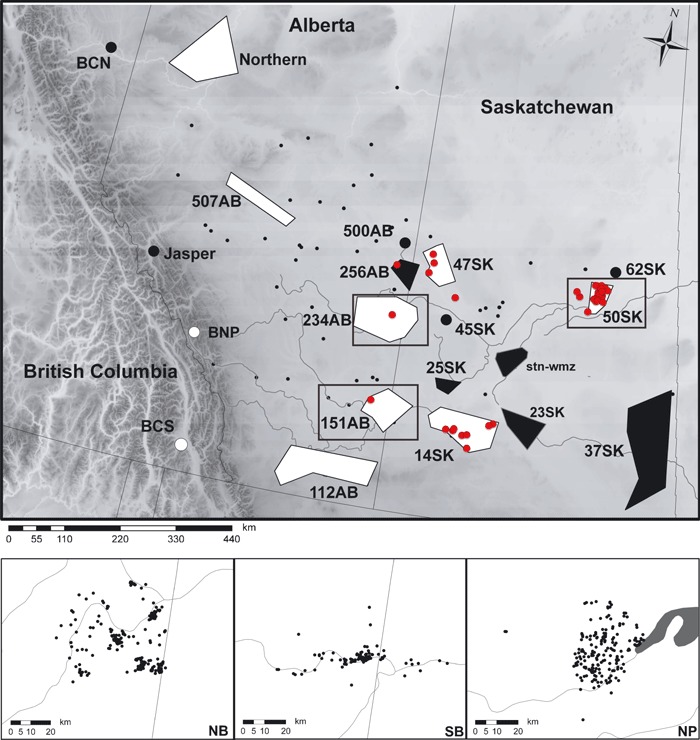
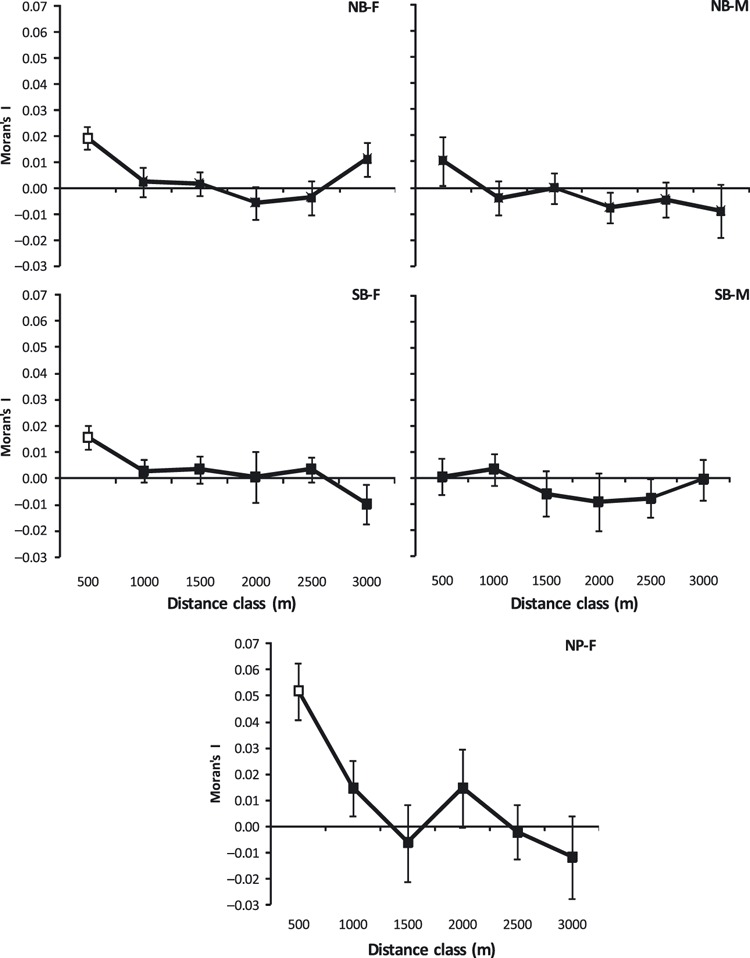
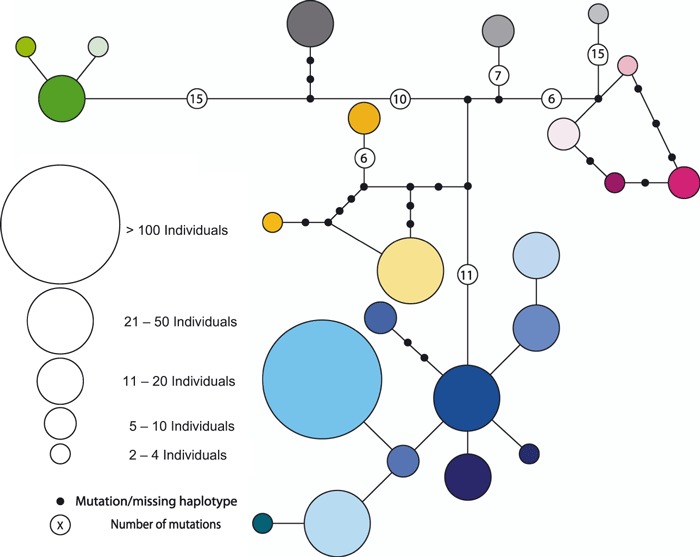
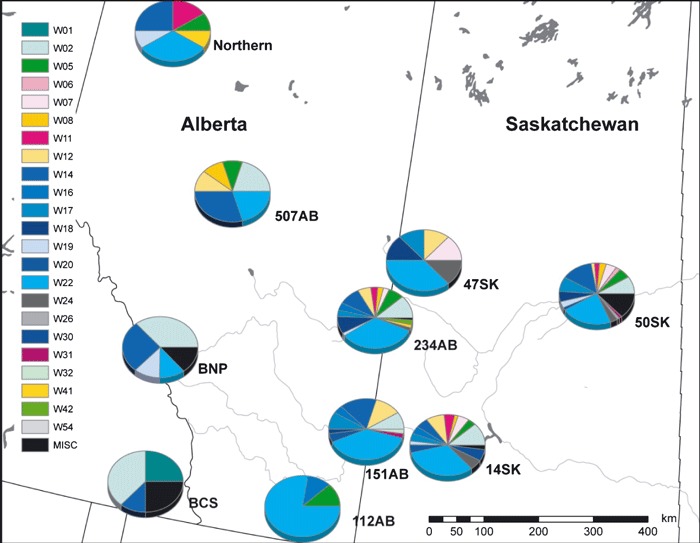
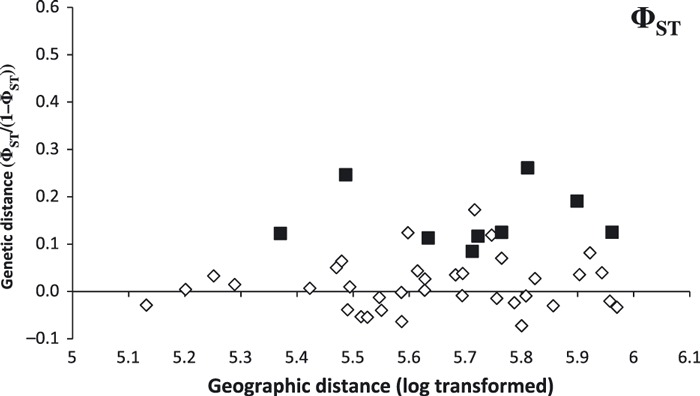
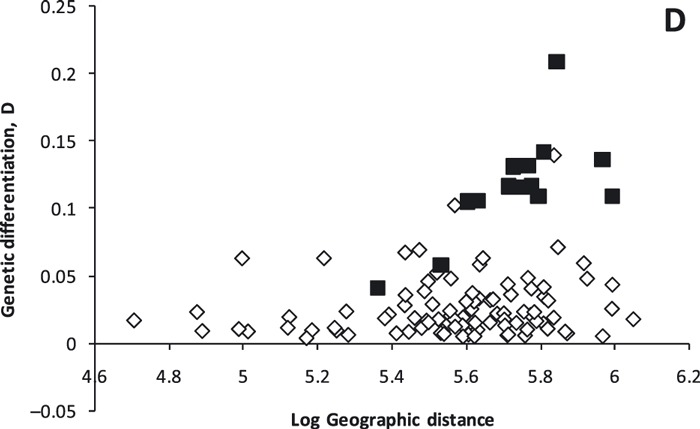
Chronic wasting disease is a transmissible spongiform encephalopathy of cervids, similar to sheep scrapie that has only recently been detected in wild populations of white-tailed deer (Odocoileus virginianus) and mule deer (Odocoileus hemionus hemionus) in western Canada. Relatively little is known about local transmission dynamics of the disease or the potential for long-distance spread. We analysed the population genetic structure of over 2000 white-tailed deer sampled from Alberta, British Columbia, and Saskatchewan using microsatellite profiles and mtDNA sequencing to assess the relative risk of disease spread. There was very little differentiation among subpopulations and a weak trend of increasing differentiation with geographic distance. This suggests that the potential for long-distance disease spread through the dispersal of infected individuals is possible, yet the risk of spread should gradually diminish with distance from infection foci. Within subpopulations, females were more related than expected by chance (R > 0) within a radius of approximately 500 m. Sex-biased philopatry and social interactions among related females may facilitate local disease transmission within social groups. Local herd reduction may therefore be an effective tool for reducing the disease prevalence when implemented at the appropriate spatial scale.
慢性消耗病是一种鹿科动物的传染性海绵状脑病,类似于羊瘙痒症,最近才在加拿大西部的白尾鹿(弗吉尼亚鹿)和骡鹿(黑尾鹿指名亚种)野生种群中被发现。对于该疾病的本地传播动态或远距离传播的可能性,人们了解相对较少。我们使用微卫星图谱和线粒体DNA测序分析了从艾伯塔省、不列颠哥伦比亚省和萨斯喀彻温省采集的2000多只白尾鹿的种群遗传结构,以评估疾病传播的相对风险。亚种群之间的分化非常小,且存在随着地理距离增加而分化增强的微弱趋势。这表明通过感染个体的扩散实现疾病远距离传播是有可能的,但传播风险应会随着与感染源距离的增加而逐渐降低。在亚种群内部,在大约500米半径范围内,雌性之间的亲缘关系比随机预期的更为密切(R>0)。雌性偏向的留居性以及相关雌性之间的社会互动可能会促进社会群体内部的本地疾病传播。因此,在适当的空间尺度上实施局部鹿群数量减少措施可能是降低疾病流行率的有效手段。