Baker Christopher L, Kajita Shimpei, Walker Michael, Saxl Ruth L, Raghupathy Narayanan, Choi Kwangbom, Petkov Petko M, Paigen Kenneth
Center for Genome Dynamics, The Jackson Laboratory, Bar Harbor, Maine, United States of America.
Center for Genome Dynamics, The Jackson Laboratory, Bar Harbor, Maine, United States of America; Okayama University, Graduate School of Natural Science and Technology, Okayama, Okayama, Japan.
PLoS Genet. 2015 Jan 8;11(1):e1004916. doi: 10.1371/journal.pgen.1004916. eCollection 2015 Jan.
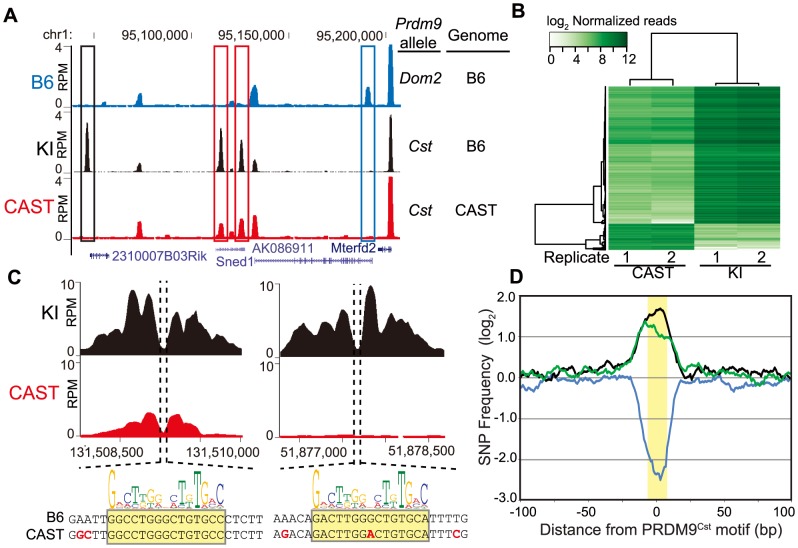
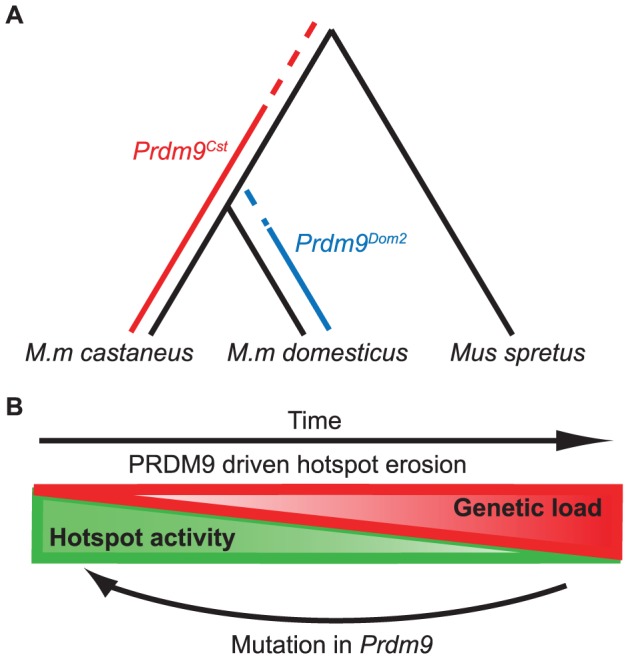
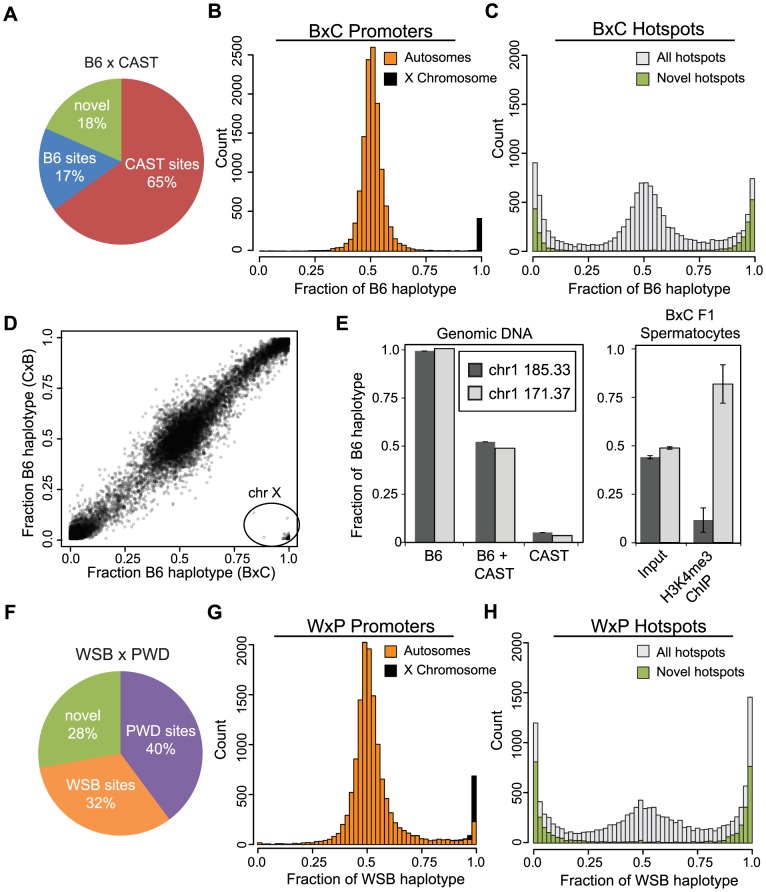
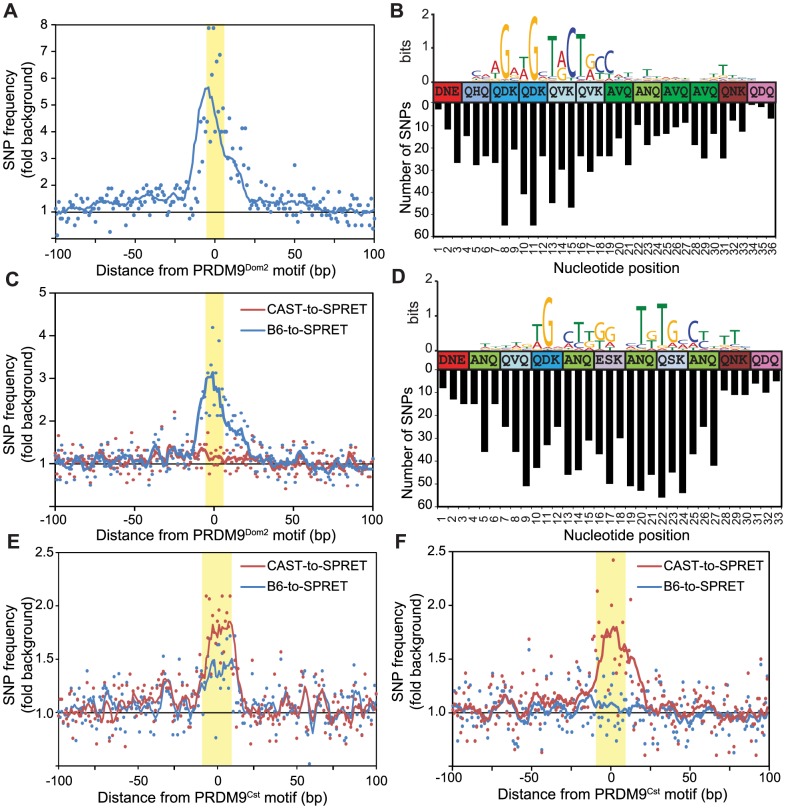
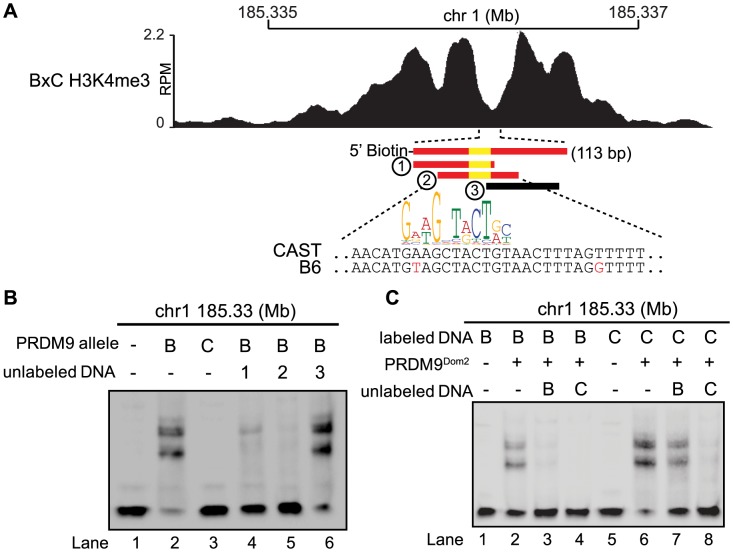
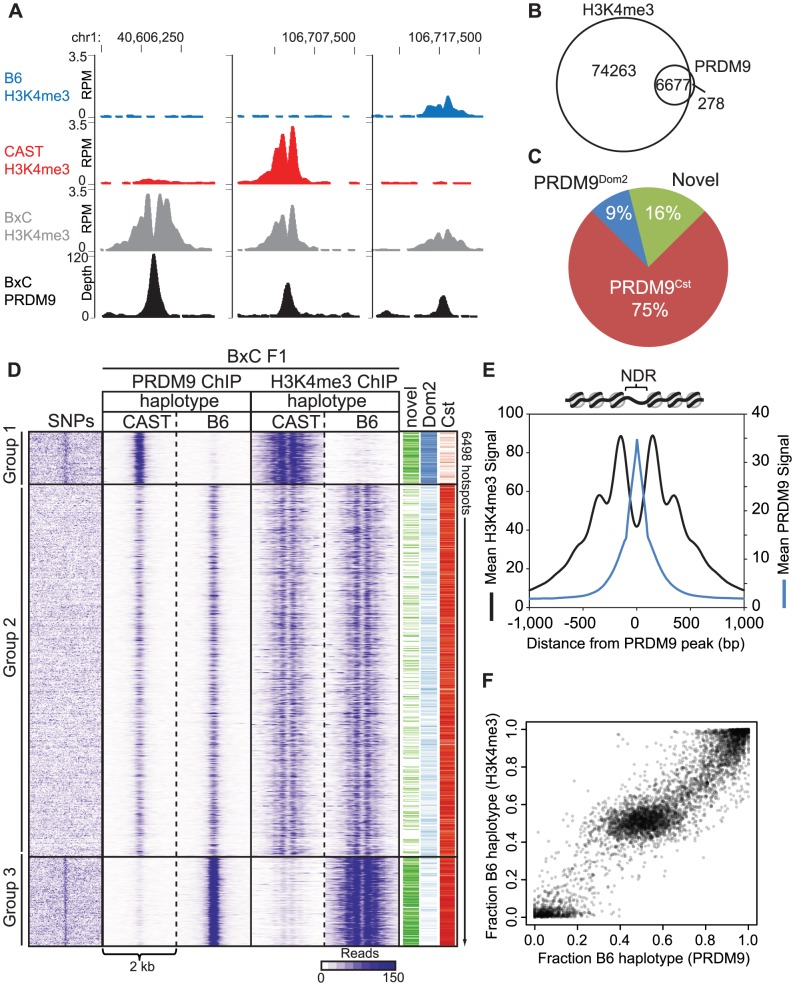
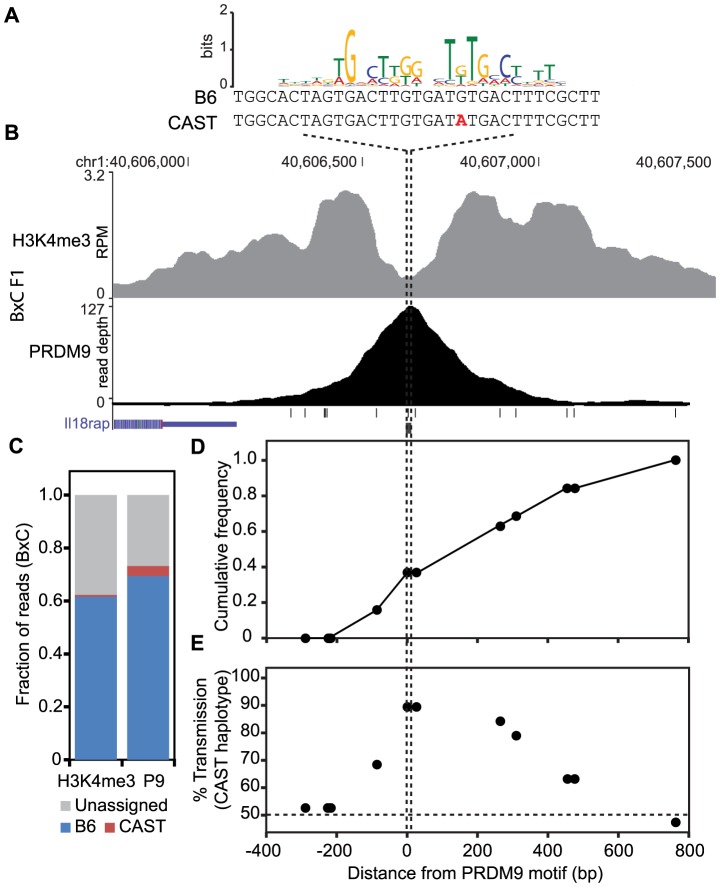
Meiotic recombination generates new genetic variation and assures the proper segregation of chromosomes in gametes. PRDM9, a zinc finger protein with histone methyltransferase activity, initiates meiotic recombination by binding DNA at recombination hotspots and directing the position of DNA double-strand breaks (DSB). The DSB repair mechanism suggests that hotspots should eventually self-destruct, yet genome-wide recombination levels remain constant, a conundrum known as the hotspot paradox. To test if PRDM9 drives this evolutionary erosion, we measured activity of the Prdm9Cst allele in two Mus musculus subspecies, M.m. castaneus, in which Prdm9Cst arose, and M.m. domesticus, into which Prdm9Cst was introduced experimentally. Comparing these two strains, we find that haplotype differences at hotspots lead to qualitative and quantitative changes in PRDM9 binding and activity. Using Mus spretus as an outlier, we found most variants affecting PRDM9Cst binding arose and were fixed in M.m. castaneus, suppressing hotspot activity. Furthermore, M.m. castaneus×M.m. domesticus F1 hybrids exhibit novel hotspots, with large haplotype biases in both PRDM9 binding and chromatin modification. These novel hotspots represent sites of historic evolutionary erosion that become activated in hybrids due to crosstalk between one parent's Prdm9 allele and the opposite parent's chromosome. Together these data support a model where haplotype-specific PRDM9 binding directs biased gene conversion at hotspots, ultimately leading to hotspot erosion.
减数分裂重组产生新的遗传变异,并确保配子中染色体的正确分离。PRDM9是一种具有组蛋白甲基转移酶活性的锌指蛋白,它通过在重组热点处结合DNA并指导DNA双链断裂(DSB)的位置来启动减数分裂重组。DSB修复机制表明热点最终应该自我破坏,但全基因组的重组水平保持不变,这一难题被称为热点悖论。为了测试PRDM9是否驱动了这种进化侵蚀,我们测量了Prdm9Cst等位基因在小家鼠的两个亚种中的活性,Prdm9Cst等位基因起源于小家鼠栗色亚种(M.m. castaneus),并通过实验被引入小家鼠指名亚种(M.m. domesticus)。比较这两个品系,我们发现热点处的单倍型差异导致了PRDM9结合和活性的定性和定量变化。以西班牙小家鼠作为外群,我们发现大多数影响Prdm9Cst结合的变异起源于小家鼠栗色亚种并在其中固定下来,从而抑制了热点活性。此外,小家鼠栗色亚种×小家鼠指名亚种的F1杂种表现出新型热点,在PRDM9结合和染色质修饰方面都有很大的单倍型偏差。这些新型热点代表了历史进化侵蚀的位点,由于一个亲本的Prdm9等位基因与另一个亲本的染色体之间的串扰,它们在杂种中被激活。这些数据共同支持了一个模型,即单倍型特异性的PRDM9结合在热点处引导偏向性基因转换,最终导致热点侵蚀。