Xiao Yanyu, Beier John C, Cantrell Robert Stephen, Cosner Chris, DeAngelis Donald L, Ruan Shigui
Department of Mathematics, University of Miami, Coral Gables, Florida, United States of America; Department of Public Health Science, Miller School of Medicine, University of Miami, Miami, Florida, United States of America.
Department of Public Health Science, Miller School of Medicine, University of Miami, Miami, Florida, United States of America.
PLoS Negl Trop Dis. 2015 Jan 8;9(1):e3388. doi: 10.1371/journal.pntd.0003388. eCollection 2015 Jan.
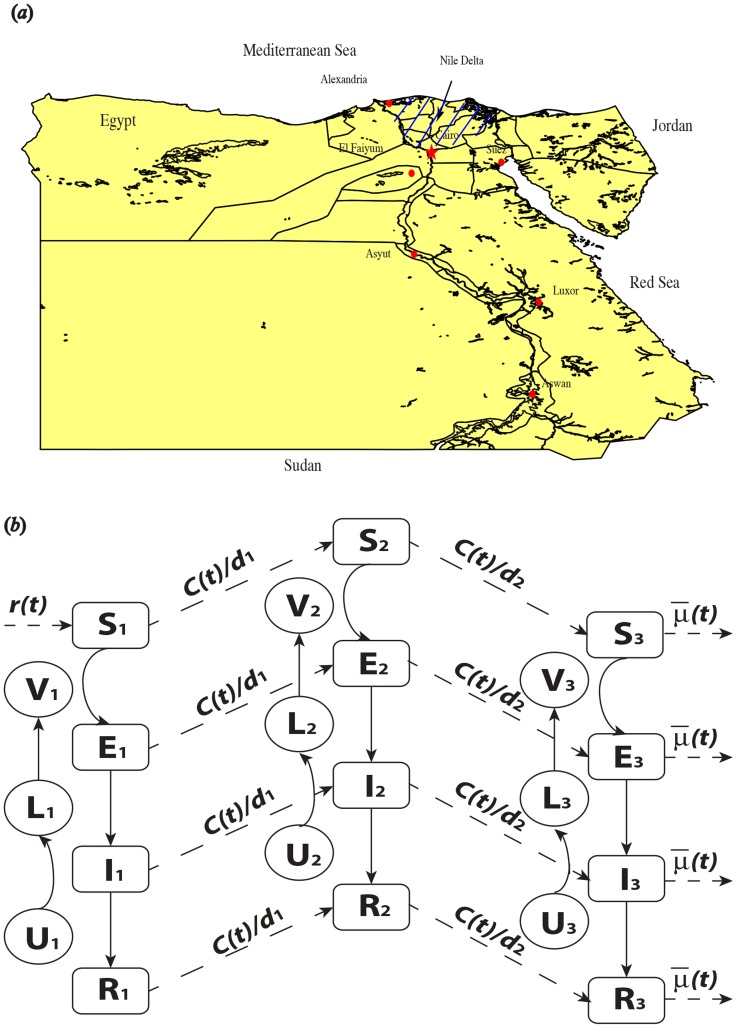
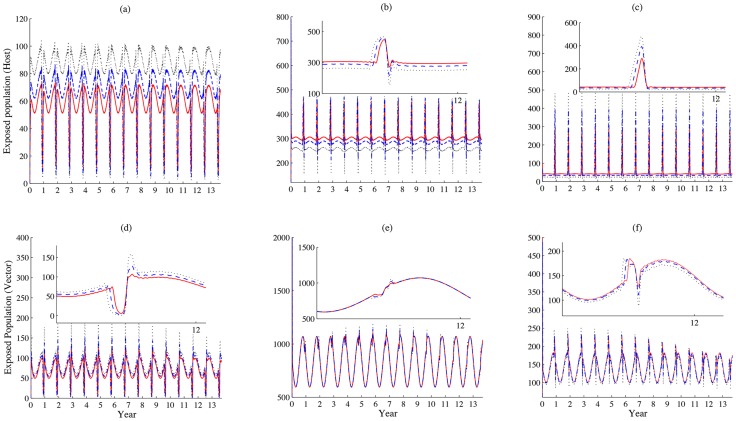
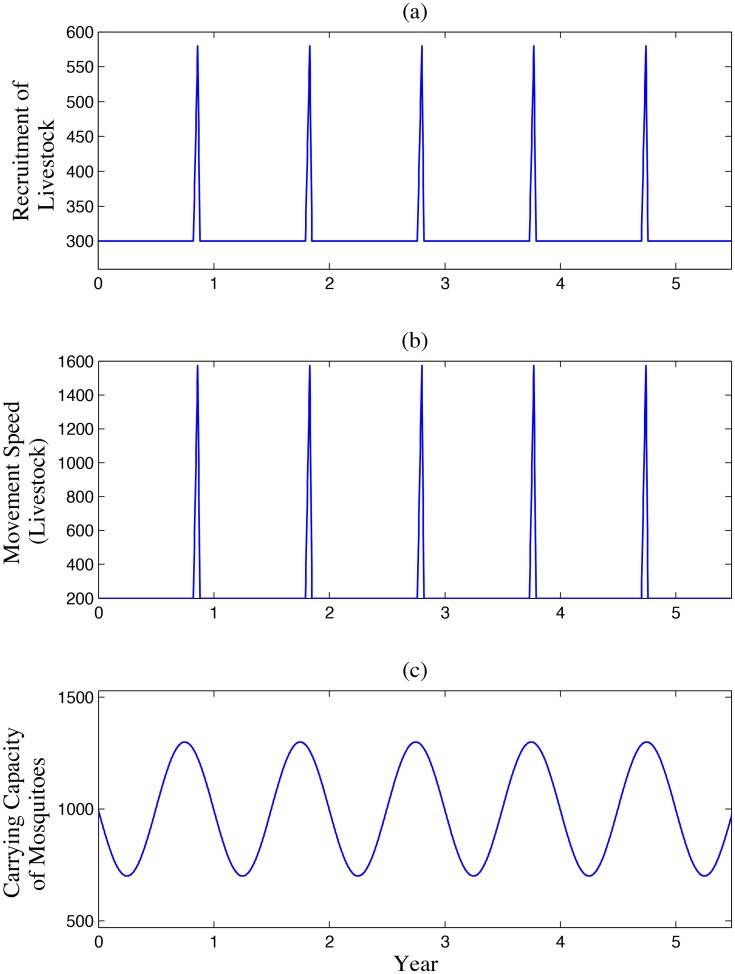
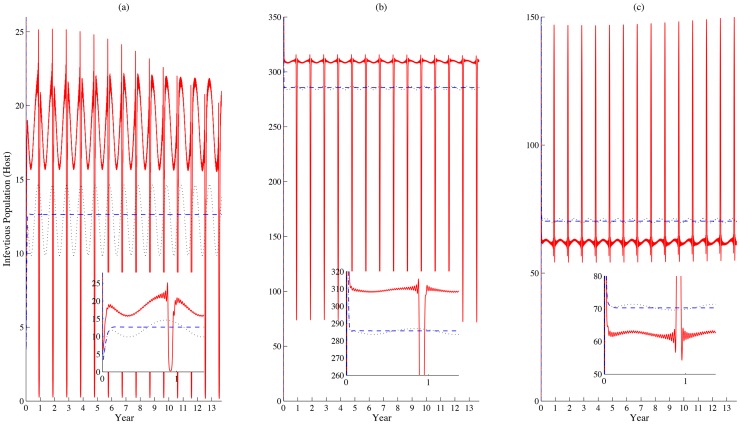
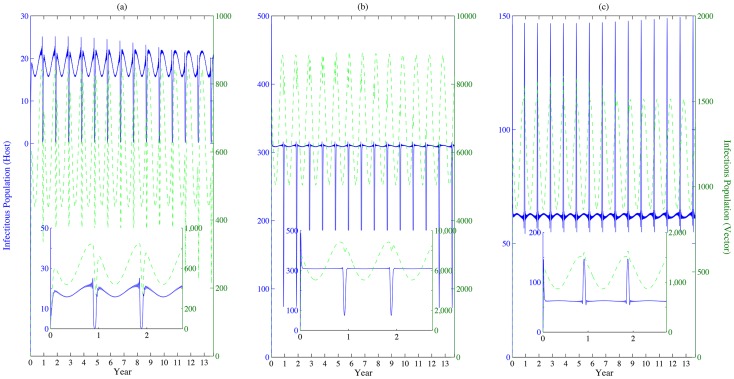
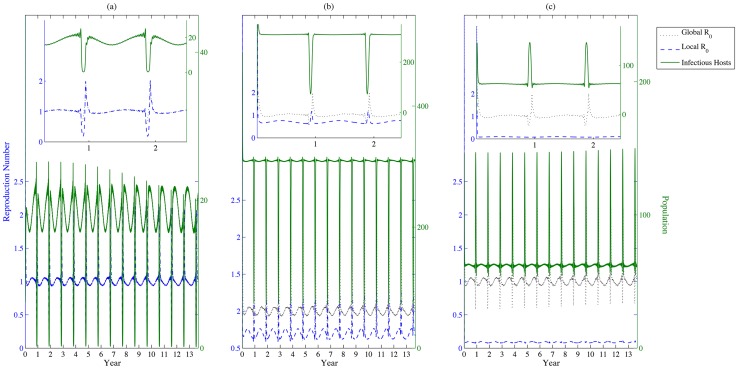
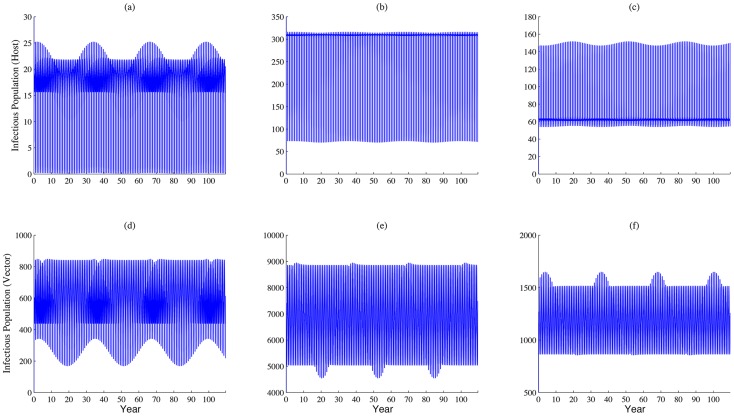
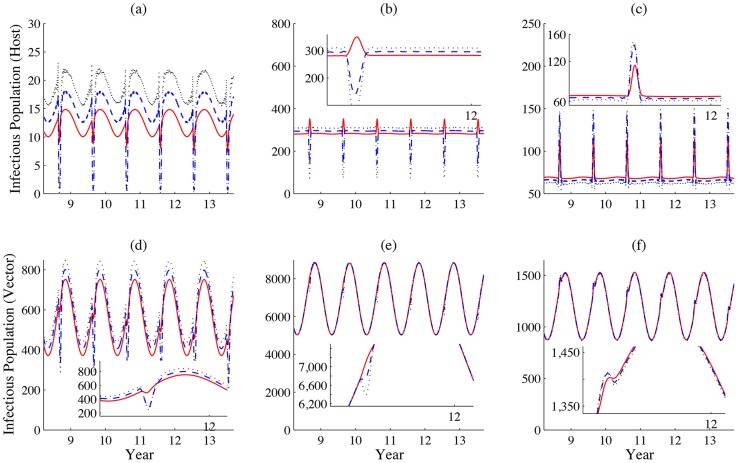
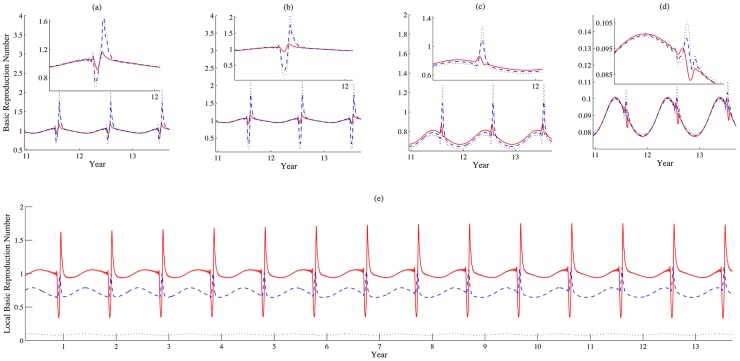
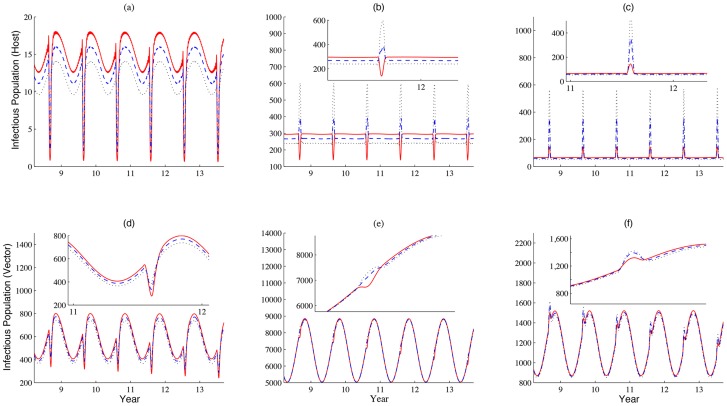
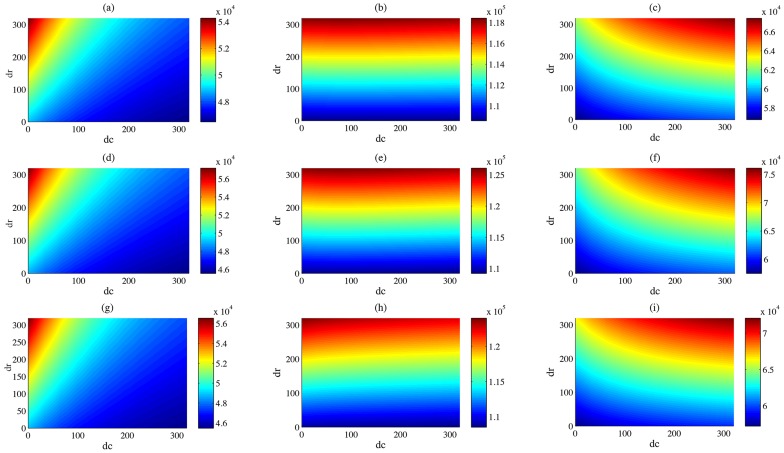
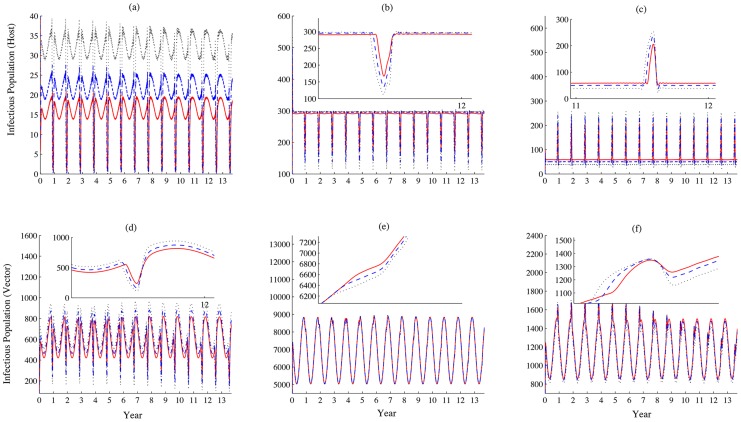
Rift Valley fever (RVF) is an important mosquito-borne viral zoonosis in Africa and the Middle East that causes human deaths and significant economic losses due to huge incidences of death and abortion among infected livestock. Outbreaks of RVF are sporadic and associated with both seasonal and socioeconomic effects. Here we propose an almost periodic three-patch model to investigate the transmission dynamics of RVF virus (RVFV) among ruminants with spatial movements. Our findings indicate that, in Northeastern Africa, human activities, including those associated with the Eid al Adha feast, along with a combination of climatic factors such as rainfall level and hydrological variations, contribute to the transmission and dispersal of the disease pathogen. Moreover, sporadic outbreaks may occur when the two events occur together: 1) abundant livestock are recruited into areas at risk from RVF due to the demand for the religious festival and 2) abundant numbers of mosquitoes emerge. These two factors have been shown to have impacts on the severity of RVF outbreaks. Our numerical results present the transmission dynamics of the disease pathogen over both short and long periods of time, particularly during the festival time. Further, we investigate the impact on patterns of disease outbreaks in each patch brought by festival- and seasonal-driven factors, such as the number of livestock imported daily, the animal transportation speed from patch to patch, and the death rate induced by ceremonial sacrifices. In addition, our simulations show that when the time for festival preparation starts earlier than usual, the risk of massive disease outbreaks rises, particularly in patch 3 (the place where the religious ceremony will be held).
裂谷热(RVF)是非洲和中东一种重要的蚊媒病毒性人畜共患病,由于受感染牲畜大量死亡和流产,导致人类死亡和重大经济损失。裂谷热疫情呈散发性,与季节和社会经济影响都有关联。在此,我们提出一个几乎周期的三斑块模型,以研究裂谷热病毒(RVFV)在有空间移动的反刍动物中的传播动态。我们的研究结果表明,在非洲东北部,包括与宰牲节盛宴相关的人类活动,以及降雨水平和水文变化等气候因素的综合作用,促成了疾病病原体的传播和扩散。此外,当以下两个事件同时发生时,可能会出现散发性疫情:1)由于宗教节日的需求,大量牲畜被引入裂谷热风险区域;2)出现大量蚊子。这两个因素已被证明会对裂谷热疫情的严重程度产生影响。我们的数值结果呈现了疾病病原体在短期和长期内的传播动态,特别是在节日期间。此外,我们研究了节日和季节驱动因素(如每日进口牲畜数量、动物在斑块间的运输速度以及仪式性宰杀导致的死亡率)对每个斑块疾病爆发模式的影响。此外,我们的模拟结果表明,当节日准备时间比往常提前开始时,大规模疾病爆发的风险会增加,特别是在斑块3(将举行宗教仪式的地方)。