Lu Wei, Jiang Jian-Ping, Hu Jue, Wang Jue, Zheng Ming-Zhi
Department of Vascular Surgery, Quzhou People's Hospital, Quzhou, Zhejiang 324000, P.R. China.
Department of Clinical Medicine, Zhejiang Medical College, Hangzhou, Zhejiang 310053, P.R. China.
Exp Ther Med. 2015 Feb;9(2):377-383. doi: 10.3892/etm.2014.2105. Epub 2014 Dec 3.
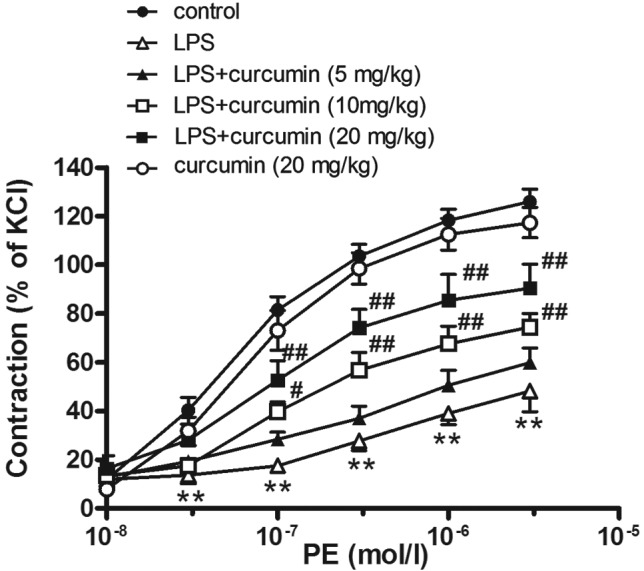
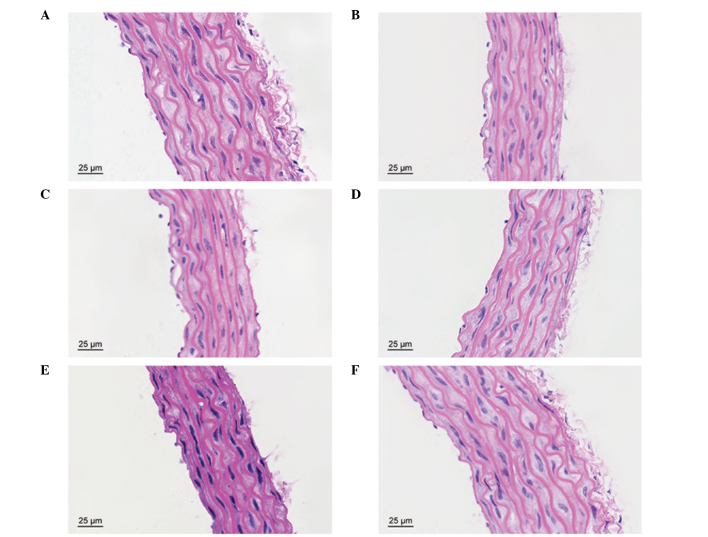
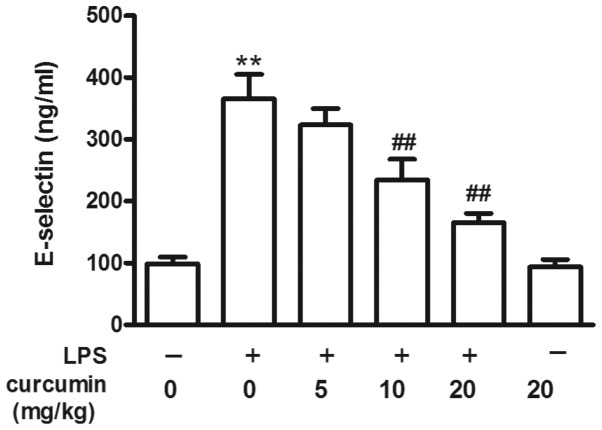
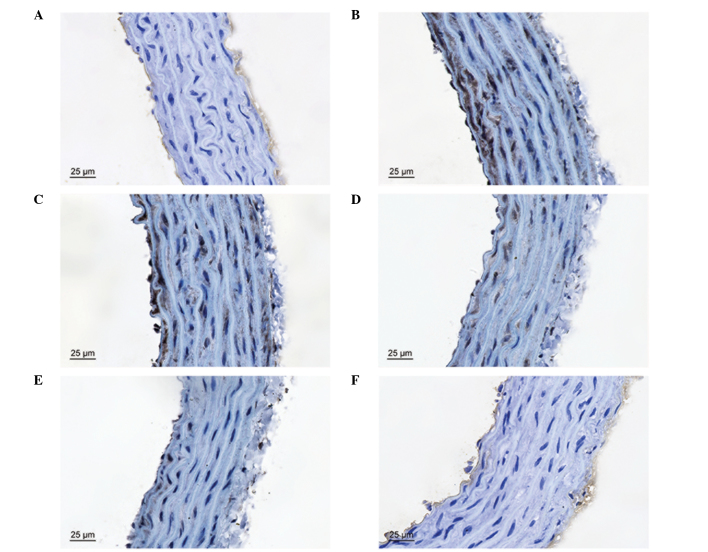
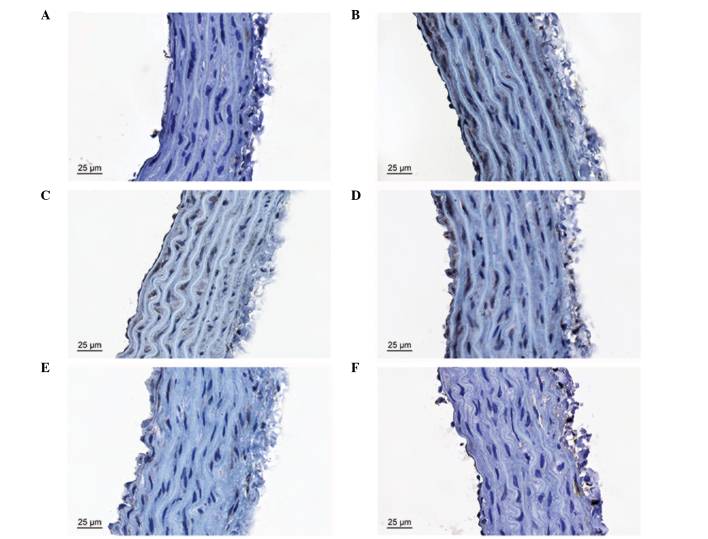
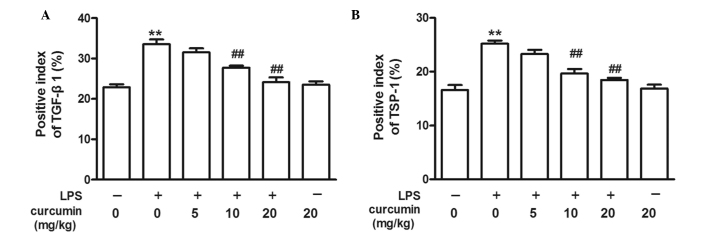
Sepsis is a complex syndrome characterized by the development of progressive dysfunction in multiple organs. The aim of the present study was to investigate the protective effect of curcumin against lipopolysaccharide (LPS)-induced vasoconstrictive dysfunction, and to investigate the possible underlying mechanism. Male Sprague-Dawley rats were randomly divided into the following groups: Control, sepsis and curcumin. A sepsis model was established by an intraperitoneal (i.p.) injection of 5 mg/kg LPS. Thoracic aortic rings obtained from the rats were mounted in an organ bath and the vasoconstriction of the rings was recorded. In addition, the serum E-selectin levels were determined by an enzyme-linked immunosorbent assay. The expression levels of thrombospondin (TSP)-1 and transforming growth factor (TGF)-β1 in the aortic tissue were detected by immunohistochemistry. Vasoconstriction of the aortic rings was found to significantly decrease in the sepsis rats when compared with the control group. However, curcumin (10 or 20 mg/kg, i.p.) prevented the vasoconstrictive dysfunction induced by LPS. The serum level of E-selectin and the expression levels of TSP-1 and TGF-β1 significantly increased in the sepsis rats when compared with the control group rats; however, the levels decreased significantly following treatment with curcumin (10 or 20 mg/kg). Furthermore, hematoxylin and eosin staining revealed that curcumin alleviated the LPS-induced damage in the aortic tunica intima and tunica media. Therefore, the results indicated that curcumin alleviates LPS-induced vasoconstrictive dysfunction in the thoracic aorta of rats. In addition, the inhibition of TSP-1 and TGF-β1 expression may be involved in the mechanism underlying this protective effect.
脓毒症是一种复杂的综合征,其特征是多个器官出现进行性功能障碍。本研究的目的是探讨姜黄素对脂多糖(LPS)诱导的血管收缩功能障碍的保护作用,并研究其可能的潜在机制。将雄性Sprague-Dawley大鼠随机分为以下几组:对照组、脓毒症组和姜黄素组。通过腹腔注射5mg/kg LPS建立脓毒症模型。从大鼠获取胸主动脉环并安装在器官浴槽中,记录血管环的收缩情况。此外,采用酶联免疫吸附测定法测定血清E-选择素水平。通过免疫组织化学检测主动脉组织中血小板反应蛋白(TSP)-1和转化生长因子(TGF)-β1的表达水平。与对照组相比,脓毒症大鼠的主动脉环收缩明显降低。然而,姜黄素(10或20mg/kg,腹腔注射)可预防LPS诱导的血管收缩功能障碍。与对照组大鼠相比,脓毒症大鼠的血清E-选择素水平以及TSP-1和TGF-β1的表达水平显著升高;然而,用姜黄素(10或20mg/kg)治疗后这些水平显著降低。此外,苏木精-伊红染色显示姜黄素减轻了LPS诱导的主动脉内膜和中膜损伤。因此,结果表明姜黄素可减轻LPS诱导的大鼠胸主动脉血管收缩功能障碍。此外,TSP-1和TGF-β1表达的抑制可能参与了这种保护作用的潜在机制。