Hospital Authority Information Technology Services, Health Informatics Section, Hong Kong, China (Hong Kong).
JMIR Med Inform. 2013 Aug 26;1(1):e1. doi: 10.2196/medinform.2766.
A territory-wide Internet-based electronic patient record allows better patient care in different sectors. The engagement of private physicians is one of the major facilitators for implementation, but there is limited information about the current adoption level of electronic medical record (eMR) among private primary care physicians.
This survey measured the adoption level, enabling factors, and hindering factors of eMR, among private physicians in Hong Kong. It also evaluated the key functions and the popularity of electronic systems and vendors used by these private practitioners.
A central registry consisting of 4324 private practitioners was set up. Invitations for self-administered surveys and the completed questionnaires were sent and returned via fax, email, postal mail, and on-site clinic visits. Current users and non-users of eMR system were compared according to their demographic and practice characteristics. Student's t tests and chi-square tests were used for continuous and categorical variables, respectively.
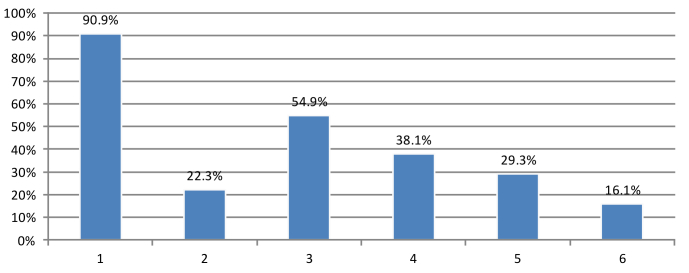
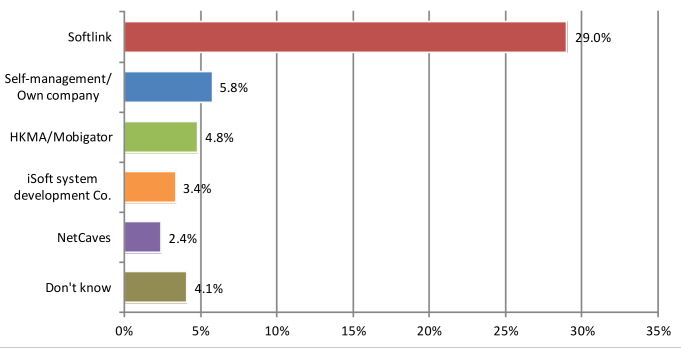
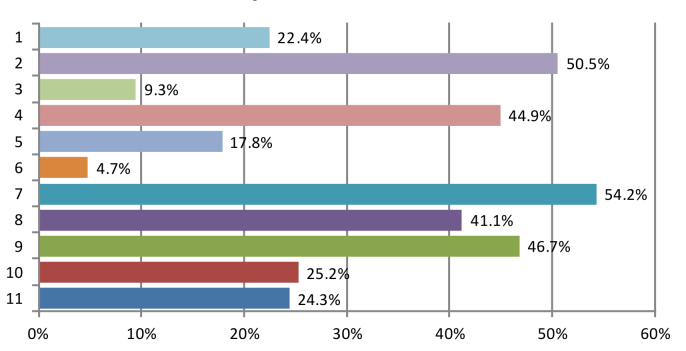
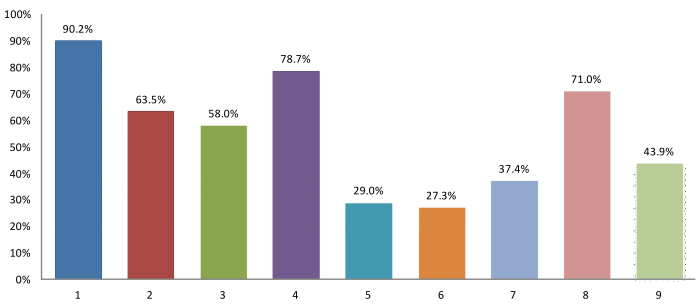
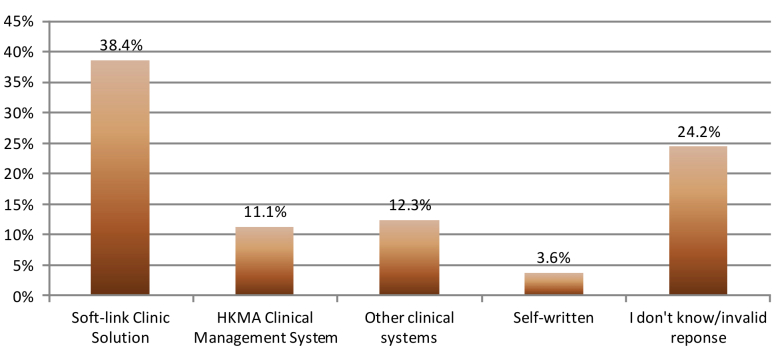
A total of 524 completed surveys (response rate 524/4405 11.90%) were collected. The proportion of using eMR in private clinics was 79.6% (417/524). When compared with non-users, the eMR users were younger (users: 48.4 years SD 10.6 years vs non-users: 61.7 years SD 10.2 years, P<.001); more were female physicians (users: 80/417, 19.2% vs non-users: 14/107, 13.1%, P=.013); possessed less clinical experience (with more than20 years of practice: users: 261/417, 62.6% vs non-user: 93/107, 86.9%, P<.001); fewer worked under a Health Maintenance Organization (users: 347/417, 83.2% vs non-users: 97/107, 90.7%, P<.001) and more worked with practice partners (users: 126/417, 30.2% vs non-users: 4/107, 3.7%, P<.001). Efficiency (379/417, 90.9%) and reduction of medical errors (229/417, 54.9%) were the major enabling factors, while patient-unfriendliness (58/107, 54.2%) and limited consultation time (54/107, 50.5%) were the most commonly reported hindering factors. The key functions of computer software among eMR users consisted of electronic patient registration system (376/417, 90.2%), drug dispensing system (328/417, 78.7%) and electronic drug labels (296/417, 71.0%). SoftLink Clinic Solution was the most popular vendor (160/417, 38.4%).
These findings identified several physician groups who should be targeted for more assistance on eMR installation and its adoption. Future studies should address the barriers of using Internet-based eMR to enhance its adoption.
基于互联网的全港电子病人纪录可改善不同界别的病人护理。私人执业医生的参与是推行电子病历(EMR)的主要促成因素之一,但目前有关私人基层医生采用电子病历的情况,资料有限。
本调查旨在量度香港私人执业医生采用电子病历的情况、有利因素及阻碍因素,并评估这些私人执业者所使用的电子系统及供应商的主要功能和普及程度。
成立了一个由 4324 名私人执业医生组成的中央登记册。邀请他们填写自行设计的问卷,并透过传真、电邮、邮递及亲临诊所交回已填妥的问卷。我们比较了电子病历系统的现时使用者和非使用者在人口统计和执业特征方面的差异。我们分别使用学生 t 检验和卡方检验比较连续变量和分类变量。
共收回 524 份完整的问卷(回应率为 524/4405,即 11.90%)。在私人诊所使用电子病历的比例为 79.6%(417/524)。与非使用者相比,电子病历使用者较年轻(使用者:48.4 岁,标准差 10.6 岁;非使用者:61.7 岁,标准差 10.2 岁,P<.001);较多为女医生(使用者:80/417,19.2%;非使用者:14/107,13.1%,P=.013);拥有较少的临床经验(执业超过 20 年:使用者:261/417,62.6%;非使用者:93/107,86.9%,P<.001);较少在医疗保健组织(使用者:347/417,83.2%;非使用者:97/107,90.7%,P<.001)下执业;较多与执业伙伴一起工作(使用者:126/417,30.2%;非使用者:4/107,3.7%,P<.001)。提高效率(379/417,90.9%)和减少医疗失误(229/417,54.9%)是主要的有利因素,而病人不友好(58/107,54.2%)和有限的就诊时间(54/107,50.5%)是最常报告的阻碍因素。电子病历使用者的电脑软件主要功能包括电子病人登记系统(376/417,90.2%)、发药系统(328/417,78.7%)和电子药物标签(296/417,71.0%)。SoftLink Clinic Solution 是最受欢迎的供应商(160/417,38.4%)。
这些发现确定了一些应针对其提供更多电子病历安装和采用援助的医生群组。未来的研究应针对使用基于互联网的电子病历的障碍进行研究,以提高其采用率。