Department of Surgery, Hepatopancreatobiliary Service, Memorial Sloan Kettering Cancer Center, New York, New York. Department of Surgery, Division of Surgical Oncology, University of Illinois at Chicago, Chicago, Illinois.
Department of Surgery, Hepatopancreatobiliary Service, Memorial Sloan Kettering Cancer Center, New York, New York.
Cancer Immunol Res. 2015 Apr;3(4):380-8. doi: 10.1158/2326-6066.CIR-14-0212. Epub 2015 Jan 19.
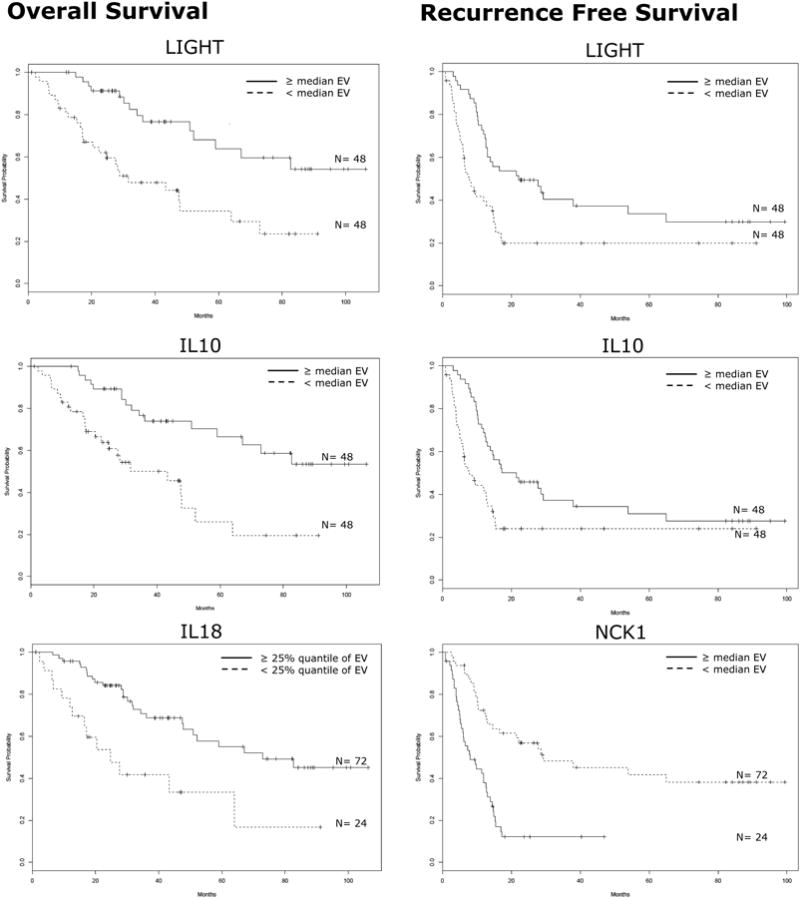
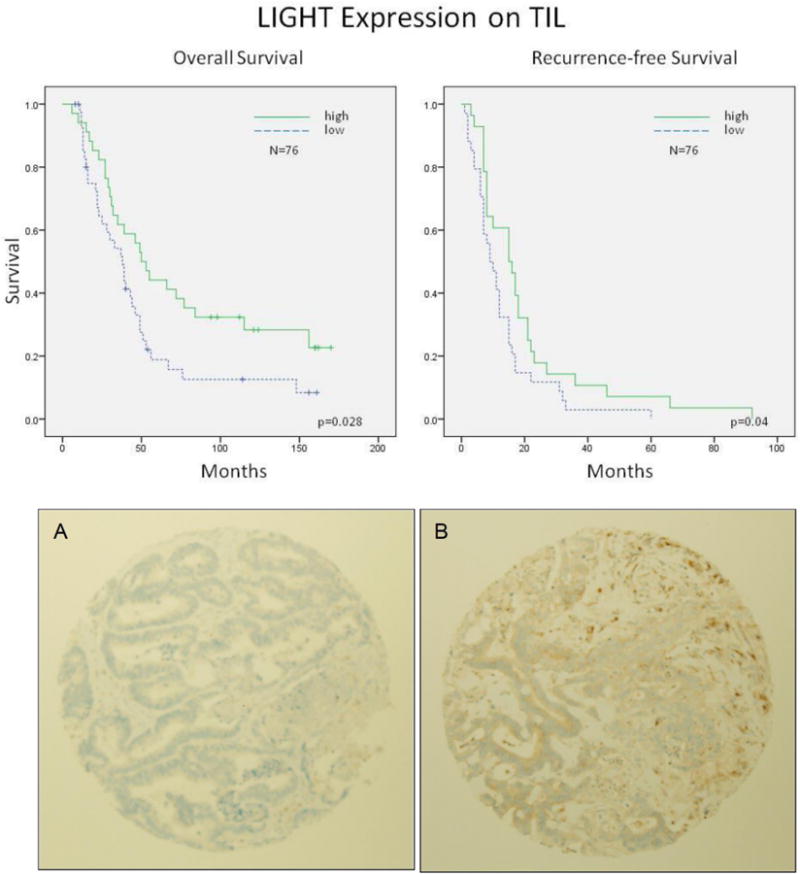
Though immune responses correlate with prognosis in primary colorectal cancer, the role of tumor immunity in metastatic disease is less clear. We hypothesized that patient survival and tumor recurrence correlate with transcriptional evidence of lymphocyte proliferation/activation in resected colorectal cancer liver metastases (CRLM). Microarray gene analysis was performed on liver tumor specimens from 96 patients who underwent resection for CRLM. A Cox proportional hazards model identified genes associated with overall survival (OS) and recurrence-free survival (RFS). Conventional gene ontology (GO) enrichment analysis ranked biologically relevant processes. Survival probabilities of prioritized processes were assessed. Protein expression was validated with immunohistochemistry in an independent set of patients. GO analysis identified and ranked unique biologic processes that correlated with survival. Genes that specifically functioned in the biologic process of "T-cell proliferation" were significant predictors of OS (P = 0.01), and both "T-cell proliferation" and "activation" were highly associated with RFS (P ≤ 0.01). Analysis of genes in these GO categories identified increased TNFSF14/LIGHT expression to be most associated with improved OS and RFS (P ≤ 0.0006). Immunohistochemistry of an independent validation set of CRLM confirmed that both increased tumor-infiltrating lymphocytes (TIL) and higher LIGHT expression on TILs were associated with improved OS and RFS. Differential expression of genes involved in T-cell proliferation/activation was associated with survival outcomes in a large number of surgical patients who underwent resection of CRLM. These biologic functions determined by GO analysis of the tumor microenvironment have identified specific immune-related genes that may be involved in an antitumor immune response.
尽管免疫反应与原发性结直肠癌的预后相关,但肿瘤免疫在转移性疾病中的作用尚不清楚。我们假设患者的生存和肿瘤复发与切除的结直肠癌肝转移(CRLM)中的淋巴细胞增殖/激活的转录证据相关。对 96 例接受 CRLM 切除的患者的肝肿瘤标本进行了微阵列基因分析。Cox 比例风险模型确定了与总生存(OS)和无复发生存(RFS)相关的基因。传统的基因本体(GO)富集分析对生物学相关过程进行了排序。评估了优先处理过程的生存概率。在独立的患者组中使用免疫组织化学验证了蛋白质表达。GO 分析确定并排列了与生存相关的独特生物学过程。专门在“T 细胞增殖”生物学过程中起作用的基因是 OS 的重要预测因子(P=0.01),并且“T 细胞增殖”和“激活”均与 RFS 高度相关(P≤0.01)。对这些 GO 类别的基因分析表明,TNFSF14/LIGHT 表达增加与 OS 和 RFS 的改善最相关(P≤0.0006)。对 CRLM 的独立验证组的免疫组织化学分析证实,肿瘤内浸润淋巴细胞(TIL)增加和 TIL 上 LIGHT 表达增加均与 OS 和 RFS 的改善相关。T 细胞增殖/激活相关基因的差异表达与接受 CRLM 切除的大量手术患者的生存结果相关。肿瘤微环境的 GO 分析确定的这些生物学功能已确定了可能参与抗肿瘤免疫反应的特定免疫相关基因。