Luo Yujie, Zhang Xiaona, Luo Zhengrong, Zhang Qinglin, Liu Jihong
Key Laboratory of Horticultural Plant Biology (MOE), College of Horticulture and Forestry Science, Huazhong Agricultural University, Wuhan, 430070, China.
BMC Plant Biol. 2015 Jan 21;15:11. doi: 10.1186/s12870-014-0400-6.
microRNAs (miRNAs) have been shown to play key roles in regulating gene expression at post-transcriptional level, but miRNAs associated with natural deastringency of Chinese pollination-constant nonastringent persimmon (CPCNA) have never been identified.
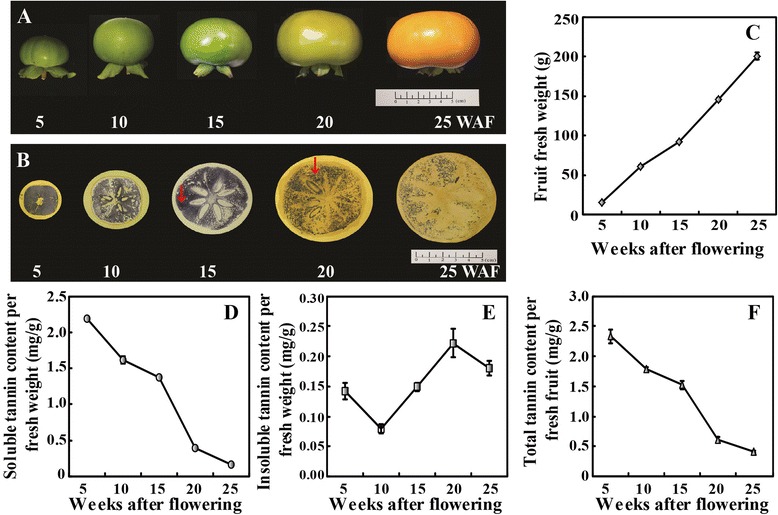
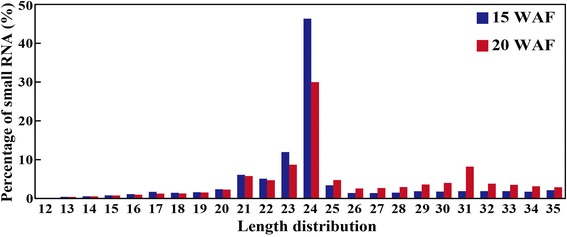
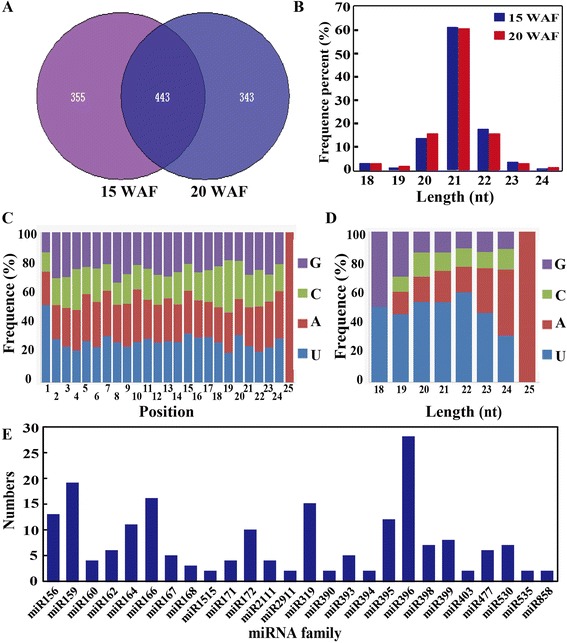
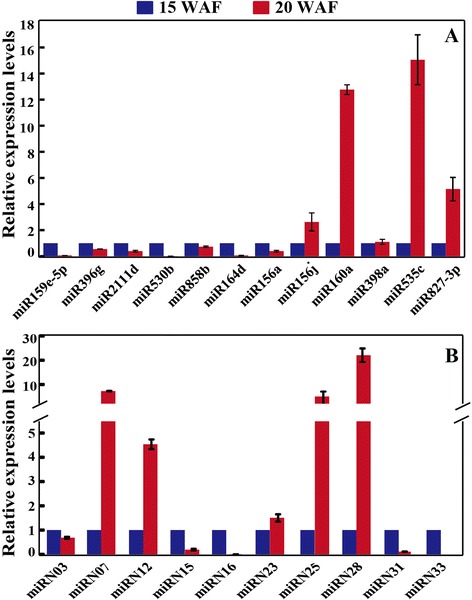
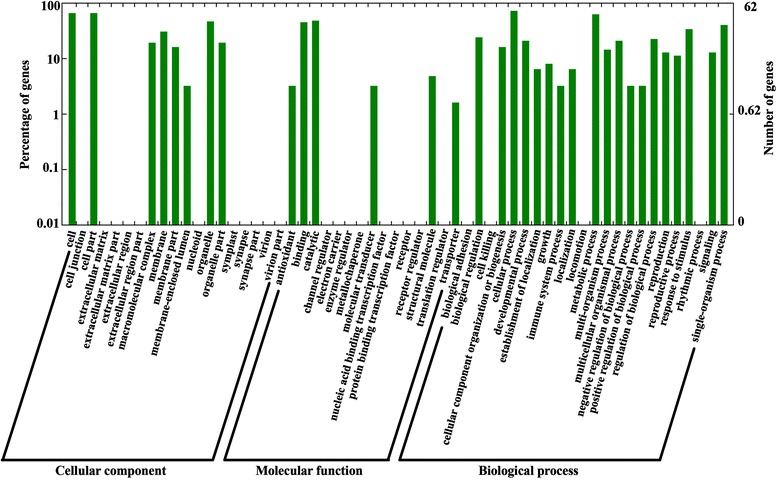
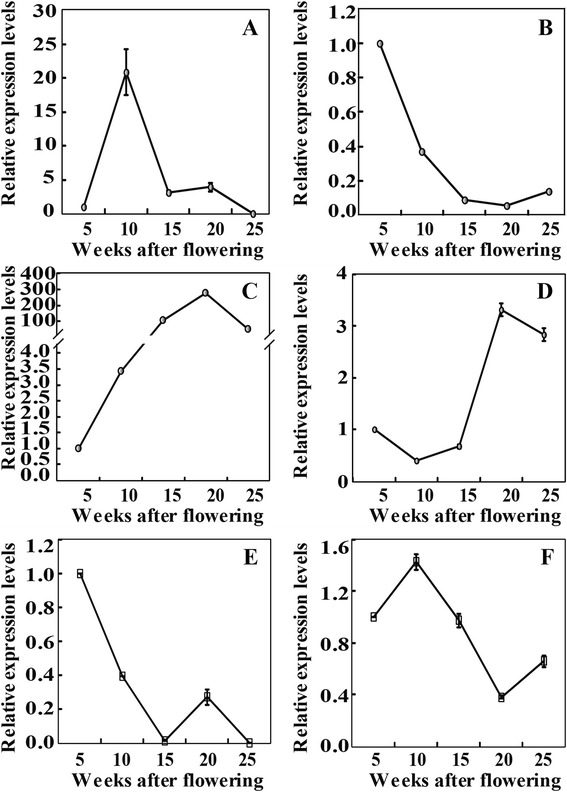
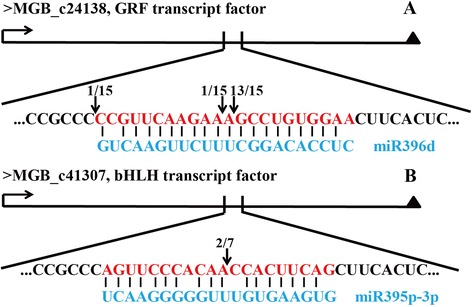
In this study, two small RNA libraries established using 'Eshi No. 1' persimmon (Diospyros kaki Thunb.; CPCNA) fruits collected at 15 and 20 weeks after flowering (WAF) were sequenced through Solexa platform in order to identify miRNAs involved in deastringency of persimmon. A total of 6,258,487 and 7,634,169 reads were generated for the libraries at 15 and 20 WAF, respectively. Based on sequence similarity and hairpin structure prediction, 236 known miRNAs belonging to 65 miRNA families and 33 novel miRNAs were identified using persimmon transcriptome data. Sixty one of the characterized miRNAs exhibited pronounced difference in the expression levels between 15 and 20 WAF, 17 up-regulated and 44 down-regulated. Expression profiles of 12 conserved and 10 novel miRNAs were validated by stem loop qRT-PCR. A total of 198 target genes were predicted for the differentially expressed miRNAs, including several genes that have been reported to be implicated in proanthocyanidins (PAs, or called tannin) accumulation. In addition, two transcription factors, a GRF and a bHLH, were experimentally confirmed as the targets of dka-miR396 and dka-miR395, respectively.
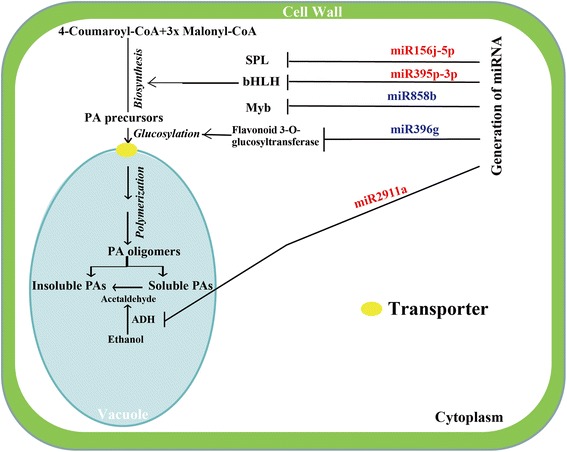
Taken together, the present data unraveled several important miRNAs in persimmon. Among them, miR395p-3p and miR858b may regulate bHLH and MYB, respectively, which are influenced by SPL under the control of miR156j-5p and in turn regulate the structural genes involved in PA biosynthesis. In addition, dka-miR396g and miR2911a may regulate their target genes associated with glucosylation and insolubilization of tannin precursors. All of these miRNAs might play key roles in the regulation of (de)astringency in persimmon fruits under normal development conditions.
微小RNA(miRNA)已被证明在转录后水平调控基因表达中发挥关键作用,但与中国授粉后恒定非涩柿(CPCNA)自然脱涩相关的miRNA尚未被鉴定出来。
在本研究中,为了鉴定参与柿脱涩的miRNA,使用开花后15周和20周(WAF)采集的‘鄂柿1号’柿(Diospyros kaki Thunb.;CPCNA)果实构建了两个小RNA文库,并通过Solexa平台进行测序。15周和20周WAF文库分别产生了6,258,487和7,634,169条读数。基于序列相似性和发夹结构预测,利用柿转录组数据鉴定出属于65个miRNA家族的236个已知miRNA和33个新miRNA。其中61个已鉴定的miRNA在15周和20周WAF之间的表达水平表现出明显差异,17个上调,44个下调。通过茎环qRT-PCR验证了12个保守miRNA和10个新miRNA的表达谱。共预测了198个差异表达miRNA的靶基因,包括几个据报道与原花青素(PAs,或称为单宁)积累有关的基因。此外,实验证实两个转录因子,一个GRF和一个bHLH,分别是dka-miR396和dka-miR395的靶标。
综上所述,本研究数据揭示了柿中几个重要的miRNA。其中,miR395p-3p和miR858b可能分别调控bHLH和MYB,它们在miR156j-5p的控制下受SPL影响,进而调控参与PA生物合成的结构基因。此外,dka-miR396g和miR2911a可能调控其与单宁前体糖基化和不溶性相关的靶基因。所有这些miRNA可能在正常发育条件下柿果实脱涩调控中发挥关键作用。