Qiao Xin, Li Meng, Li Leiting, Yin Hao, Wu Juyou, Zhang Shaoling
College of Horticulture, State Key Laboratory of Crop Genetics and Germplasm Enhancement, Nanjing Agricultural University, Nanjing, 210095, China.
BMC Plant Biol. 2015 Jan 21;15:12. doi: 10.1186/s12870-014-0401-5.
Heat shock transcription factors (Hsfs), which act as important transcriptional regulatory proteins in eukaryotes, play a central role in controlling the expression of heat-responsive genes. At present, the genomes of Chinese white pear ('Dangshansuli') and five other Rosaceae fruit crops have been fully sequenced. However, information about the Hsfs gene family in these Rosaceae species is limited, and the evolutionary history of the Hsfs gene family also remains unresolved.
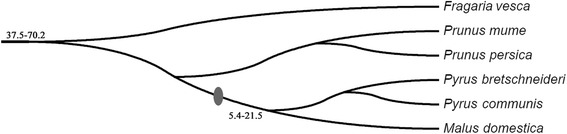
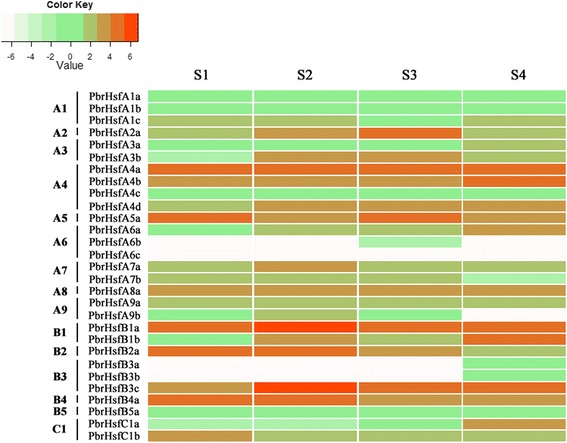
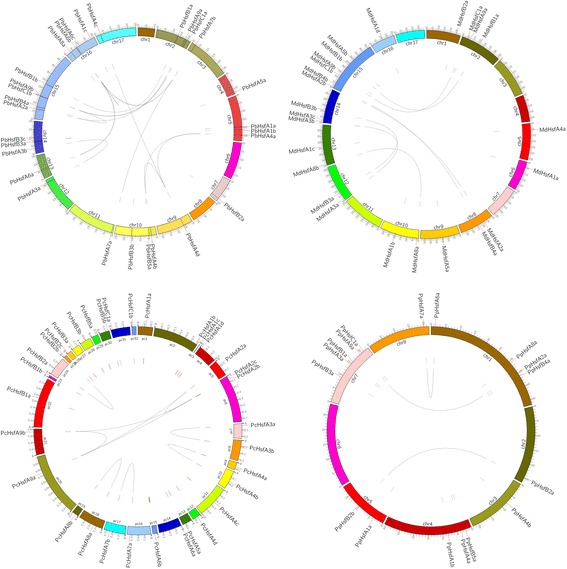
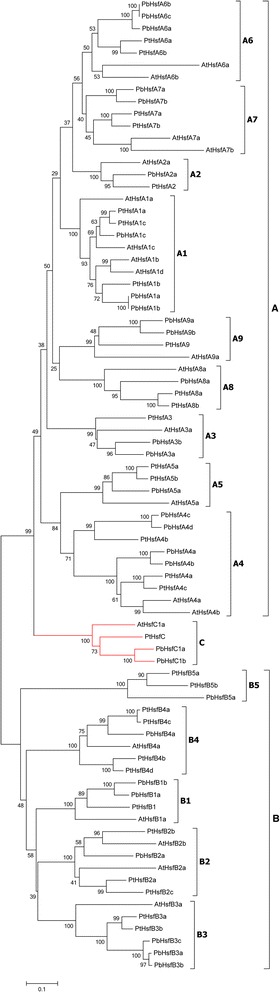
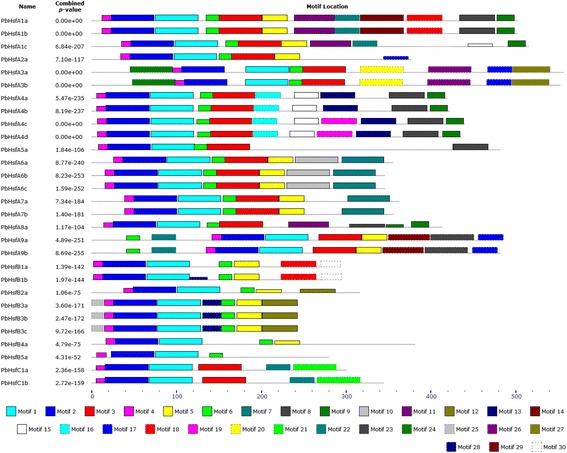
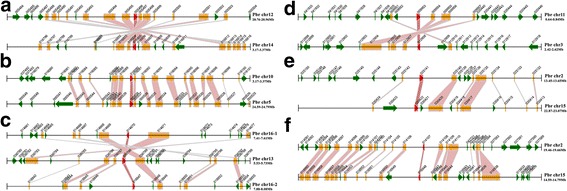
In this study, 137 Hsf genes were identified from six Rosaceae species (Pyrus bretschneideri, Malus × domestica, Prunus persica, Fragaria vesca, Prunus mume, and Pyrus communis), 29 of which came from Chinese white pear, designated as PbHsf. Based on the structural characteristics and phylogenetic analysis of these sequences, the Hsf family genes could be classified into three main groups (classes A, B, and C). Segmental and dispersed duplications were the primary forces underlying Hsf gene family expansion in the Rosaceae. Most of the PbHsf duplicated gene pairs were dated back to the recent whole-genome duplication (WGD, 30-45 million years ago (MYA)). Purifying selection also played a critical role in the evolution of Hsf genes. Transcriptome data demonstrated that the expression levels of the PbHsf genes were widely different. Six PbHsf genes were upregulated in fruit under naturally increased temperature.
A comprehensive analysis of Hsf genes was performed in six Rosaceae species, and 137 full length Hsf genes were identified. The results presented here will undoubtedly be useful for better understanding the complexity of the Hsf gene family and will facilitate functional characterization in future studies.
热休克转录因子(Hsfs)作为真核生物中重要的转录调节蛋白,在控制热响应基因的表达中起核心作用。目前,中国白梨(‘砀山酥梨’)和其他五种蔷薇科果树作物的基因组已完成全测序。然而,关于这些蔷薇科物种中Hsfs基因家族的信息有限,并且Hsfs基因家族的进化历史也尚未明确。
在本研究中,从六种蔷薇科物种(白梨、苹果、桃、草莓、梅和西洋梨)中鉴定出137个Hsf基因,其中29个来自中国白梨,命名为PbHsf。基于这些序列的结构特征和系统发育分析,Hsf家族基因可分为三个主要组(A类、B类和C类)。片段重复和分散重复是蔷薇科中Hsf基因家族扩张的主要驱动力。大多数PbHsf重复基因对可追溯到最近的全基因组复制(WGD,3000 - 4500万年前)。纯化选择在Hsf基因的进化中也起着关键作用。转录组数据表明,PbHsf基因的表达水平差异很大。六个PbHsf基因在自然升温的果实中上调。
对六种蔷薇科物种的Hsf基因进行了全面分析,鉴定出137个全长Hsf基因。本文给出的结果无疑将有助于更好地理解Hsf基因家族的复杂性,并将促进未来研究中的功能表征。