State Key Laboratory of Crop Genetics and Germplasm Enhancement, Centre of Pear Engineering Technology Research, Nanjing Agricultural University, Nanjing, China.
BMC Genomics. 2020 Sep 7;21(1):612. doi: 10.1186/s12864-020-07032-9.
Lysin motif-containing proteins (LYP), which act as pattern-recognition receptors, play central roles in growth, node formation, and responses to biotic stresses. The sequence of Chinese white pear genome (cv. 'Dangshansuli') along with the seven other species of Rosaceae has already been reported. Although, in these fruit crops, there is still a lack of clarity regarding the LYP family genes and their evolutionary history.
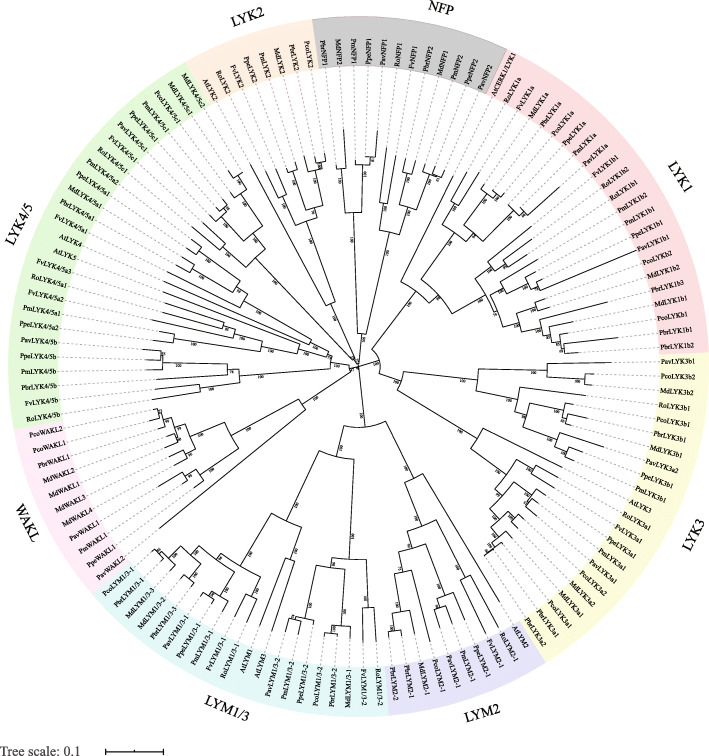
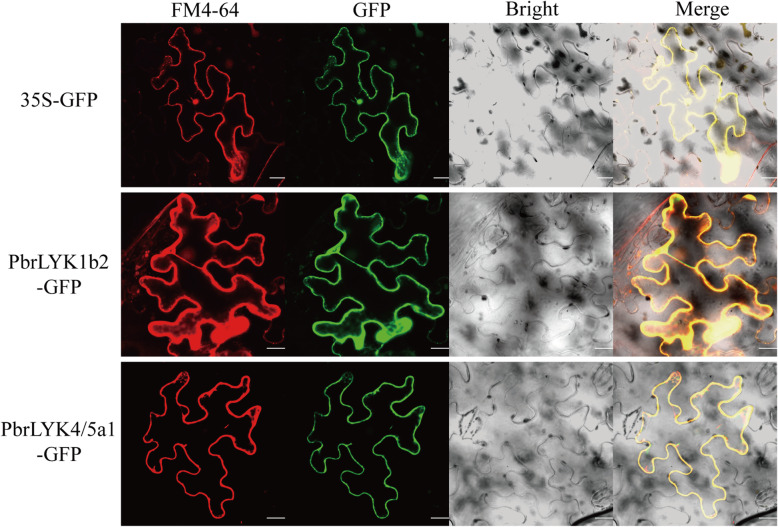
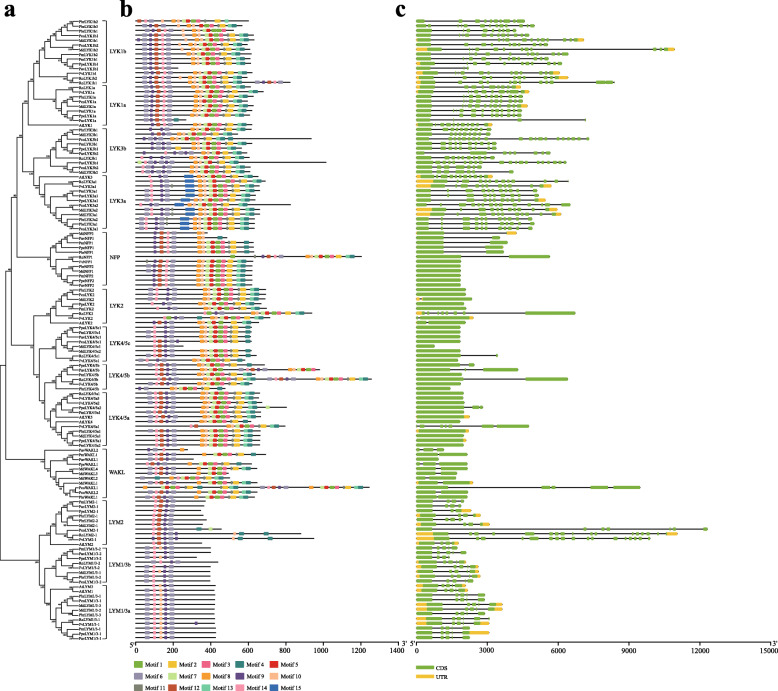
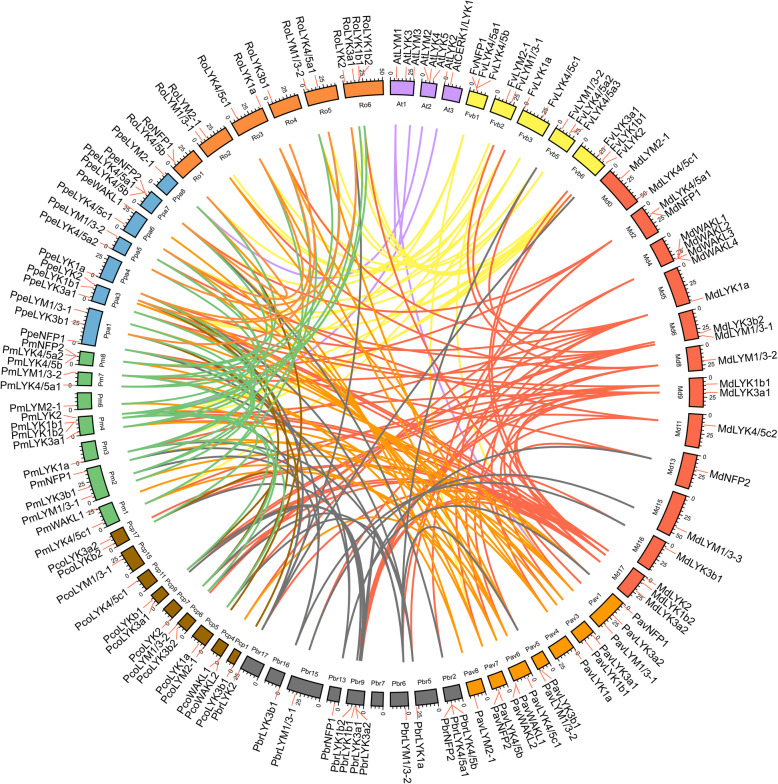
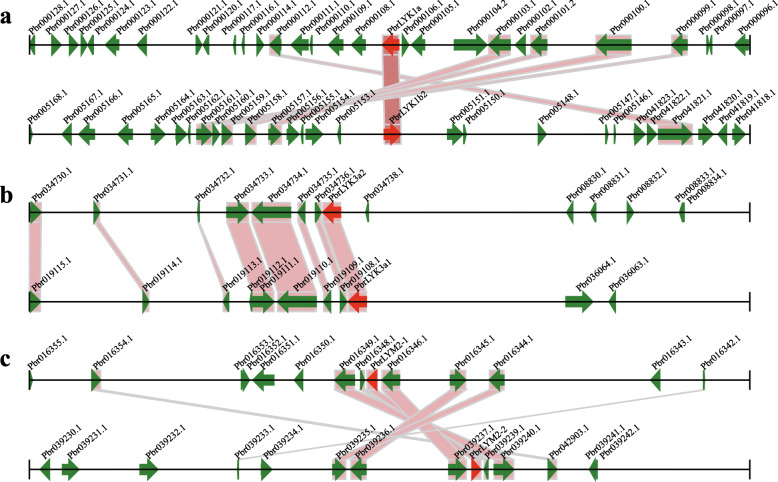
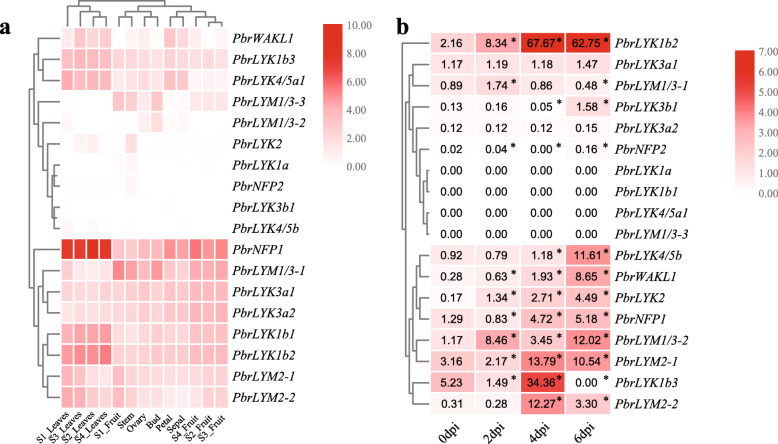
In the existing study, eight Rosaceae species i.e., Pyrus communis, Prunus persica, Fragaria vesca, Pyrus bretschneideri, Prunus avium, Prunus mume, Rubus occidentalis, and Malus × domestica were evaluated. Here, we determined a total of 124 LYP genes from the underlined Rosaceae species. While eighteen of the genes were from Chinese white pear, named as PbrLYPs. According to the LYPs structural characteristics and their phylogenetic analysis, those genes were classified into eight groups (group LYK1, LYK2, LYK3, LYK4/5, LYM1/3, LYM2, NFP, and WAKL). Dispersed duplication and whole-genome duplication (WGD) were found to be the most contributing factors of LYP family expansion in the Rosaceae species. More than half of the duplicated PbrLYP gene pairs were dated back to the ancient WGD (~ 140 million years ago (MYA)), and PbrLYP genes have experienced long-term purifying selection. The transcriptomic results indicated that the PbrLYP genes expression was tissue-specific. Most PbrLYP genes showed differential expression in leaves under fungal pathogen infection with two of them located in the plasmalemma.
A comprehensive analysis identified 124 LYP genes in eight Rosaceae species. Our findings have provided insights into the functions and characteristics of the Rosaceae LYP genes and a guide for the identification of other candidate LYPs for further genetic improvements for pathogen-resistance in higher plants.
富含亮氨酸重复序列的蛋白(LYP)作为模式识别受体,在生长、节点形成和生物胁迫响应中发挥核心作用。中国白梨基因组(cv. 'Dangshansuli')与其他七个蔷薇科物种的序列已经被报道。然而,在这些水果作物中,LYP 家族基因及其进化历史仍然不清楚。
在本研究中,评估了八个蔷薇科物种,即梨、桃、草莓、西洋梨、欧洲甜樱桃、李、悬钩子和苹果。我们从上述蔷薇科物种中总共确定了 124 个 LYP 基因。其中 18 个基因来自中国白梨,命名为 PbrLYPs。根据 LYP 的结构特征和系统发育分析,这些基因被分为八个组(LYK1、LYK2、LYK3、LYK4/5、LYM1/3、LYM2、NFP 和 WAKL)。分散复制和全基因组复制(WGD)被发现是蔷薇科物种 LYP 家族扩张的最主要因素。超过一半的 PbrLYP 基因对可以追溯到古老的 WGD(~1.4 亿年前),并且 PbrLYP 基因经历了长期的纯化选择。转录组学结果表明,PbrLYP 基因的表达具有组织特异性。大多数 PbrLYP 基因在叶片受到真菌病原体感染时表现出差异表达,其中两个基因位于质膜上。
对八个蔷薇科物种进行了全面分析,确定了 124 个 LYP 基因。我们的研究结果为蔷薇科 LYP 基因的功能和特征提供了深入了解,并为鉴定其他候选 LYP 基因提供了指导,以进一步提高高等植物的抗病性。