Almomen Aliyah, Cho Sungpil, Yang Chieh-Hsiang, Li Zhengzheng, Jarboe Elke A, Peterson C Matthew, Huh Kang Moo, Janát-Amsbury Margit M
Department of Obstetrics and Gynecology, Division of Gynecologic Oncology, University of Utah, Salt Lake City, Utah, 84132, USA.
Pharm Res. 2015 Jul;32(7):2266-79. doi: 10.1007/s11095-014-1616-8. Epub 2015 Jan 22.
The safe and functional delivery of progesterone through the vaginal route remains an unmet clinical need. The purpose of this work is to prepare a new progesterone (P4) gel for vaginal application using a thermosensitive mucoadhesive polymer, glycol chitin (GC).
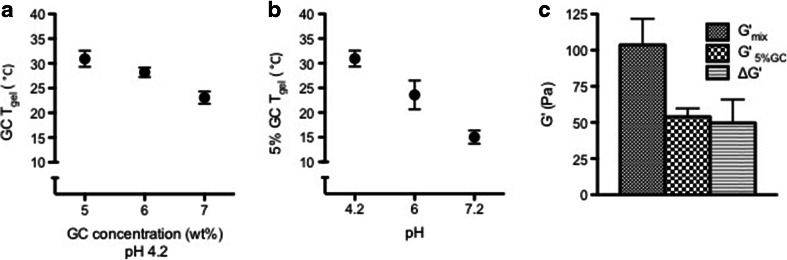
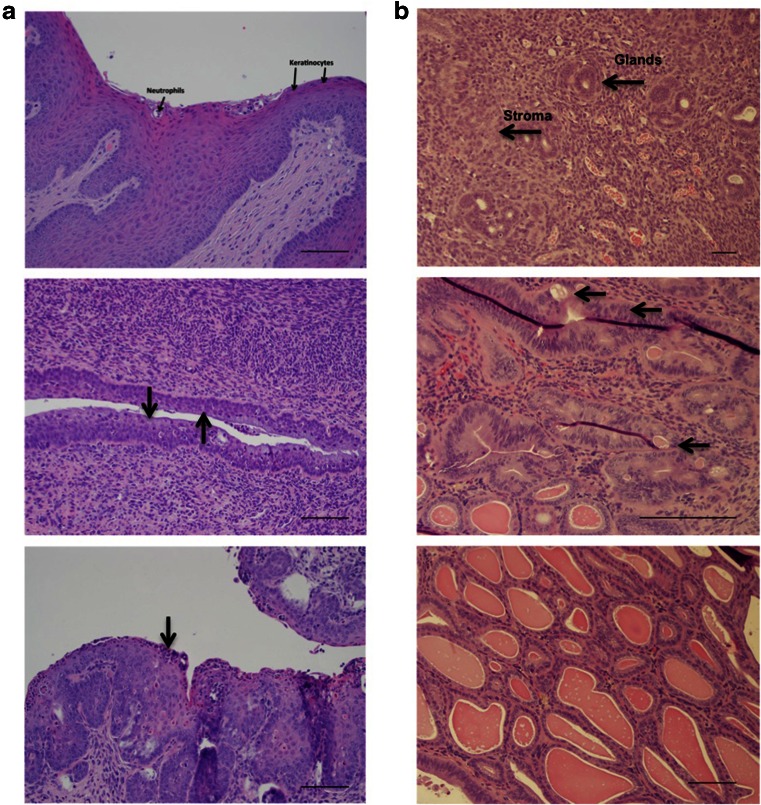
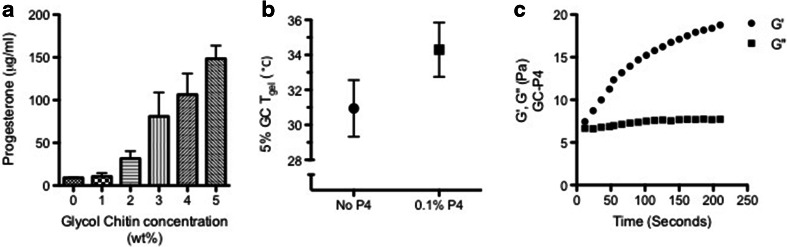
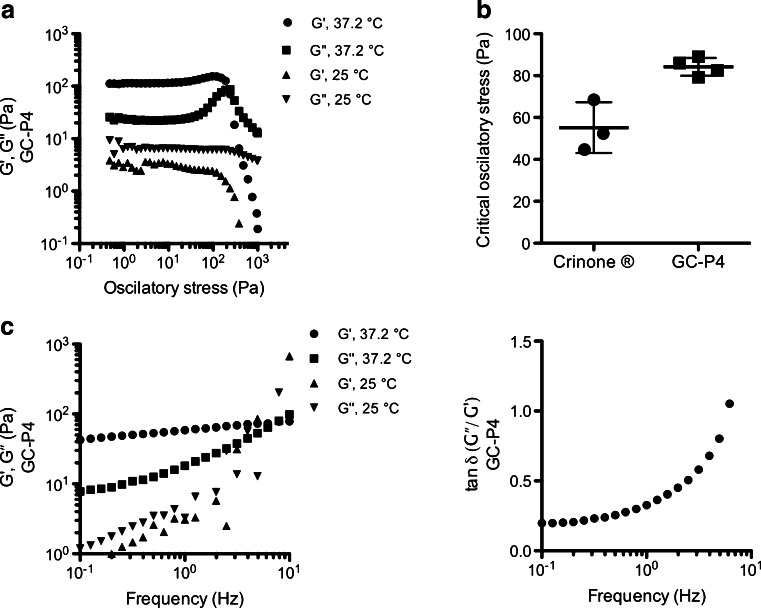
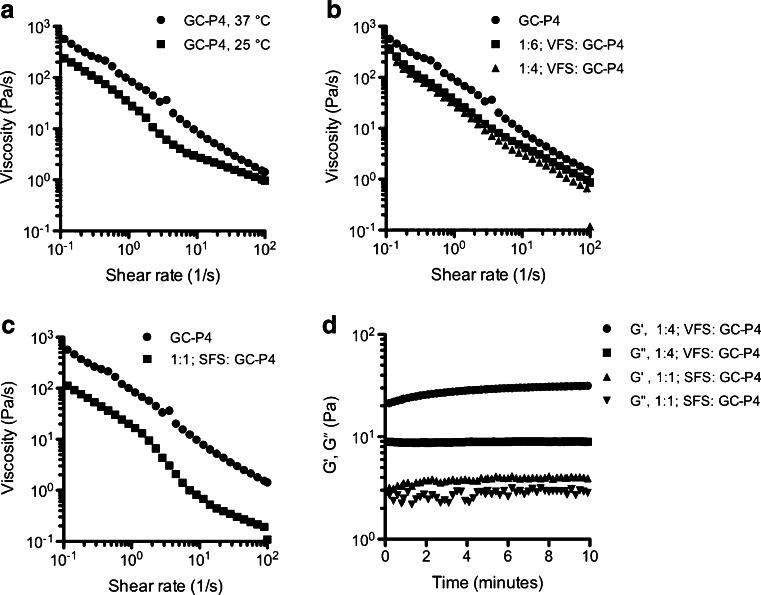
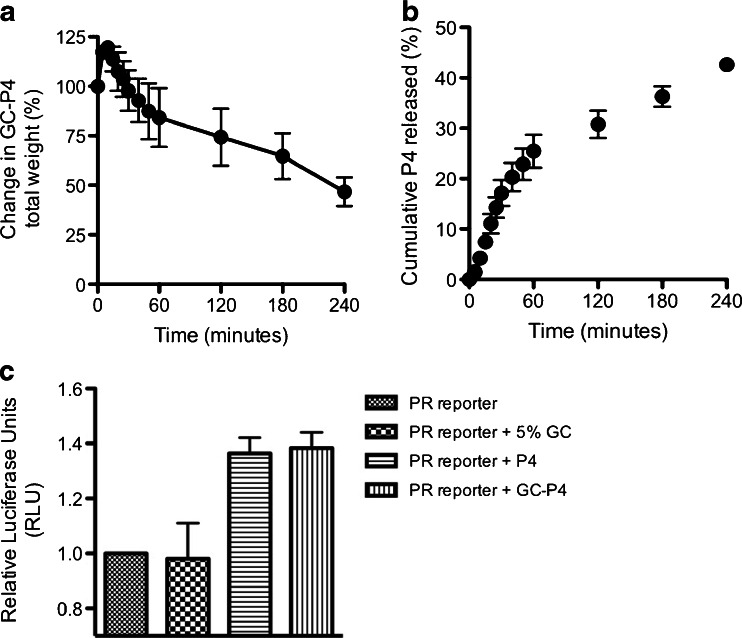
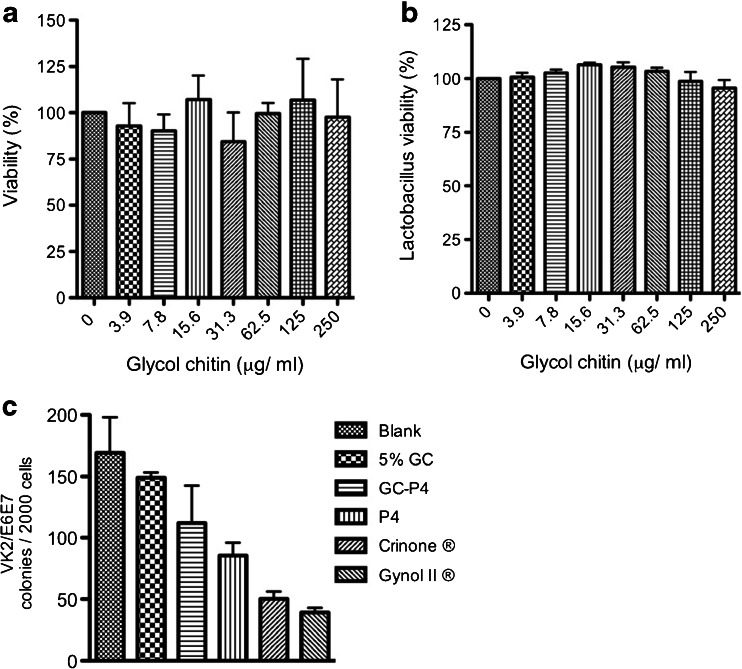
Thermogelling, mucoadhesive, mechanical, and viscoelastic properties of GC and the new formulation were evaluated using rheometry. In vitro release profile and the bioactivity of P4 were determined using vaginal fluid simulant (VFS) pH 4.2, and PR-reporter gene assay, respectively. In vitro safety of the formulations was tested using (VK2/E6E7) vaginal epithelial cell line and Lactobacillus Crispatus. Finally, in vivo safety and the efficacy of this formulation were evaluated using an endometrial hypoplasia mouse model.
Results shows the aqueous solution of 5%; (w/v) GC loaded with 0.1%; (w/v) P4 prepared in pH 4.2, (GC-P4), forms a thermosensitive mucoadhesive hydrogel and can maintain stable physical properties at 37 °C. GC-P4 gel release 50% of P4 in 4 h after exposure to VFS, and no significant decrease in % viability of VK2/E6E7 or Lactobacillus was found after exposure to 5% GC or GC-P4. GC-P4 does not exhibit obvious toxicities to vaginal tissue in vivo even after repeated application. Efficacy studies indicated that GC-P4 was capable of preventing the progression of simple endometrial hyperplasia (SEH) to complex atypical endometrial hyperplasia (CAEH) in vivo.
Results indicates that GC-P4 retains many characteristics for an effective vaginal delivery system for P4. Therefore we believe that GC-P4 formulation is a promising alternative to current vaginal P4 formulation.
通过阴道途径安全且有效地递送孕酮仍然是一项尚未满足的临床需求。本研究的目的是使用热敏性粘膜粘附聚合物——乙二醇壳聚糖(GC)制备一种新型的用于阴道给药的孕酮(P4)凝胶。
使用流变仪评估GC和新制剂的热凝胶化、粘膜粘附性、机械性能和粘弹性。分别使用pH 4.2的阴道液模拟物(VFS)和PR报告基因测定法测定P4的体外释放曲线和生物活性。使用(VK2/E6E7)阴道上皮细胞系和卷曲乳杆菌测试制剂的体外安全性。最后,使用子宫内膜发育不全小鼠模型评估该制剂的体内安全性和疗效。
结果表明,在pH 4.2条件下制备的含0.1%(w/v)P4的5%(w/v)GC水溶液(GC-P4)形成热敏性粘膜粘附水凝胶,并能在37°C下保持稳定的物理性质。GC-P4凝胶在暴露于VFS后4小时内释放50%的P4,暴露于5% GC或GC-P4后,VK2/E6E7或乳杆菌的活力百分比没有显著下降。即使重复应用,GC-P4在体内对阴道组织也未表现出明显毒性。疗效研究表明,GC-P4能够在体内预防单纯性子宫内膜增生(SEH)进展为复杂性非典型子宫内膜增生(CAEH)。
结果表明,GC-P4保留了作为P4有效阴道给药系统的许多特性。因此,我们认为GC-P4制剂是当前阴道用P4制剂的一个有前景的替代品。