Huang Ning, Chen Xiong, Krishna Rajamani, Jiang Donglin
Department of Materials Molecular Science, Institute for Molecular Science, National Institutes of Natural Sciences, 5-1 Higashiyama, Myodaiji, Okazaki 444-8787 (Japan).
Angew Chem Int Ed Engl. 2015 Mar 2;54(10):2986-90. doi: 10.1002/anie.201411262. Epub 2015 Jan 22.
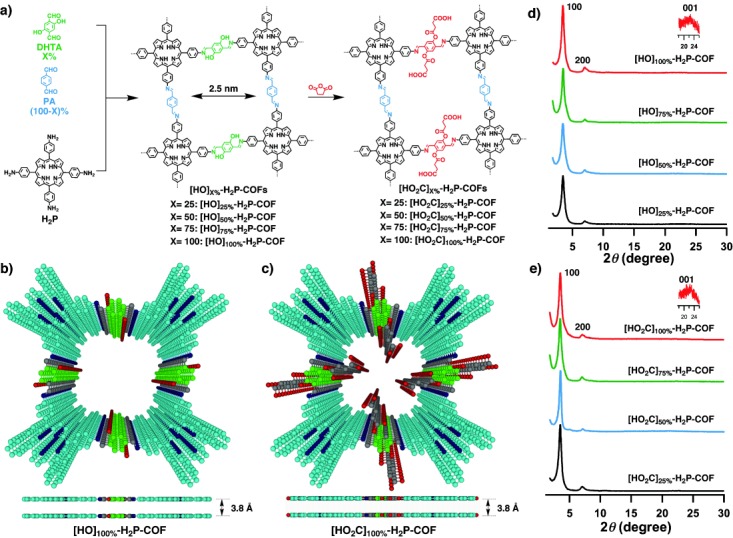
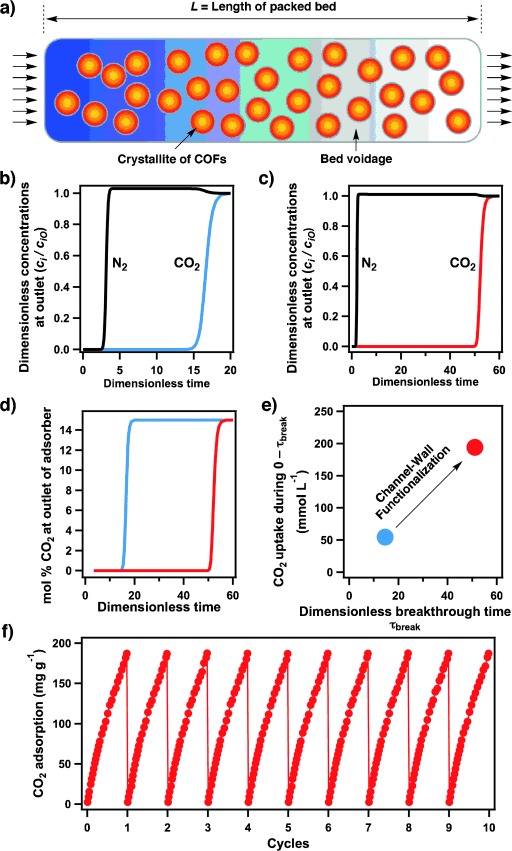
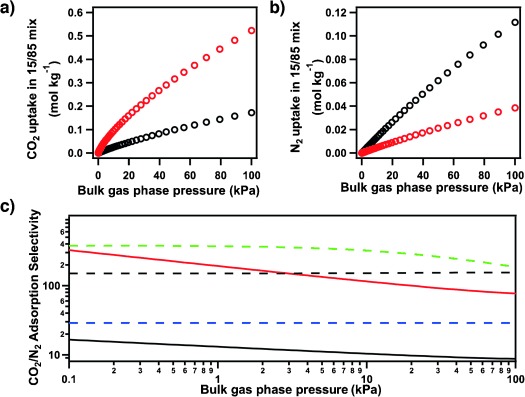
Ordered open channels found in two-dimensional covalent organic frameworks (2D COFs) could enable them to adsorb carbon dioxide. However, the frameworks' dense layer architecture results in low porosity that has thus far restricted their potential for carbon dioxide adsorption. Here we report a strategy for converting a conventional 2D COF into an outstanding platform for carbon dioxide capture through channel-wall functionalization. The dense layer structure enables the dense integration of functional groups on the channel walls, creating a new version of COFs with high capacity, reusability, selectivity, and separation productivity for flue gas. These results suggest that channel-wall functional engineering could be a facile and powerful strategy to develop 2D COFs for high-performance gas storage and separation.
在二维共价有机框架(2D COF)中发现的有序开放通道可使其吸附二氧化碳。然而,这些框架的致密层结构导致孔隙率较低,迄今为止限制了它们在二氧化碳吸附方面的潜力。在此,我们报告了一种通过通道壁功能化将传统2D COF转化为出色的二氧化碳捕获平台的策略。致密层结构能够使功能基团在通道壁上密集整合,从而创建出具有高容量、可重复使用性、选择性以及烟道气分离效率的新型COF。这些结果表明,通道壁功能工程可能是开发用于高性能气体存储和分离的2D COF的一种简便而有效的策略。