Lisboa Sabrina F, Gomes Felipe V, Silva Andréia L, Uliana Daniela L, Camargo Laura H A, Guimarães Francisco S, Cunha Fernando Q, Joca Sâmia R L, Resstel Leonardo B M
Department of Pharmacology, Medical School of Ribeirão Preto (Drs Lisboa, Gomes, Silva, Cunha, and Resstel, Ms Uliana and Ms Camargo), Department of Pharmacology, School of Pharmaceutical Sciences of Ribeirão Preto (Dr Joca), and Center for Interdisciplinary Research on Applied Neurosciences, University of São Paulo, Brazil (Drs Lisboa, Gomes, Guimarães, Joca, and Resstel).
Int J Neuropsychopharmacol. 2015 Jan 24;18(8):pyv005. doi: 10.1093/ijnp/pyv005.
Inducible or neuronal nitric oxide synthase gene deletion increases or decreases anxiety-like behavior in mice, respectively. Since nitric oxide and endocannabinoids interact to modulate defensive behavior, the former effect could involve a compensatory increase in basal brain nitric oxide synthase activity and/or changes in the endocannabinoid system. Thus, we investigated the expression and extinction of contextual fear conditioning of inducible nitric oxide knockout mice and possible involvement of endocannabinoids in these responses.
We evaluated the effects of a preferential neuronal nitric oxide synthase inhibitor, 7-nitroindazol, nitric oxide synthase activity, and mRNA changes of nitrergic and endocannabinoid systems components in the medial prefrontal cortex and hippocampus of wild-type and knockout mice. The effects of URB597, an inhibitor of the fatty acid amide hydrolase enzyme, which metabolizes the endocannabinoid anandamide, WIN55,212-2, a nonselective cannabinoid agonist, and AM281, a selective CB1 antagonist, on contextual fear conditioning were also evaluated.
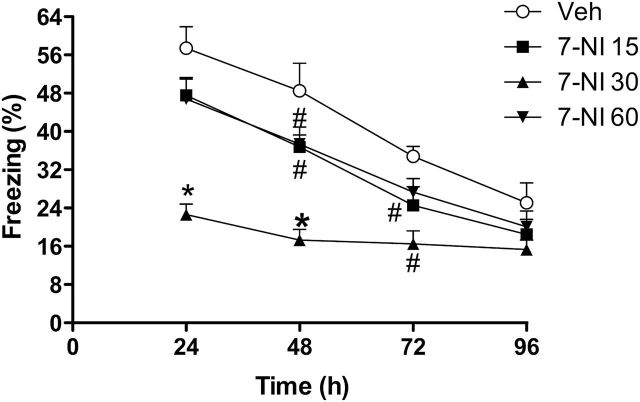
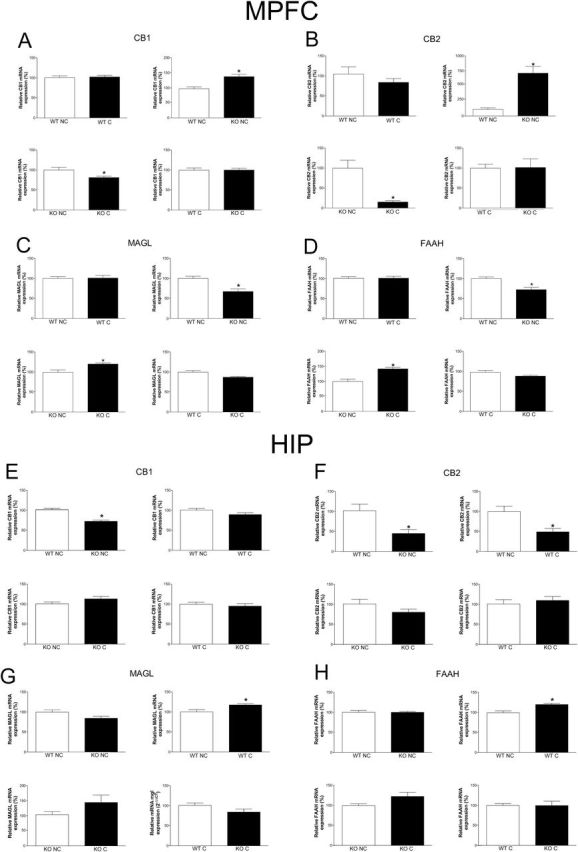
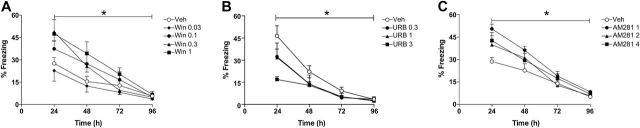
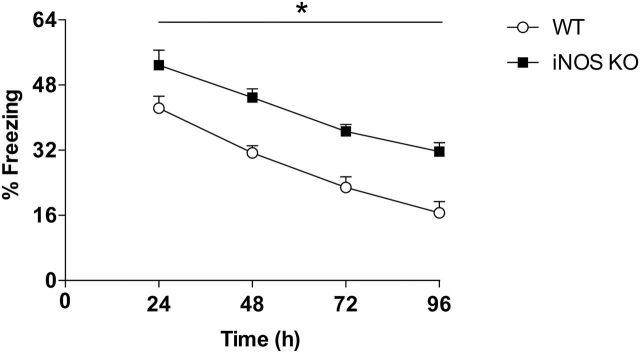
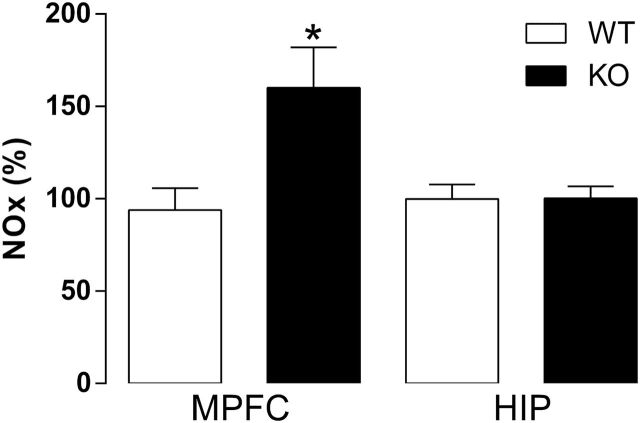
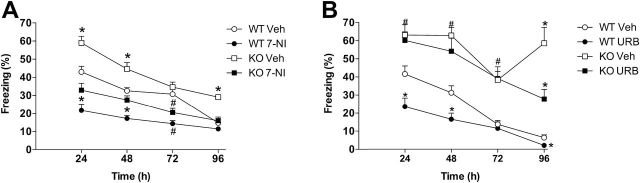
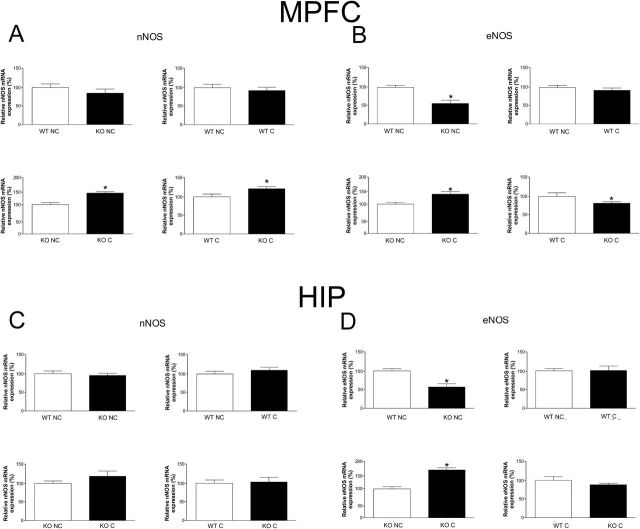
Contextual fear conditioning expression was similar in wild-type and knockout mice, but the latter presented extinction deficits and increased basal nitric oxide synthase activity in the medial prefrontal cortex. 7-Nitroindazol decreased fear expression and facilitated extinction in wild-type and knockout mice. URB597 decreased fear expression in wild-type and facilitated extinction in knockout mice, whereas WIN55,212-2 and AM281 increased it in wild-type mice. Nonconditioned knockout mice showed changes in the mRNA expression of nitrergic and endocannabinoid system components in the medial prefrontal cortex and hippocampus that were modified by fear conditioning.
These data reinforce the involvement of the nitric oxide and endocannabinoids (anandamide) in stress-related disorders and point to a deregulation of the endocannabinoid system in situations where nitric oxide signaling is increased.
诱导型或神经元型一氧化氮合酶基因缺失分别会增加或降低小鼠的焦虑样行为。由于一氧化氮和内源性大麻素相互作用以调节防御行为,前一种效应可能涉及基础脑一氧化氮合酶活性的代偿性增加和/或内源性大麻素系统的变化。因此,我们研究了诱导型一氧化氮敲除小鼠情境恐惧条件反射的表达和消退情况,以及内源性大麻素在这些反应中的可能作用。
我们评估了一种选择性神经元一氧化氮合酶抑制剂7-硝基吲唑、一氧化氮合酶活性以及野生型和敲除小鼠内侧前额叶皮质和海马中氮能和内源性大麻素系统成分的mRNA变化的影响。还评估了脂肪酸酰胺水解酶(该酶可代谢内源性大麻素花生四烯乙醇胺)抑制剂URB597、非选择性大麻素激动剂WIN55,212-2和选择性CB1拮抗剂AM281对情境恐惧条件反射的影响。
野生型和敲除小鼠的情境恐惧条件反射表达相似,但敲除小鼠存在消退缺陷,且内侧前额叶皮质的基础一氧化氮合酶活性增加。7-硝基吲唑降低了野生型和敲除小鼠的恐惧表达并促进了消退。URB597降低了野生型小鼠的恐惧表达并促进了敲除小鼠的消退,而WIN55,212-2和AM281增加了野生型小鼠的恐惧表达。未进行条件反射的敲除小鼠在内侧前额叶皮质和海马中氮能和内源性大麻素系统成分的mRNA表达发生了变化,这些变化因恐惧条件反射而改变。
这些数据强化了一氧化氮和内源性大麻素(花生四烯乙醇胺)与应激相关障碍的关联,并指出在一氧化氮信号增强的情况下内源性大麻素系统失调。