Harvey Allison G, Soehner Adriane M, Kaplan Kate A, Hein Kerrie, Lee Jason, Kanady Jennifer, Li Descartes, Rabe-Hesketh Sophia, Ketter Terence A, Neylan Thomas C, Buysse Daniel J
Department of Psychology, University of California, Berkeley.
Department of Psychiatry, School of Medicine, University of California, San Francisco.
J Consult Clin Psychol. 2015 Jun;83(3):564-77. doi: 10.1037/a0038655. Epub 2015 Jan 26.
To determine if a treatment for interepisode bipolar disorder I patients with insomnia improves mood state, sleep, and functioning.
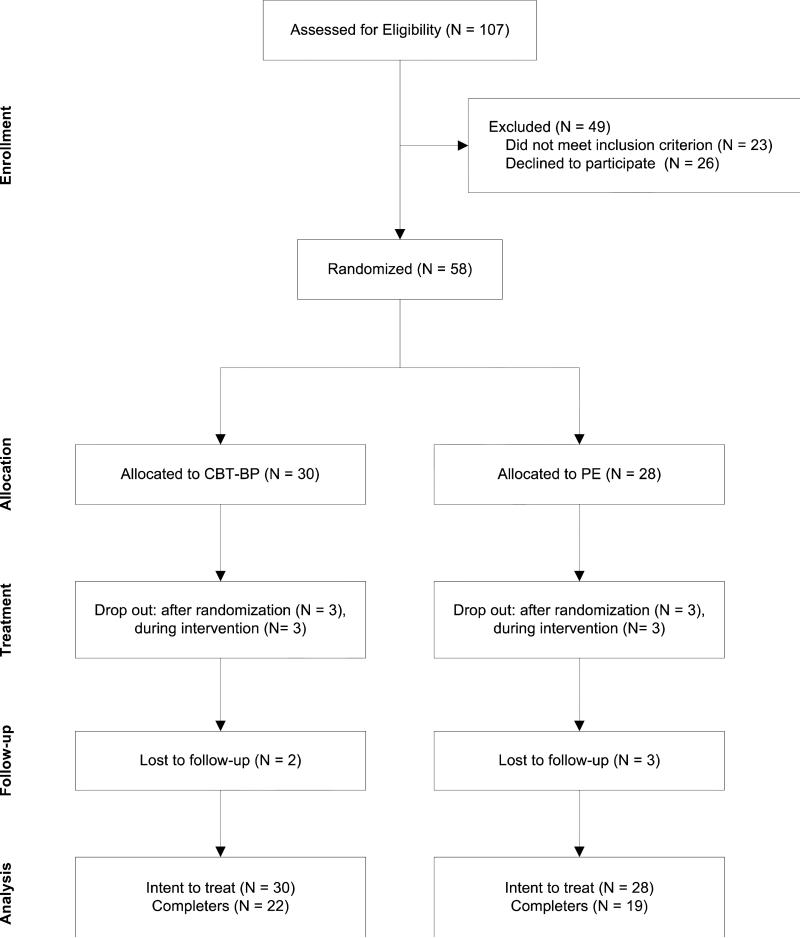
Alongside psychiatric care, interepisode bipolar disorder I participants with insomnia were randomly allocated to a bipolar disorder-specific modification of cognitive behavior therapy for insomnia (CBTI-BP; n = 30) or psychoeducation (PE; n = 28) as a comparison condition. Outcomes were assessed at baseline, the end of 8 sessions of treatment, and 6 months later. This pilot was conducted to determine initial feasibility and generate effect size estimates.
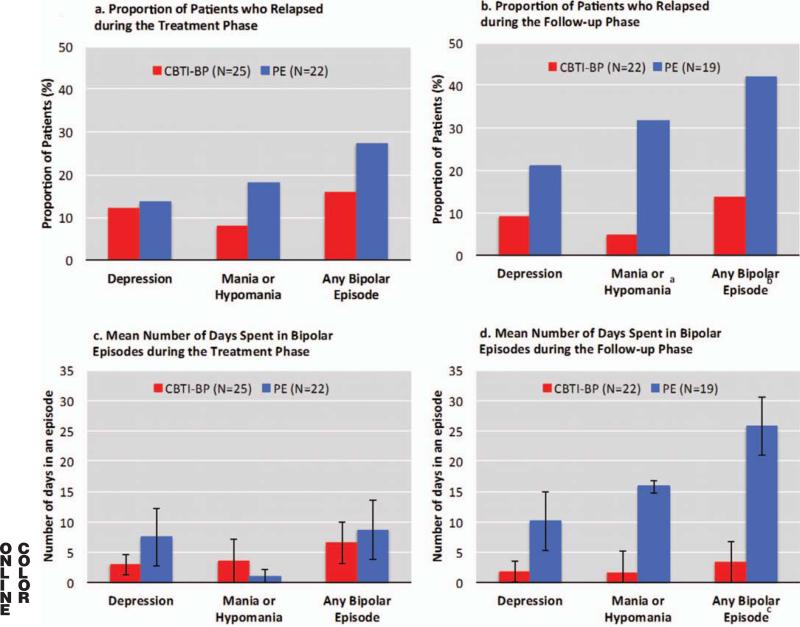
During the 6-month follow-up, the CBTI-BP group had fewer days in a bipolar episode relative to the PE group (3.3 days vs. 25.5 days). The CBTI-BP group also experienced a significantly lower hypomania/mania relapse rate (4.6% vs. 31.6%) and a marginally lower overall mood episode relapse rate (13.6% vs. 42.1%) compared with the PE group. Relative to PE, CBTI-BP reduced insomnia severity and led to higher rates of insomnia remission at posttreatment and marginally higher rates at 6 months. Both CBTI-BP and PE showed statistically significant improvement on selected sleep and functional impairment measures. The effects of treatment were well sustained through follow-up for most outcomes, although some decline on secondary sleep benefits was observed.
CBTI-BP was associated with reduced risk of mood episode relapse and improved sleep and functioning on certain outcomes in bipolar disorder. Hence, sleep disturbance appears to be an important pathway contributing to bipolar disorder. The need to develop bipolar disorder-specific sleep diary scoring standards is highlighted.
确定针对伴有失眠的I型双相情感障碍发作间期患者的一种治疗方法是否能改善情绪状态、睡眠和功能。
除精神科护理外,将伴有失眠的I型双相情感障碍发作间期参与者随机分配至针对失眠的双相情感障碍特异性认知行为疗法(CBTI-BP;n = 30)或心理教育(PE;n = 28)作为对照条件。在基线、8次治疗结束时和6个月后评估结果。进行该试点研究以确定初始可行性并生成效应量估计值。
在6个月的随访期间,与PE组相比,CBTI-BP组处于双相情感障碍发作期的天数更少(3.3天对25.5天)。与PE组相比,CBTI-BP组的轻躁狂/躁狂复发率也显著更低(4.6%对31.6%),总体情绪发作复发率略低(13.6%对42.1%)。相对于PE,CBTI-BP降低了失眠严重程度,导致治疗后失眠缓解率更高,6个月时缓解率略高。CBTI-BP和PE在选定的睡眠和功能损害指标上均显示出具有统计学意义的改善。尽管观察到一些次要睡眠益处有所下降,但大多数结果的治疗效果在随访期间保持良好。
CBTI-BP与双相情感障碍患者情绪发作复发风险降低以及某些结果的睡眠和功能改善相关。因此,睡眠障碍似乎是导致双相情感障碍的一条重要途径。强调了制定双相情感障碍特异性睡眠日记评分标准的必要性。