Wanyenze Rhoda K, Matovu Joseph K B, Kamya Moses R, Tumwesigye Nazarius M, Nannyonga Maria, Wagner Glenn J
Makerere University School of Public Health, Kampala, Uganda.
Makerere University School of Medicine, Kampala, Uganda.
BMC Womens Health. 2015 Jan 28;15:5. doi: 10.1186/s12905-014-0158-x.
Eliminating family planning (FP) unmet need among HIV-infected individuals (PLHIV) is critical to elimination of mother-to-child HIV transmission. We assessed FP unmet need among PLHIV attending two clinics with differing models of FP services. Nsambya Home Care provided only FP information while Mulago HIV clinic provided information and contraceptives onsite.
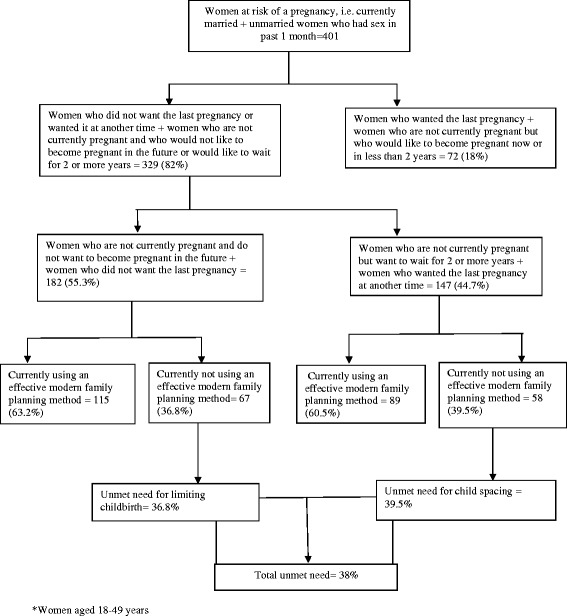
In a cross-sectional study conducted between February-June 2011, we documented pregnancies, fertility desires, and contraceptive use among 797 HIV-infected men and women (408 in Mulago and 389 in Nsambya). FP unmet need was calculated among women who were married, unmarried but had sex within the past month, did not desire the last or future pregnancy at all or wished to postpone for ≥ two years and were not using contraceptives. Multivariable analyses for correlates of FP unmet need were computed for each clinic.
Overall, 40% (315) had been pregnant since HIV diagnosis; 58% desired the pregnancies. Of those who were not pregnant, 49% (366) did not desire more children at all; 15.7% wanted children then and 35.3% later. The unmet need for FP in Nsambya (45.1%) was significantly higher than that in Mulago at 30.9% (p = 0.008). Age 40+ compared to 18-29 years (OR = 6.05; 95% CI: 1.69, 21.62 in Mulago and OR = 0.21; 95% CI: 0.05, 0.90 in Nsambya), other Christian denominations (Pentecostal and Seventh Day Adventists) compared to Catholics (OR = 7.18; 95% CI: 2.14, 24.13 in Mulago and OR = 0.23; 95% CI: 0.06, 0.80 in Nsambya), and monthly expenditure > USD 200 compared to < USD40 in Nsambya (OR = 0.17; 95% CI: 0.03, 0.90) were associated with FP unmet need.
More than half of the pregnancies in this population were desired. Unmet need for FP was very high at both clinics and especially at the clinic which did not have contraceptives onsite. Lower income and younger women were most affected by the lack of contraceptives onsite. Comprehensive and aggressive FP programs are required for fertility support and elimination of FP unmet need among PLHIV, even with integration of FP information and supplies into HIV clinics.
消除艾滋病毒感染者(PLHIV)中未满足的计划生育需求对于消除母婴艾滋病毒传播至关重要。我们评估了在两家提供不同模式计划生育服务的诊所就诊的艾滋病毒感染者中未满足的计划生育需求。恩桑比亚家庭护理中心仅提供计划生育信息,而穆拉戈艾滋病毒诊所则现场提供信息和避孕药具。
在2011年2月至6月进行的一项横断面研究中,我们记录了797名艾滋病毒感染男性和女性(穆拉戈408名,恩桑比亚389名)的怀孕情况、生育意愿和避孕药具使用情况。在已婚、未婚但过去一个月内有性行为、完全不希望有最后一次或未来怀孕、希望推迟两年及以上且未使用避孕药具的女性中计算未满足的计划生育需求。对每个诊所计算未满足的计划生育需求的相关因素进行多变量分析。
总体而言,40%(315名)自艾滋病毒诊断以来怀孕;58%希望怀孕。在未怀孕的人中,49%(366名)根本不想要更多孩子;15.7%当时想要孩子,35.3%以后想要。恩桑比亚未满足的计划生育需求(45.1%)显著高于穆拉戈的30.9%(p = 0.008)。与18 - 29岁相比,40岁及以上年龄组(穆拉戈的比值比[OR] = 6.05;95%置信区间[CI]:1.69,21.62;恩桑比亚的OR = 0.21;95% CI:0.05,0.90)、与天主教徒相比的其他基督教教派(五旬节派和基督复临安息日会)(穆拉戈的OR = 7.18;95% CI:2.14,24.13;恩桑比亚的OR = 0.23;95% CI:0.06,0.80)以及恩桑比亚每月支出>200美元与<40美元相比(OR = 0.17;95% CI:0.03,0.90)与未满足的计划生育需求相关。
该人群中超过一半的怀孕是自愿的。两家诊所未满足的计划生育需求都非常高,尤其是在没有现场避孕药具的诊所。低收入和年轻女性受现场缺乏避孕药具的影响最大。即使将计划生育信息和用品纳入艾滋病毒诊所,也需要全面和积极的计划生育项目来提供生育支持并消除艾滋病毒感染者中未满足的计划生育需求。