Kumar Vinod, Singh Anshuman, Mithra S V Amitha, Krishnamurthy S L, Parida Swarup K, Jain Sourabh, Tiwari Kapil K, Kumar Pankaj, Rao Atmakuri R, Sharma S K, Khurana Jitendra P, Singh Nagendra K, Mohapatra Trilochan
National Research Centre on Plant Biotechnology, New Delhi 110012, India.
Central Soil Salinity Research Institute, Karnal, Haryana 132001, India.
DNA Res. 2015 Apr;22(2):133-45. doi: 10.1093/dnares/dsu046. Epub 2015 Jan 27.
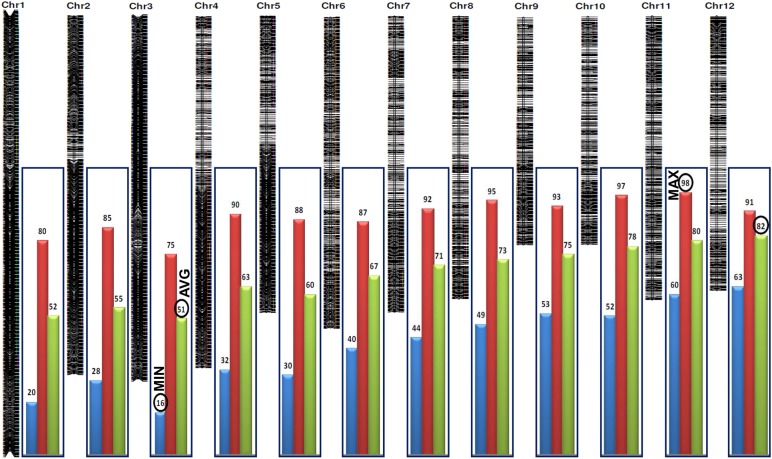
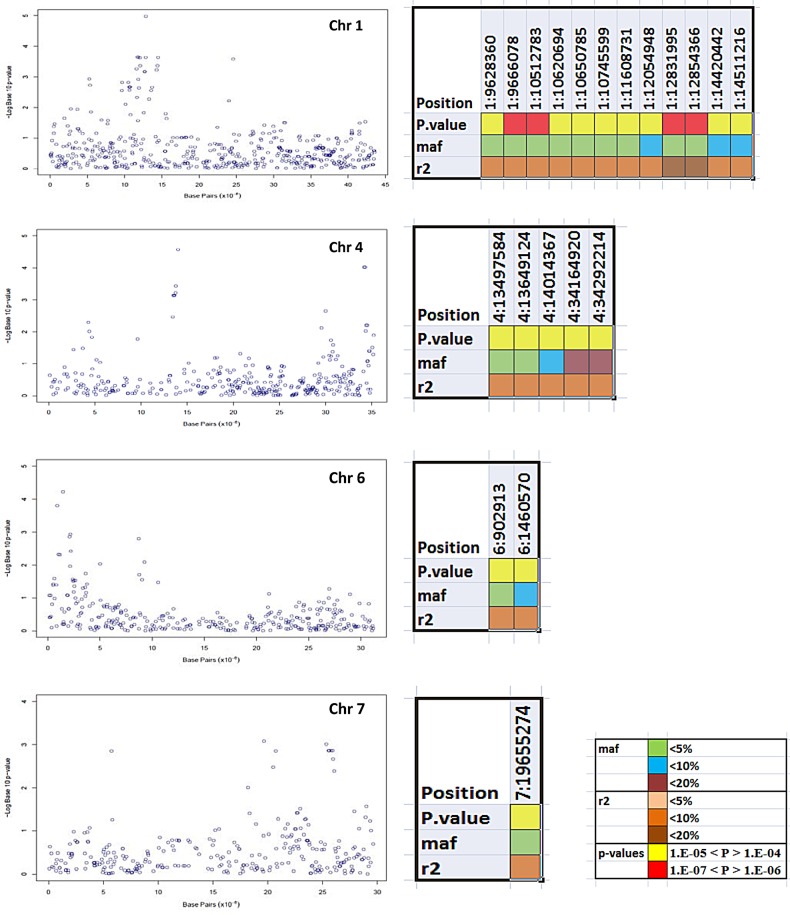
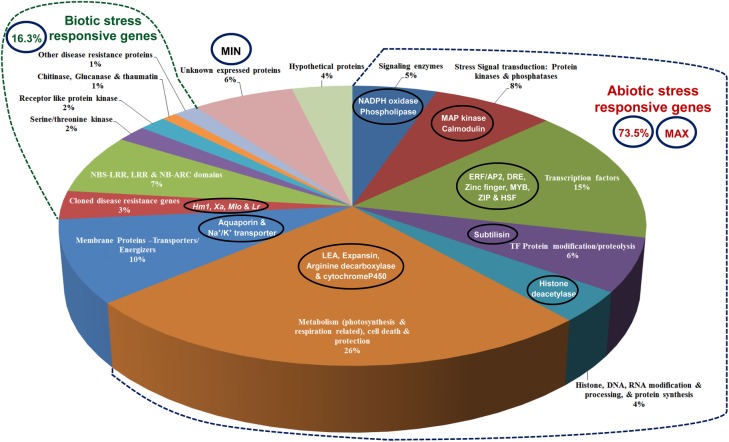
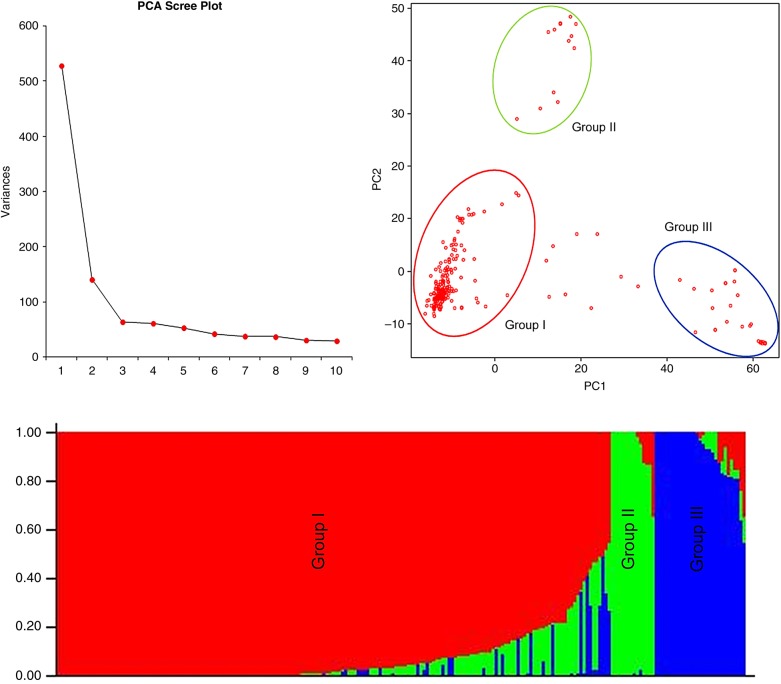
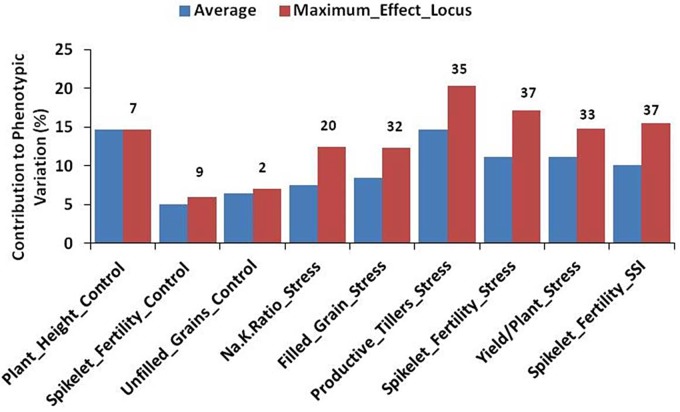
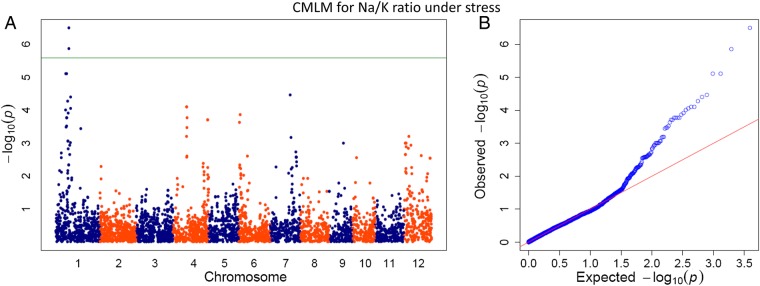
Salinity tolerance in rice is highly desirable to sustain production in areas rendered saline due to various reasons. It is a complex quantitative trait having different components, which can be dissected effectively by genome-wide association study (GWAS). Here, we implemented GWAS to identify loci controlling salinity tolerance in rice. A custom-designed array based on 6,000 single nucleotide polymorphisms (SNPs) in as many stress-responsive genes, distributed at an average physical interval of <100 kb on 12 rice chromosomes, was used to genotype 220 rice accessions using Infinium high-throughput assay. Genetic association was analysed with 12 different traits recorded on these accessions under field conditions at reproductive stage. We identified 20 SNPs (loci) significantly associated with Na(+)/K(+) ratio, and 44 SNPs with other traits observed under stress condition. The loci identified for various salinity indices through GWAS explained 5-18% of the phenotypic variance. The region harbouring Saltol, a major quantitative trait loci (QTLs) on chromosome 1 in rice, which is known to control salinity tolerance at seedling stage, was detected as a major association with Na(+)/K(+) ratio measured at reproductive stage in our study. In addition to Saltol, we also found GWAS peaks representing new QTLs on chromosomes 4, 6 and 7. The current association mapping panel contained mostly indica accessions that can serve as source of novel salt tolerance genes and alleles. The gene-based SNP array used in this study was found cost-effective and efficient in unveiling genomic regions/candidate genes regulating salinity stress tolerance in rice.
由于各种原因,水稻耐盐性对于维持盐碱化地区的产量至关重要。它是一个具有不同组成部分的复杂数量性状,可通过全基因组关联研究(GWAS)有效解析。在此,我们实施GWAS以鉴定控制水稻耐盐性的基因座。使用基于6000个单核苷酸多态性(SNP)的定制设计芯片,这些SNP分布在12条水稻染色体上平均物理间隔小于100 kb的许多胁迫响应基因中,采用Infinium高通量检测法对220份水稻种质进行基因分型。在生殖阶段的田间条件下,对这些种质记录的12个不同性状进行遗传关联分析。我们鉴定出20个与Na(+)/K(+)比率显著相关的SNP(基因座),以及44个与胁迫条件下观察到的其他性状相关的SNP。通过GWAS鉴定的各种盐度指数基因座解释了5%-18%的表型变异。在我们的研究中,位于水稻第1染色体上的主要数量性状基因座(QTL)Saltol所在区域,被检测到与生殖阶段测量的Na(+)/K(+)比率存在主要关联,Saltol已知在幼苗期控制耐盐性。除了Saltol,我们还在第4、6和7染色体上发现了代表新QTL的GWAS峰值。当前的关联定位群体主要包含籼稻种质,可作为新的耐盐基因和等位基因的来源。本研究中使用的基于基因的SNP芯片在揭示调控水稻盐胁迫耐受性的基因组区域/候选基因方面具有成本效益且效率高。