Camfferman Fleur A, Ecury-Goossen Ginette M, La Roche Jhuresy E, de Jong Nico, van 't Leven Willem, Vos Hendrik J, Verweij Martin D, Nasserinejad Kazem, Cools Filip, Govaert Paul, Dudink Jeroen
Department of Neonatology, Universitair Ziekenhuis Brussel, Vrije Universiteit Brussel , Brussels , Belgium.
Department of Neonatology, Erasmus Medical Centre , Rotterdam , Netherlands.
Front Hum Neurosci. 2015 Jan 13;8:1068. doi: 10.3389/fnhum.2014.01068. eCollection 2014.
Preterm infants are born during critical stages of brain development, in which the adaptive capacity of the fetus to extra-uterine environment is limited. Inadequate brain perfusion has been directly linked to preterm brain damage. Advanced high-frequency ultrasound probes and processing algorithms allow visualization of microvessels and depiction of regional variation. To assess whether visualization and flow velocity estimates of preterm cerebral perfusion using Doppler techniques are accurate, we conducted an in vitro experiment using a microvessel flow phantom.
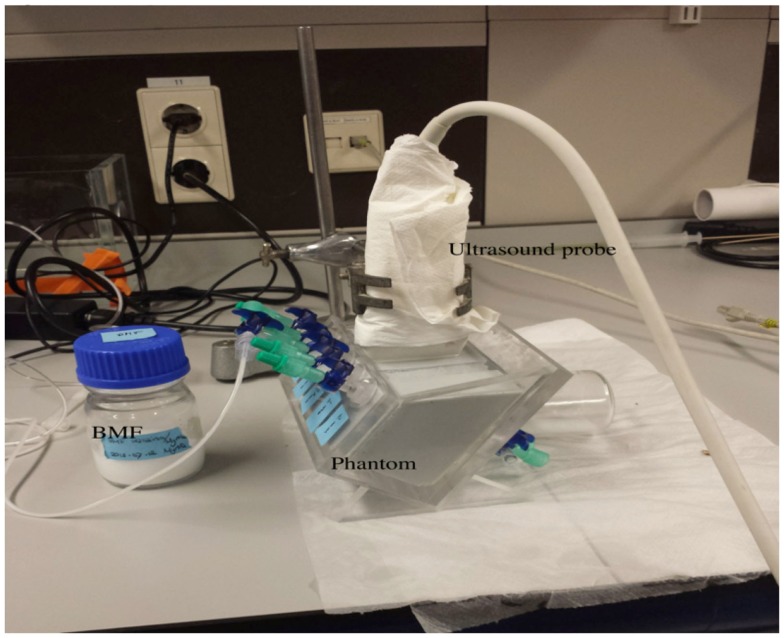
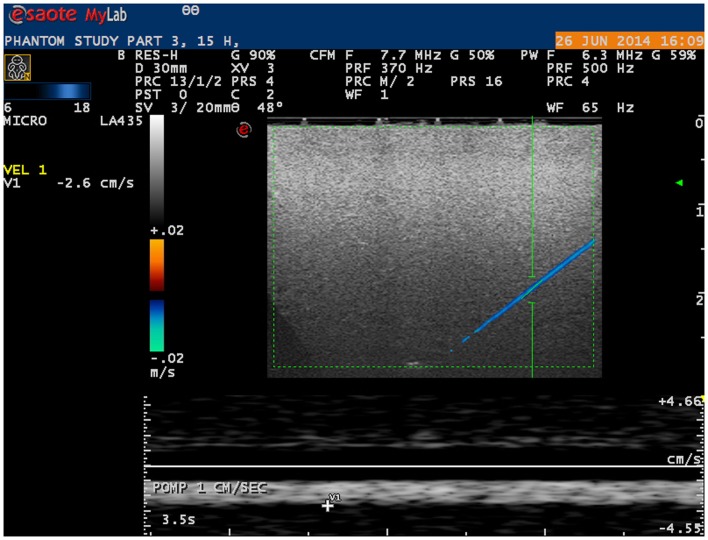
An in-house developed flow phantom containing two microvessels (inner diameter 200 and 700 μm) with attached syringe pumps, filled with blood-mimicking fluid, was used to generate non-pulsatile perfusion of variable flow. Measurements were performed using an Esaote MyLab70 scanner.
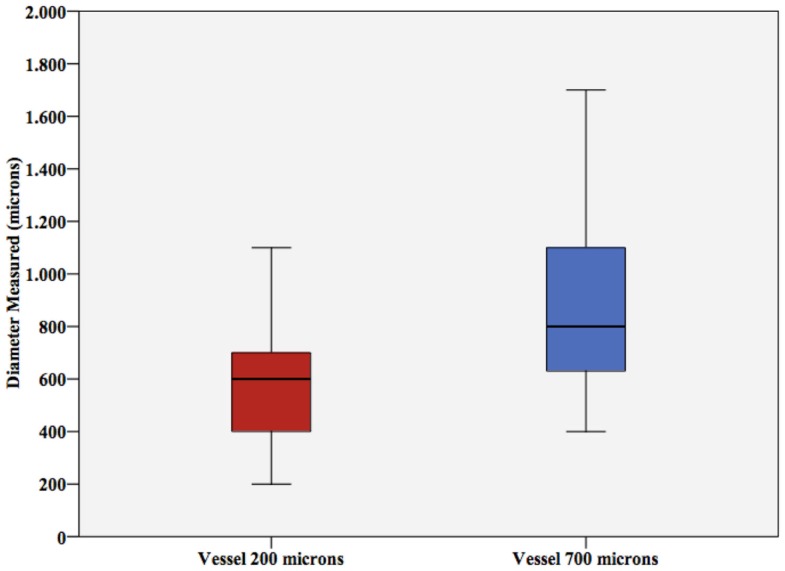
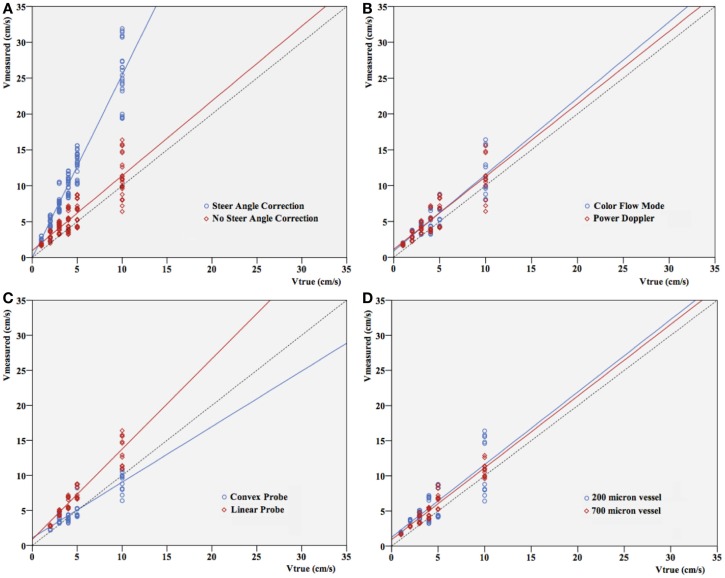
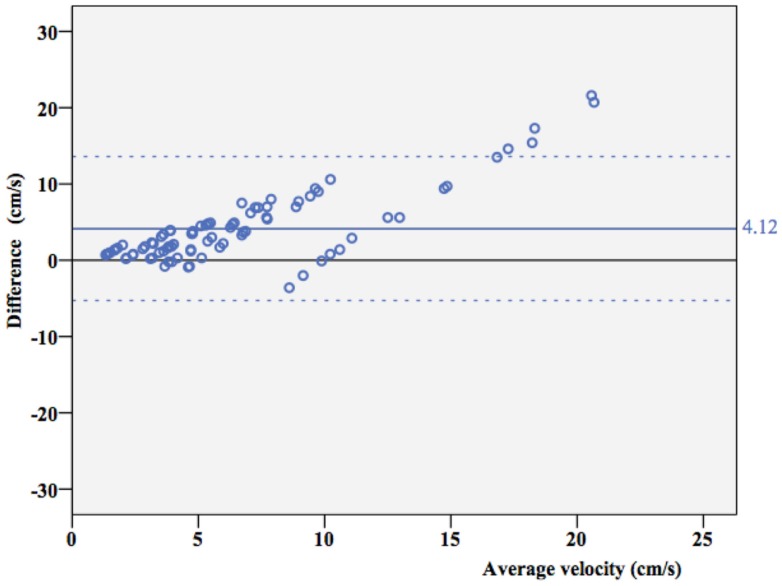
Microvessel mimicking catheters with velocities as low as 1 cm/s were adequately visualized with a linear ultrasound probe. With a convex probe, velocities <2 cm/s could not be depicted. Within settings, velocity and diameter measurements were highly reproducible [intra-class correlation 0.997 (95% CI 0.996-0.998) and 0.914 (0.864-0.946)]. Overall, mean velocity was overestimated up to threefold, especially in high velocity ranges. Significant differences were seen in velocity measurements when using steer angle correction and in vessel diameter estimation (p < 0.05).
Visualization of microvessel-size catheters mimicking small brain vessels is feasible. Reproducible velocity and diameter results can be obtained, although important overestimation of the values is observed. Before velocity estimates of microcirculation can find its use in clinical practice, calibration of the ultrasound machine for any specific Doppler purpose is essential. The ultimate goal is to develop a sonographic tool that can be used for objective study of regional perfusion in routine practice.
早产儿在大脑发育的关键阶段出生,此时胎儿对宫外环境的适应能力有限。脑灌注不足与早产脑损伤直接相关。先进的高频超声探头和处理算法能够实现微血管可视化并描绘区域差异。为了评估使用多普勒技术对早产脑灌注进行可视化和流速估计是否准确,我们使用微血管血流模拟体模进行了一项体外实验。
使用内部开发的一种血流模拟体模,其包含两根带有附加注射泵的微血管(内径分别为200和700μm),并填充了仿血液流体,以产生可变流量的非搏动性灌注。使用百胜MyLab70扫描仪进行测量。
使用线性超声探头能够充分可视化流速低至1cm/s的模拟微血管导管。使用凸阵探头时,无法描绘流速<2cm/s的情况。在设定范围内,流速和直径测量具有高度可重复性[组内相关系数分别为0.997(95%CI 0.996 - 0.998)和0.914(0.864 - 0.946)]。总体而言,平均流速被高估了三倍之多,尤其是在高流速范围内。使用转向角校正时,流速测量以及血管直径估计存在显著差异(p < 0.05)。
可视化模拟小脑血管大小的微血管导管是可行的。尽管观察到数值存在重要的高估情况,但仍可获得可重复的流速和直径结果。在微循环流速估计能够应用于临床实践之前,针对任何特定多普勒目的对超声设备进行校准至关重要。最终目标是开发一种超声工具,可用于常规实践中对区域灌注进行客观研究。