Hu Jin, Lin Ting, Gao Yuehong, Xu Junyue, Jiang Chao, Wang Guanghui, Bu Guojun, Xu Huaxi, Chen Haifeng, Zhang Yun-wu
Fujian Provincial Key Laboratory of Neurodegenerative Disease and Aging Research, School of Pharmaceutical Sciences, Xiamen University, Xiamen, 361102, China; Institute of Neuroscience, College of Medicine, Xiamen University, Xiamen, 361102, China.
Fujian Provincial Key Laboratory of Neurodegenerative Disease and Aging Research, School of Pharmaceutical Sciences, Xiamen University, Xiamen, 361102, China.
PLoS One. 2015 Jan 28;10(1):e0115973. doi: 10.1371/journal.pone.0115973. eCollection 2015.
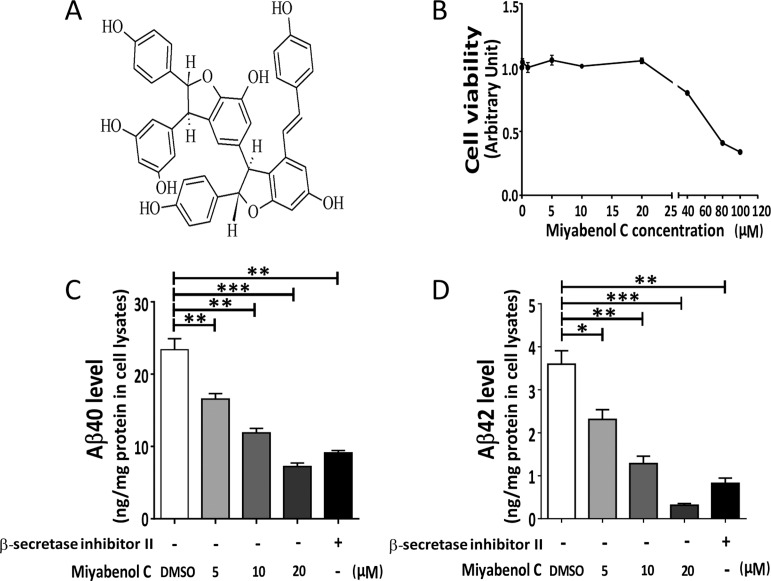
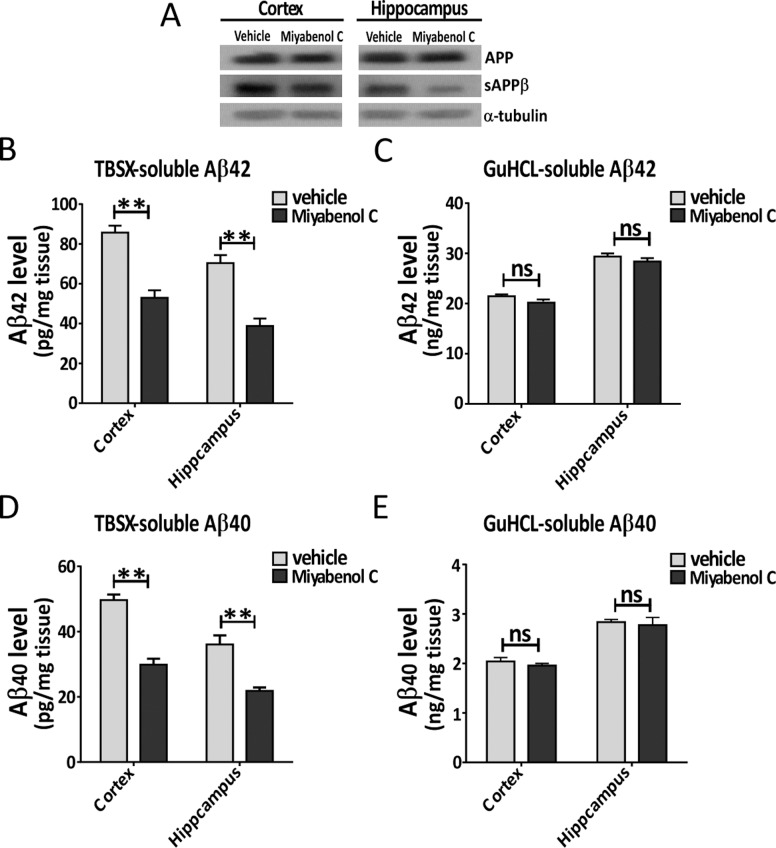
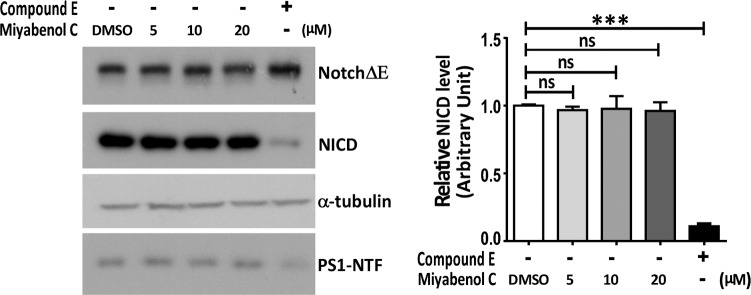
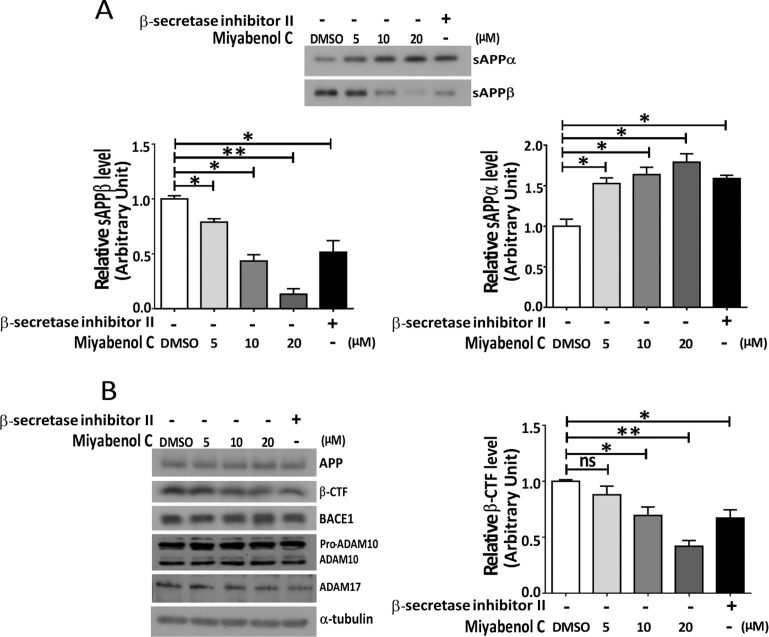
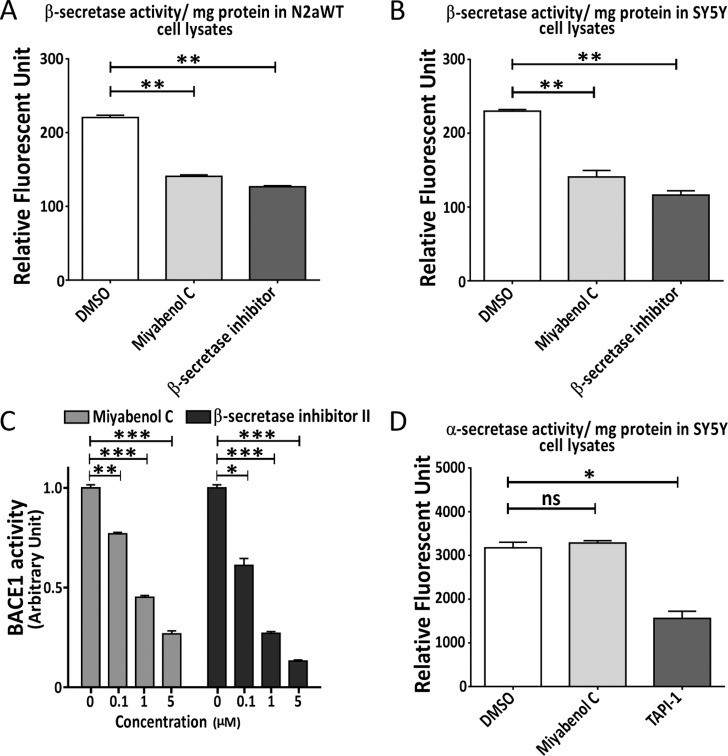
Accumulation and deposition of amyloid-β peptide (Aβ) in the brain is a primary cause of the pathogenesis of Alzheimer's disease (AD). Aβ is generated from amyloid-β precursor protein (APP) through sequential cleavages first by β-secretase and then by γ-secretase. Inhibiting β-secretase activity is believed to be one of the most promising strategies for AD treatment. In the present study, we found that a resveratrol trimer, miyabenol C, isolated from stems and leaves of the small-leaf grape (Vitisthunbergii var. taiwaniana), can markedly reduce Aβ and sAPPβ levels in both cell cultures and the brain of AD model mice. Mechanistic studies revealed that miyabenol C affects neither protein levels of APP, the two major α-secretases ADAM10 and TACE, and the γ-secretase component Presenilin 1, nor γ-secretase-mediated Notch processing and TACE activity. In contrast, although miyabenol C has no effect on altering protein levels of the β-secretase BACE1, it can inhibit both in vitro and in vivo β-secretase activity. Together, our results indicate that miyabenol C is a prominent β-secretase inhibitor and lead compound for AD drug development.
淀粉样β肽(Aβ)在大脑中的积累和沉积是阿尔茨海默病(AD)发病机制的主要原因。Aβ由淀粉样β前体蛋白(APP)依次经β-分泌酶和γ-分泌酶切割产生。抑制β-分泌酶活性被认为是治疗AD最有前景的策略之一。在本研究中,我们发现从小叶葡萄(Vitisthunbergii var. taiwaniana)的茎叶中分离出的白藜芦醇三聚体——宫部醇C,能显著降低细胞培养物和AD模型小鼠大脑中的Aβ和sAPPβ水平。机制研究表明,宫部醇C既不影响APP、两种主要的α-分泌酶ADAM10和TACE以及γ-分泌酶组分早老素1的蛋白水平,也不影响γ-分泌酶介导的Notch加工和TACE活性。相反,尽管宫部醇C对改变β-分泌酶BACE1的蛋白水平没有影响,但它能在体外和体内抑制β-分泌酶活性。总之,我们的结果表明宫部醇C是一种显著的β-分泌酶抑制剂,是AD药物开发的先导化合物。