Moffitt Sarah E, Moffitt Russell A, Sauthoff Wilson, Davis Catherine V, Hewett Kathryn, Hill Tessa M
Bodega Marine Laboratory, University of California Davis, Bodega Bay, California, United States of America; Graduate Group in Ecology, University of California Davis, Davis, California, United States of America.
Marine Conservation Institute, Glen Ellen, California, United States of America.
PLoS One. 2015 Jan 28;10(1):e0115246. doi: 10.1371/journal.pone.0115246. eCollection 2015.
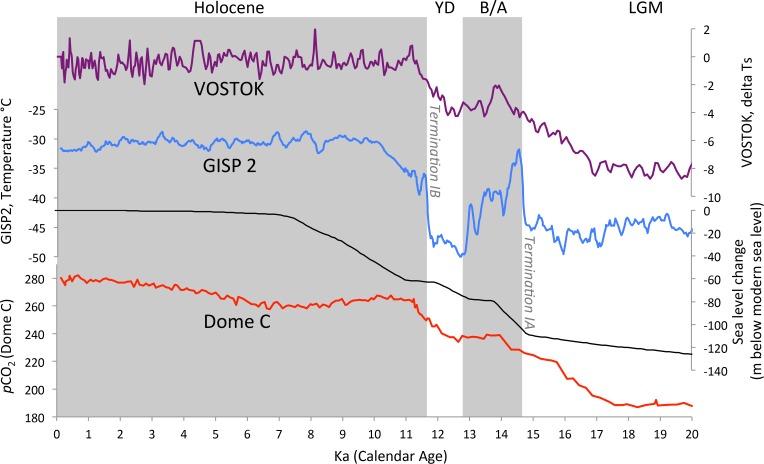
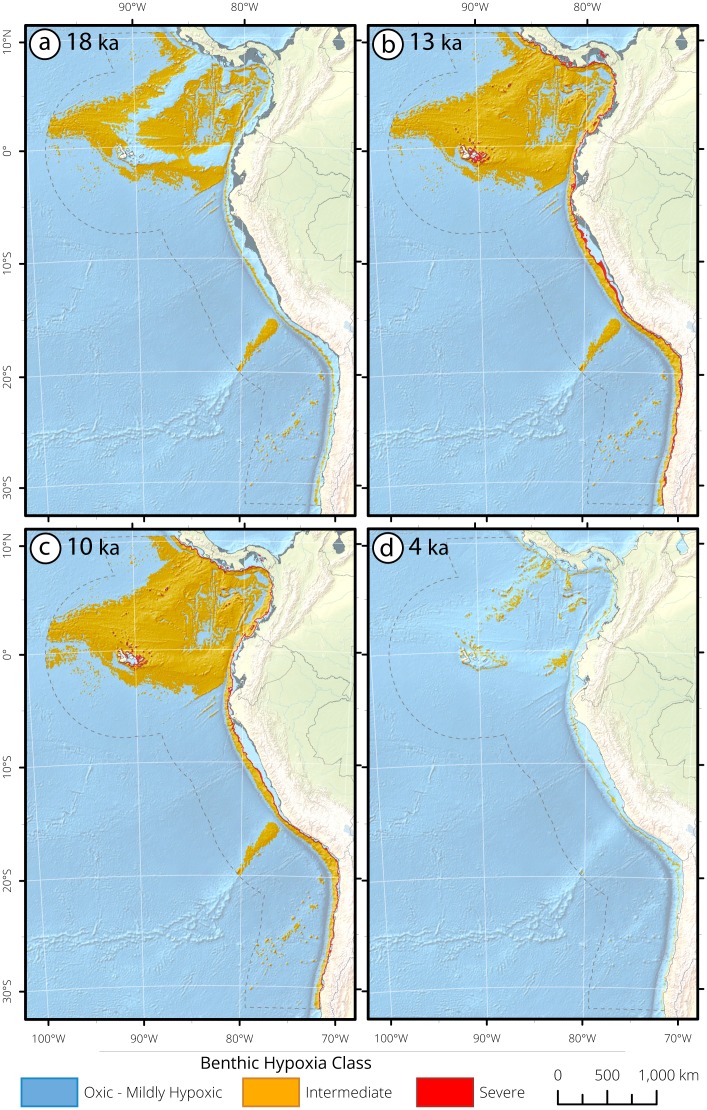
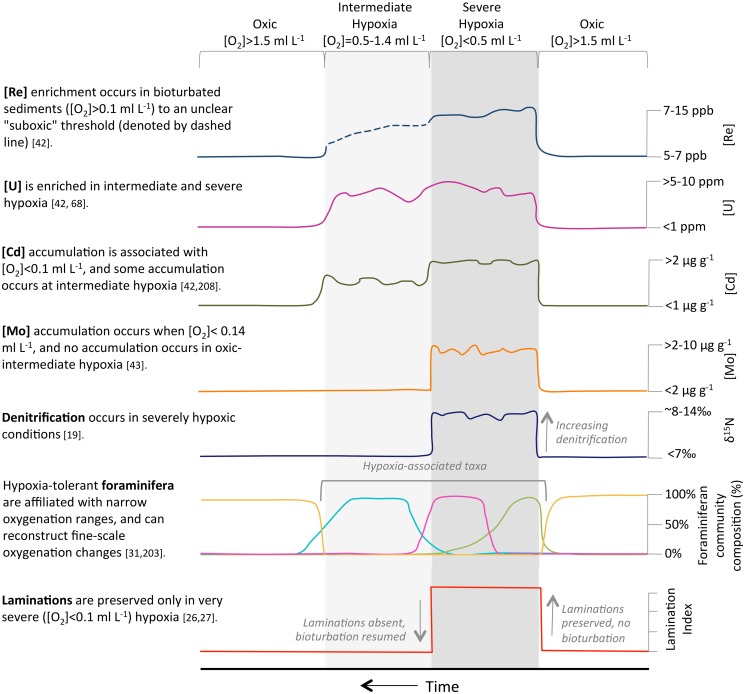
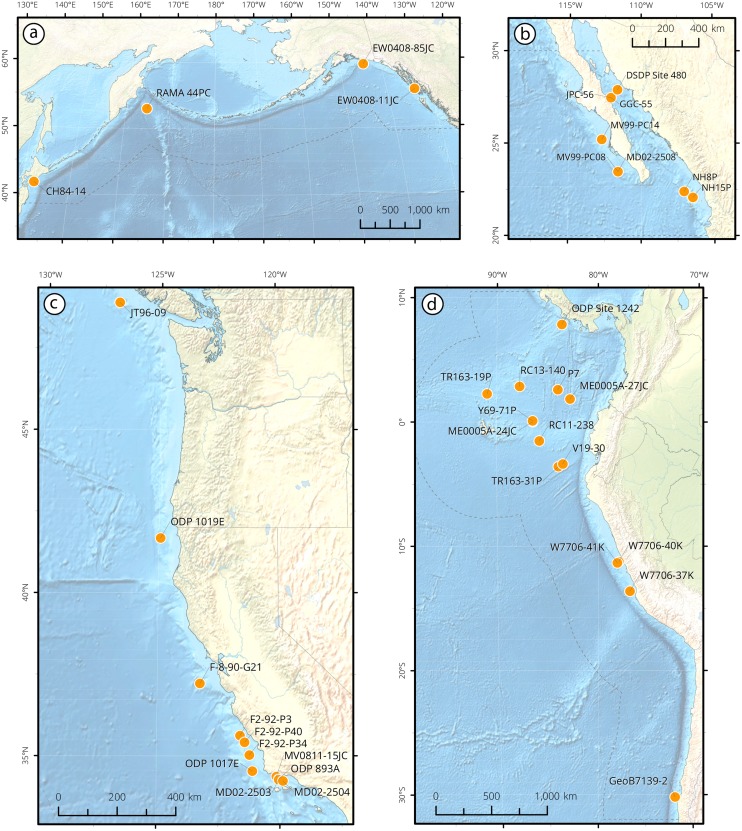
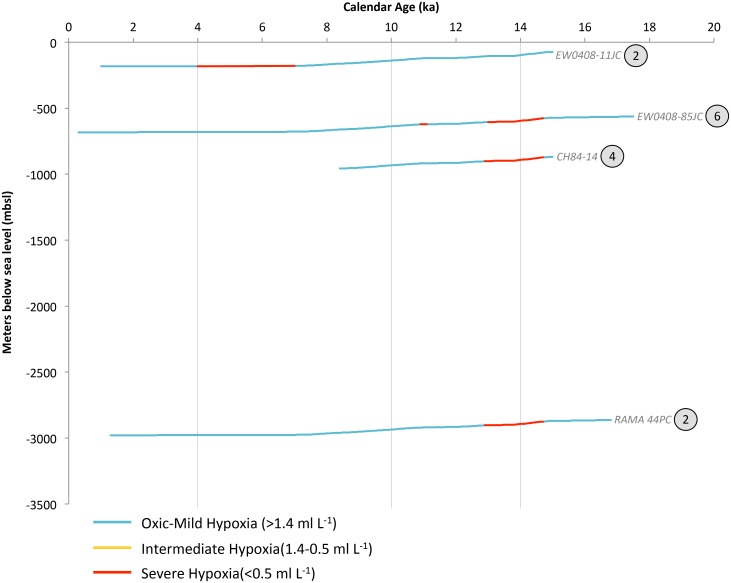
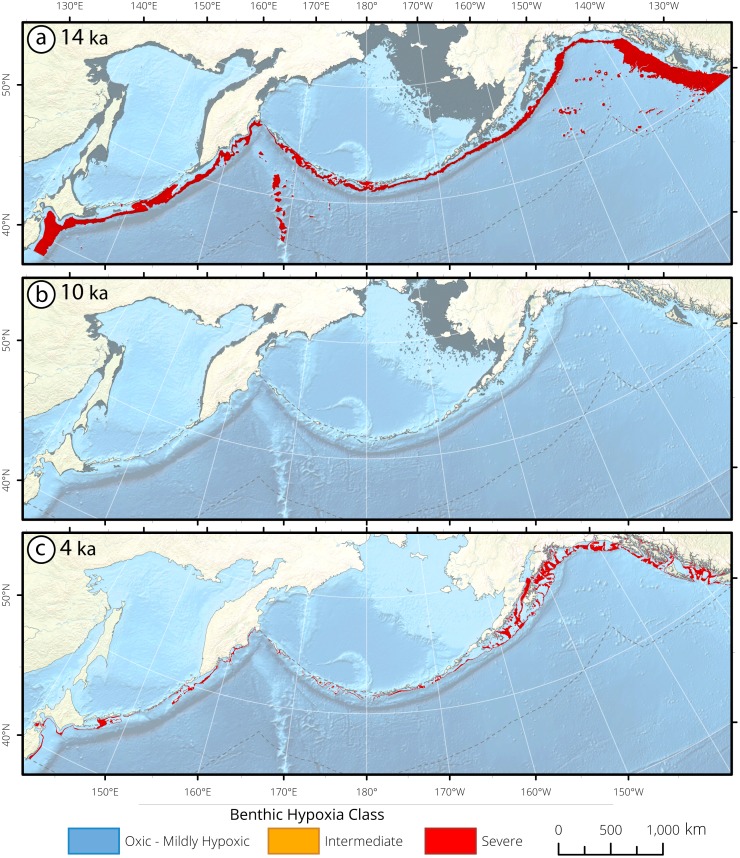
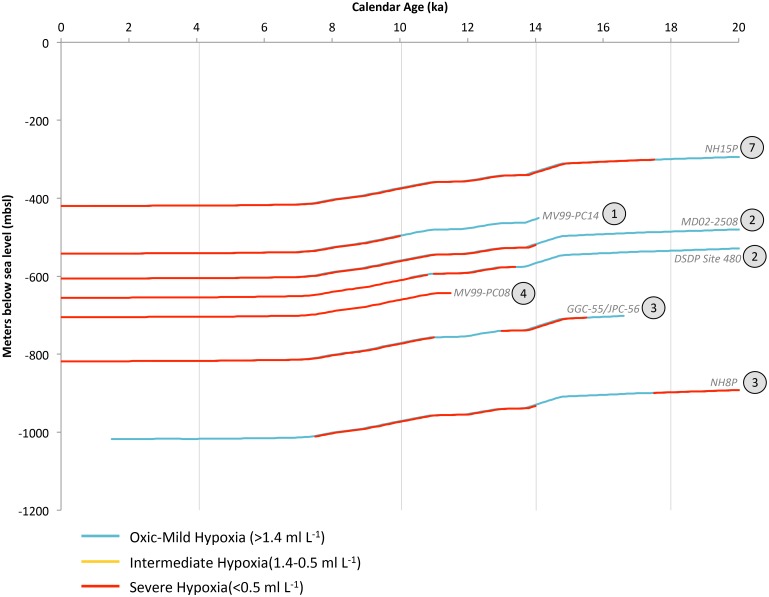
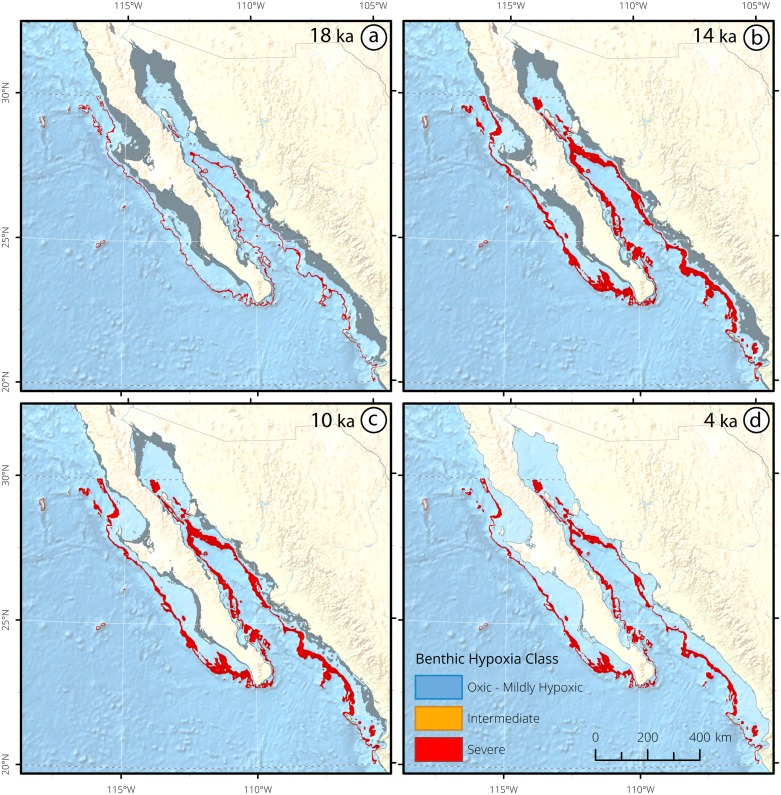
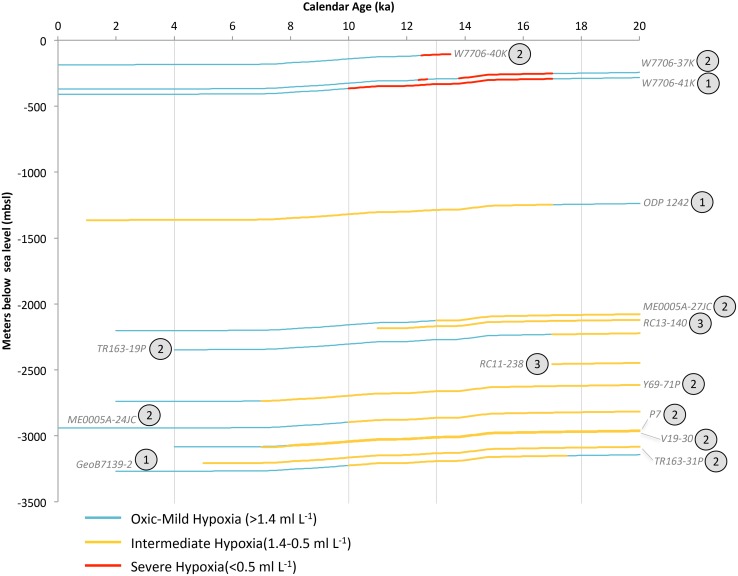
Climate-driven Oxygen Minimum Zone (OMZ) expansions in the geologic record provide an opportunity to characterize the spatial and temporal scales of OMZ change. Here we investigate OMZ expansion through the global-scale warming event of the most recent deglaciation (18-11 ka), an event with clear relevance to understanding modern anthropogenic climate change. Deglacial marine sediment records were compiled to quantify the vertical extent, intensity, surface area and volume impingements of hypoxic waters upon continental margins. By integrating sediment records (183-2,309 meters below sea level; mbsl) containing one or more geochemical, sedimentary or microfossil oxygenation proxies integrated with analyses of eustatic sea level rise, we reconstruct the timing, depth and intensity of seafloor hypoxia. The maximum vertical OMZ extent during the deglaciation was variable by region: Subarctic Pacific (600-2,900 mbsl), California Current (330-1,500 mbsl), Mexico Margin (330-830 mbsl), and the Humboldt Current and Equatorial Pacific (110-3,100 mbsl). The timing of OMZ expansion is regionally coherent but not globally synchronous. Subarctic Pacific and California Current continental margins exhibit tight correlation to the oscillations of Northern Hemisphere deglacial events (Termination IA, Bølling-Allerød, Younger Dryas and Termination IB). Southern regions (Mexico Margin and the Equatorial Pacific and Humboldt Current) exhibit hypoxia expansion prior to Termination IA (~14.7 ka), and no regional oxygenation oscillations. Our analyses provide new evidence for the geographically and vertically extensive expansion of OMZs, and the extreme compression of upper-ocean oxygenated ecosystems during the geologically recent deglaciation.
地质记录中由气候驱动的海洋缺氧带(OMZ)扩张提供了一个机会来描述OMZ变化的时空尺度。在这里,我们通过最近一次冰消期(18 - 11千年前)的全球变暖事件来研究OMZ扩张,该事件与理解现代人为气候变化具有明显的相关性。我们汇编了冰消期海洋沉积物记录,以量化缺氧水体对大陆边缘的垂直范围、强度、表面积和体积影响。通过整合包含一个或多个地球化学、沉积或微化石氧化指标的沉积物记录(海平面以下183 - 2309米;mbsl),并结合海平面上升的分析,我们重建了海底缺氧的时间、深度和强度。冰消期期间OMZ的最大垂直范围因区域而异:亚北极太平洋(约600 - 2900 mbsl)、加利福尼亚洋流(约330 - 1500 mbsl)、墨西哥边缘(约330 - 830 mbsl)以及洪堡洋流和赤道太平洋(约110 - 3100 mbsl)。OMZ扩张的时间在区域上是连贯的,但并非全球同步。亚北极太平洋和加利福尼亚洋流大陆边缘与北半球冰消期事件(终止期IA、博林 - 阿勒罗德期、新仙女木期和终止期IB)的振荡紧密相关。南部地区(墨西哥边缘、赤道太平洋和洪堡洋流)在终止期IA(约14.7千年前)之前就出现了缺氧扩张,且没有区域氧化振荡。我们的分析为OMZ在地理和垂直方向上的广泛扩张以及地质历史上最近一次冰消期期间上层海洋含氧生态系统的极端压缩提供了新证据。