Beyeler Naomi, Liu Jenny, Sieverding Maia
Global Health Group, Global Health Sciences, University of California San Francisco, San Francisco, California, United States of America.
PLoS One. 2015 Jan 28;10(1):e0117165. doi: 10.1371/journal.pone.0117165. eCollection 2015.
Interventions to reduce the burden of disease and mortality in sub-Saharan Africa increasingly recognize the important role that drug retailers play in delivering basic healthcare services. In Nigeria, owner-operated drug retail outlets, known as patent and proprietary medicine vendors (PPMVs), are a main source of medicines for acute conditions, but their practices are not well understood. Greater understanding of the role of PPMVs and the quality of care they provide is needed in order to inform ongoing national health initiatives that aim to incorporate PPMVs as a delivery mechanism.
This paper reviews and synthesizes the existing published and grey literature on the characteristics, knowledge and practices of PPMVs in Nigeria. We searched published and grey literature using a number of electronic databases, supplemented with website searches of relevant international agencies. We included all studies providing outcome data on PPMVs in Nigeria, including non-experimental studies, and assessed the rigor of each study using the WHO-Johns Hopkins Rigor scale. We used narrative synthesis to evaluate the findings.
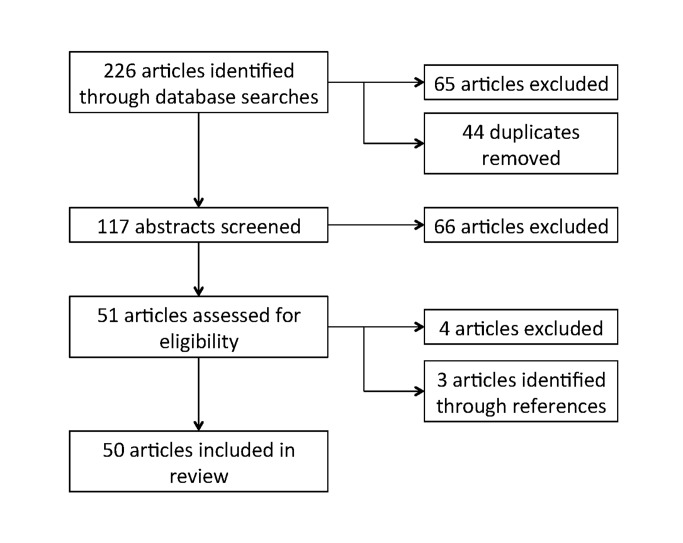
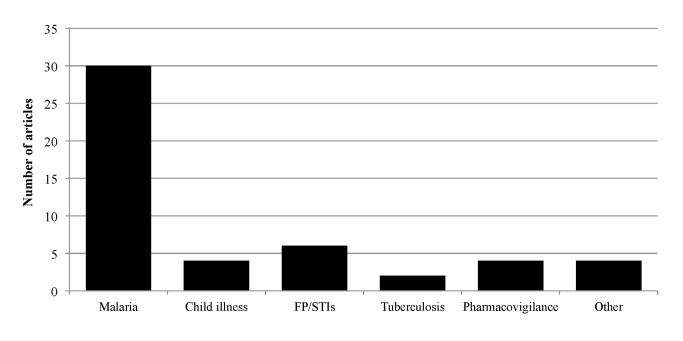
We identified 50 articles for inclusion. These studies provided data on a wide range of PPMV outcomes: training; health knowledge; health practices, including drug stocking and dispensing, client interaction, and referral; compliance with regulatory guidelines; and the effects of interventions targeting PPMVs. In general, PPMVs have low health knowledge and poor health treatment practices. However, the literature focuses largely on services for adult malaria, and little is known about other health areas or services for children.
This review highlights several concerns with the quality of the private drug retail sector in Nigeria, as well as gaps in the existing evidence base. Future research should adopt a more holistic view of the services provided by PPMV shops, and evaluate intervention strategies that may improve the services provided in this sector.
减轻撒哈拉以南非洲地区疾病负担和死亡率的干预措施越来越认识到药品零售商在提供基本医疗服务方面所起的重要作用。在尼日利亚,由所有者经营的药品零售网点,即专利和成药销售商(PPMVs),是治疗急性病症药品的主要来源,但他们的做法尚未得到充分了解。为了为旨在将PPMVs纳入服务提供机制的现行国家卫生倡议提供信息,需要更深入地了解PPMVs的作用及其提供的护理质量。
本文回顾并综合了关于尼日利亚PPMVs的特征、知识和做法的现有已发表文献和灰色文献。我们使用多个电子数据库搜索已发表文献和灰色文献,并辅以对相关国际机构网站的搜索。我们纳入了所有提供尼日利亚PPMVs结果数据的研究,包括非实验性研究,并使用世界卫生组织 - 约翰霍普金斯严谨性量表评估每项研究的严谨性。我们使用叙述性综合方法来评估研究结果。
我们确定了50篇纳入文章。这些研究提供了关于PPMVs广泛结果的数据:培训;健康知识;健康做法,包括药品储备和调配、与客户互动以及转诊;遵守监管指南;以及针对PPMVs的干预措施的效果。总体而言,PPMVs的健康知识水平较低,健康治疗做法较差。然而,文献主要关注成人疟疾服务,对其他健康领域或儿童服务了解甚少。
本综述突出了尼日利亚私营药品零售部门质量方面的几个问题,以及现有证据基础中的差距。未来的研究应更全面地看待PPMV商店提供的服务,并评估可能改善该部门服务的干预策略。