Ross Clare L, Galloway-Phillipps Neil, Armstrong Paul C, Mitchell Jane A, Warner Timothy D, Brearley Christopher, Ito Mari, Tunstall Tanushree, Elkin Sarah, Kon Onn Min, Hansel Trevor T, Paul-Clark Mark J
Imperial Clinical Respiratory Research Unit (ICRRU) and Biomedical Research Centre (BMRC), Centre for Respiratory Infection (CRI), St Mary's Hospital, Imperial College, London, UK.
National Heart and Lung Institute, Imperial College, London, UK.
BMJ Open. 2015 Jan 28;5(1):e005750. doi: 10.1136/bmjopen-2014-005750.
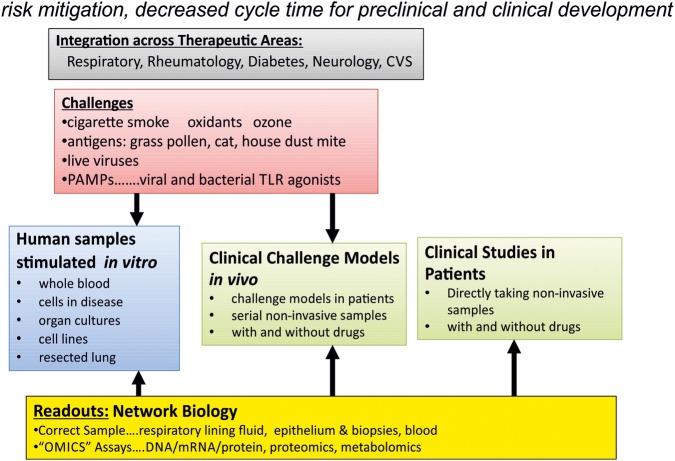
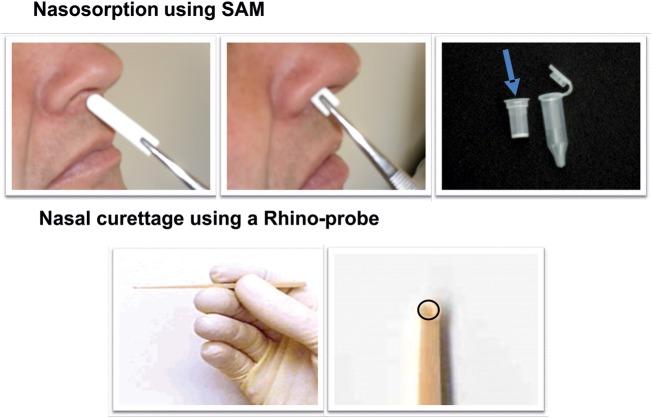
Cigarette smoke contributes to a diverse range of diseases including chronic obstructive pulmonary disease (COPD), cardiovascular disorders and many cancers. There currently is a need for human challenge models, to assess the acute effects of a controlled cigarette smoke stimulus, followed by serial sampling of blood and respiratory tissue for advanced molecular profiling. We employ precision sampling of nasal mucosal lining fluid by absorption to permit soluble mediators measurement in eluates. Serial nasal curettage was used for transcriptomic analysis of mucosal tissue.
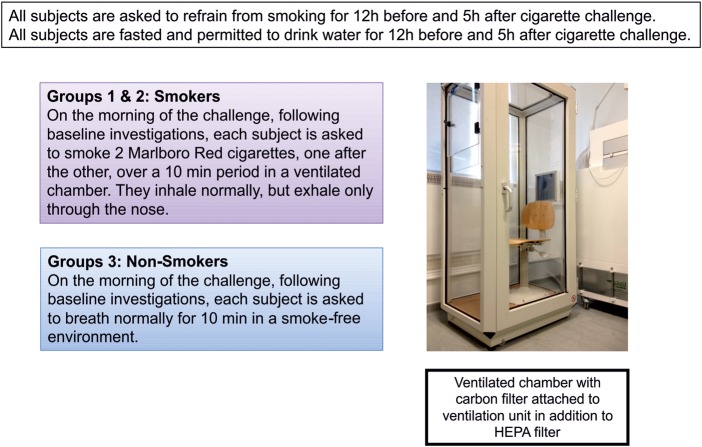
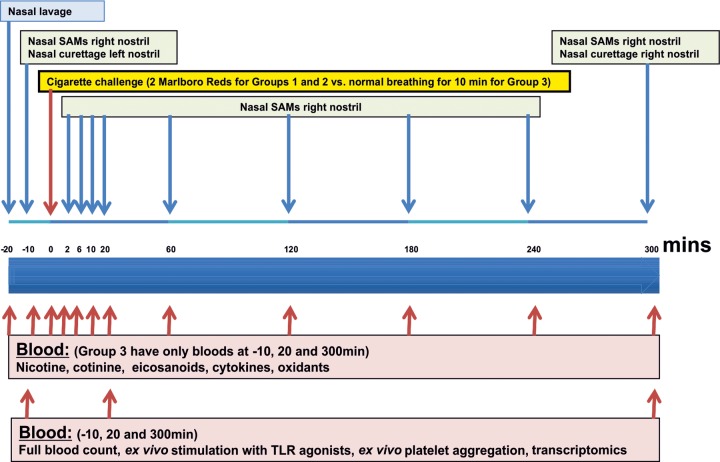
Three groups of strictly defined patients will be studied: 12 smokers with COPD (GOLD Stage 2) with emphysema, 12 matched smokers with normal lung function and no evidence of emphysema, and 12 matched never smokers with normal spirometry. Patients in the smoking groups are current smokers, and will be given full support to stop smoking immediately after this study. In giving a controlled cigarette smoke stimulus, all patients will have abstained from smoking for 12 h, and will smoke two cigarettes with expiration through the nose in a ventilated chamber. Before and after inhalation of cigarette smoke, a series of samples will be taken from the blood, nasal mucosal lining fluid and nasal tissue by curettage. Analysis of plasma nicotine and metabolites in relation to levels of soluble inflammatory mediators in nasal lining fluid and blood, as well as assessing nasal transcriptomics, ex vivo blood platelet aggregation and leucocyte responses to toll-like receptor agonists will be undertaken.
Development of acute cigarette smoke challenge models has promise for the study of molecular effects of smoking in a range of pathological processes.
This study was approved by the West London National Research Ethics Committee (12/LO/1101). The study findings will be presented at conferences and will be reported in peer-reviewed journals.
香烟烟雾会导致多种疾病,包括慢性阻塞性肺疾病(COPD)、心血管疾病和多种癌症。目前需要人体激发模型来评估受控香烟烟雾刺激的急性效应,随后对血液和呼吸组织进行系列采样以进行高级分子分析。我们采用吸收法对鼻黏膜衬液进行精准采样,以便在洗脱液中测量可溶性介质。采用系列鼻腔刮除术对黏膜组织进行转录组分析。
将研究三组严格定义的患者:12名患有肺气肿的COPD吸烟者(GOLD 2期)、12名肺功能正常且无肺气肿证据的匹配吸烟者,以及12名肺活量测定正常的匹配非吸烟者。吸烟组的患者为当前吸烟者,在本研究结束后将给予充分支持以立即戒烟。在给予受控香烟烟雾刺激时,所有患者将已戒烟12小时,并将在通风室内通过鼻腔呼气吸两支香烟。在吸入香烟烟雾前后,将通过刮除术从血液、鼻黏膜衬液和鼻组织中采集一系列样本。将分析血浆尼古丁和代谢物与鼻衬液和血液中可溶性炎症介质水平的关系,以及评估鼻转录组学、离体血小板聚集和白细胞对Toll样受体激动剂的反应。
急性香烟烟雾激发模型的开发有望用于研究吸烟在一系列病理过程中的分子效应。
本研究已获得西伦敦国家研究伦理委员会批准(12/LO/1101)。研究结果将在会议上展示,并将在同行评审期刊上发表。