Curriculum in Toxicology and Environmental Medicine.
Center for Environmental Medicine, Asthma and Lung Biology, and.
Am J Respir Cell Mol Biol. 2021 Jan;64(1):126-137. doi: 10.1165/rcmb.2020-0164OC.
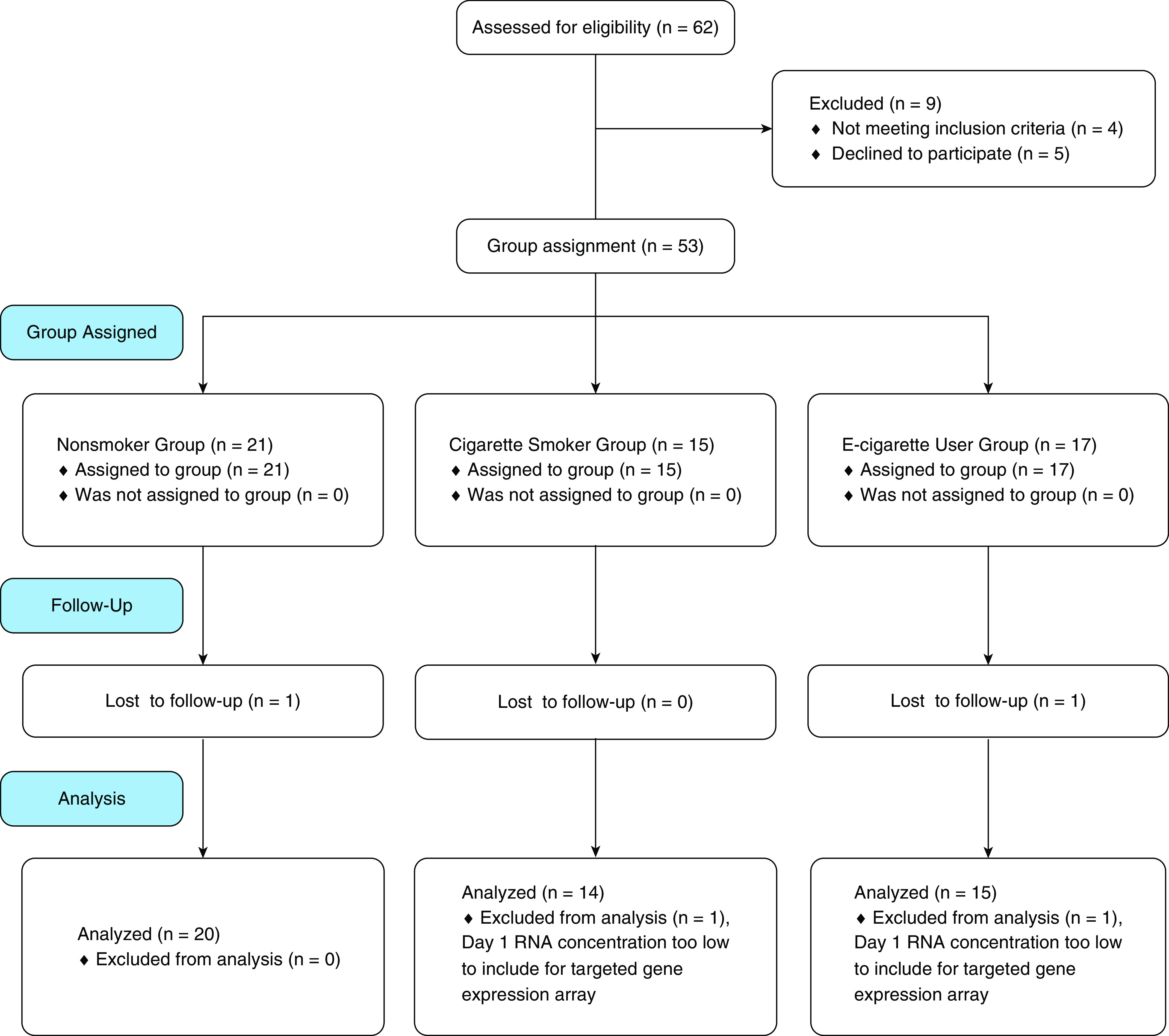
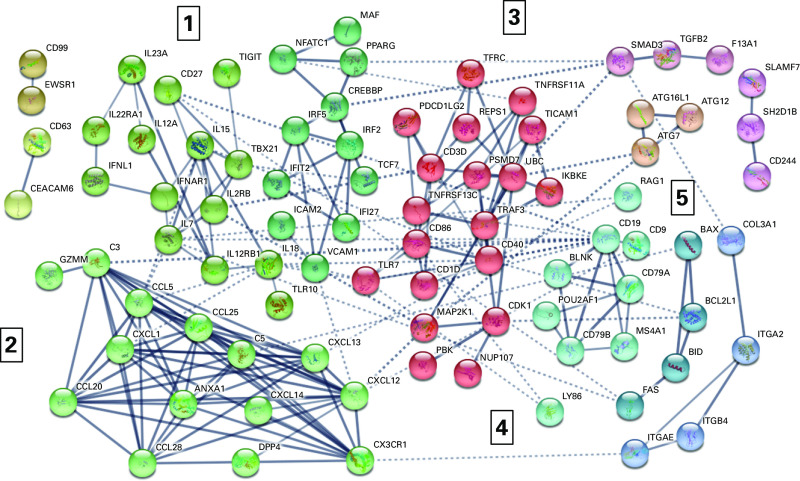
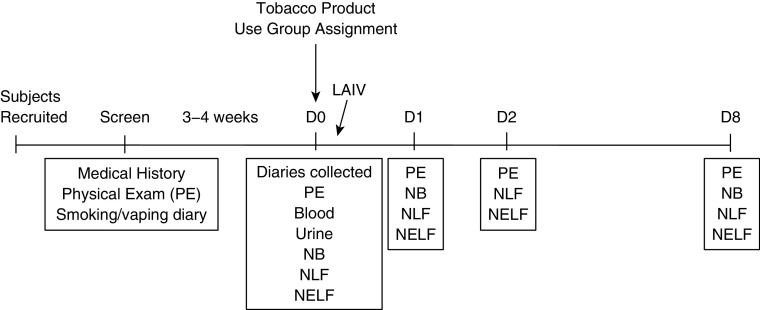
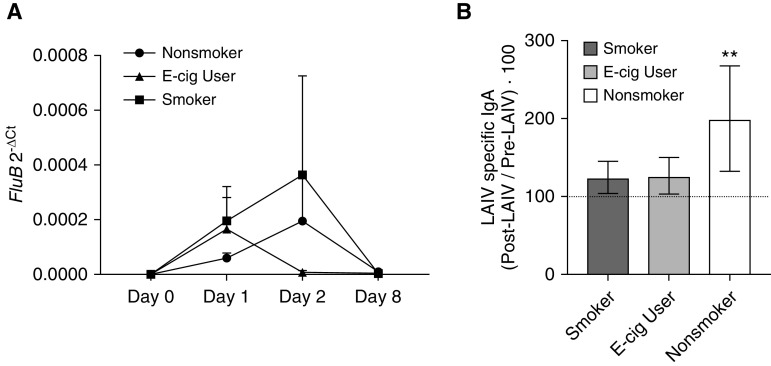
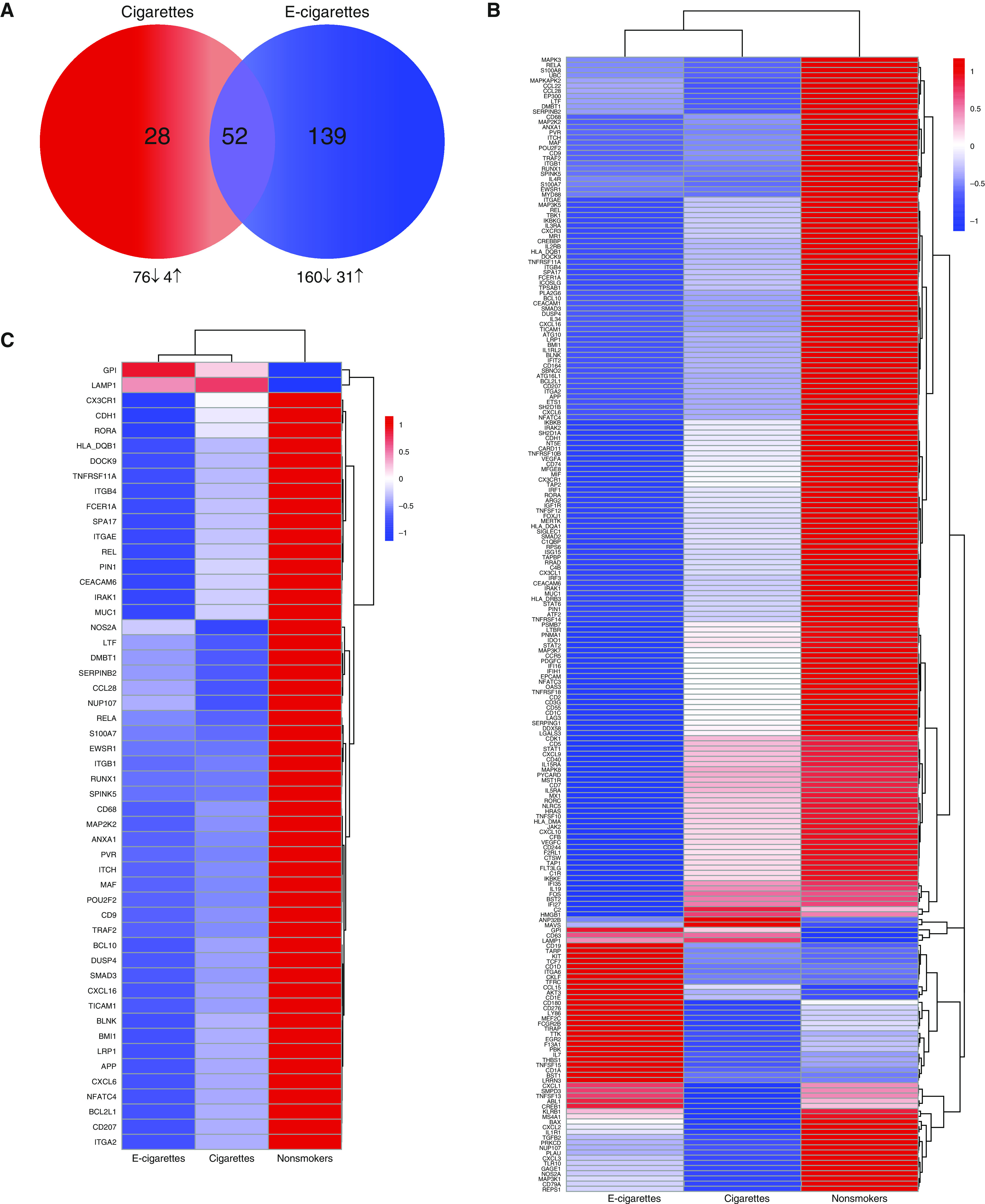
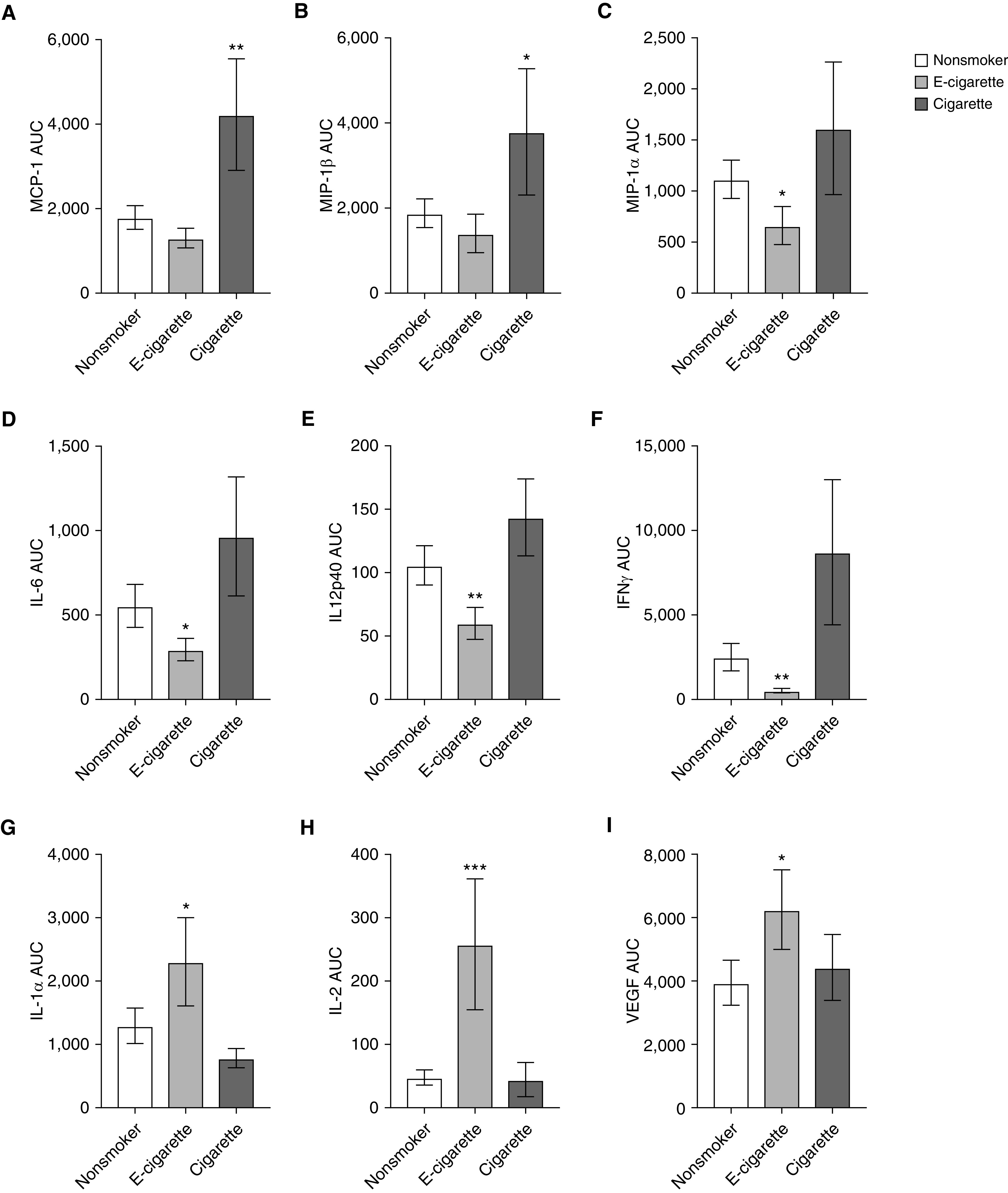
Inhalation of tobacco smoke has been linked to increased risk of viral infection, such as influenza. Inhalation of electronic-cigarette (e-cigarette) aerosol has also recently been linked to immune suppression within the respiratory tract, specifically the nasal mucosa. We propose that changes in the nasal mucosal immune response modify antiviral host-defense responses in e-cigarette users. Nonsmokers, cigarette smokers, and e-cigarette users were inoculated with live-attenuated influenza virus (LAIV) to safely examine the innate immune response to influenza infection. Before and after LAIV inoculation, we collected nasal epithelial-lining fluid, nasal lavage fluid, nasal-scrape biopsy specimens, urine, and blood. Endpoints examined include cytokines and chemokines, influenza-specific IgA, immune-gene expression, and markers of viral load. Statistical analysis included primary comparisons of cigarette and e-cigarette groups with nonsmokers, as well as secondary analysis of demographic factors as potential modifiers. Markers of viral load did not differ among the three groups. Nasal-lavage-fluid anti-LAIV IgA levels increased in nonsmokers after LAIV inoculation but did not increase in e-cigarette users and cigarette smokers. LAIV-induced gene-expression changes in nasal biopsy specimens differed in cigarette smokers and e-cigarette users as compared with nonsmokers, with a greater number of genes changed in e-cigarette users, mostly resulting in decreased expression. The top downregulated genes in cigarette smokers were , , and , and the top downregulated genes in e-cigarette users were , , and . Similarly, LAIV-induced cytokine levels in nasal epithelial-lining fluid differed among the three groups, including decreased antiviral host-defense mediators (IFNγ, IL6, and IL12p40). We also detected that sex interacted with tobacco-product exposure to modify LAIV-induced immune-gene expression. Our results demonstrate that e-cigarette use altered nasal LAIV-induced immune responses, including gene expression, cytokine and chemokine release, and LAIV-specific IgA levels. Together, these data suggest that e-cigarette use induces changes in the nasal mucosa that are consistent with the potential for altered respiratory antiviral host-defense function.Clinical trial registered with www.clinicaltrials.gov (NCT02019745).
吸入烟草烟雾已被证明会增加病毒感染的风险,例如流感。最近,吸入电子烟(e-cigarette)气溶胶也与呼吸道免疫抑制有关,特别是鼻黏膜。我们提出,鼻黏膜免疫反应的变化改变了电子烟使用者的抗病毒宿主防御反应。非吸烟者、香烟吸烟者和电子烟使用者接种了减毒活流感病毒(LAIV),以安全地检查对流感感染的先天免疫反应。在接种 LAIV 前后,我们收集了鼻上皮衬里液、鼻洗液、鼻刮活检标本、尿液和血液。检查的终点包括细胞因子和趋化因子、流感特异性 IgA、免疫基因表达和病毒载量标志物。统计分析包括香烟和电子烟组与非吸烟者的主要比较,以及作为潜在修饰剂的人口统计学因素的次要分析。三组之间的病毒载量标志物没有差异。LAIV 接种后,非吸烟者的鼻洗液抗 LAIV IgA 水平增加,但电子烟使用者和香烟吸烟者的 IgA 水平没有增加。与非吸烟者相比,香烟吸烟者和电子烟使用者的鼻活检标本中 LAIV 诱导的基因表达变化不同,电子烟使用者的基因变化更多,主要表现为表达下调。香烟吸烟者下调最多的基因是 、 和 ,电子烟使用者下调最多的基因是 、 和 。同样,鼻上皮衬里液中 LAIV 诱导的细胞因子水平在三组之间也存在差异,包括抗病毒宿主防御介质(IFNγ、IL6 和 IL12p40)减少。我们还检测到,性别与烟草制品暴露相互作用,从而改变 LAIV 诱导的免疫基因表达。我们的结果表明,电子烟的使用改变了鼻内 LAIV 诱导的免疫反应,包括基因表达、细胞因子和趋化因子释放以及 LAIV 特异性 IgA 水平。总之,这些数据表明,电子烟的使用会引起鼻黏膜的变化,这些变化与改变呼吸道抗病毒宿主防御功能的潜力一致。临床实验已在 www.clinicaltrials.gov 上注册(NCT02019745)。