Faculty of Medicine, Department of Primary Care Medicine, University of Malaya, Kuala Lumpur, Malaysia.
Faculty of Medicine, Department of Medicine, University of Malaya, Kuala Lumpur, Malaysia.
BMJ Open. 2015 Jan 29;5(1):e006407. doi: 10.1136/bmjopen-2014-006407.
To explore factors influencing poor glycaemic control in people with type 2 diabetes using insulin.
A qualitative method comprising in-depth individual interviews. A semistructured interview guide was used. The interviews were audiorecorded, transcribed verbatim and analysed using a thematic approach.
Seventeen people with type 2 diabetes using insulin with glycated haemoglobin (HbA1c) ≥9% for >1 year.
The Primary Care Clinic and Diabetes Clinic in the University of Malaya Medical Centre (UMMC), Malaysia.
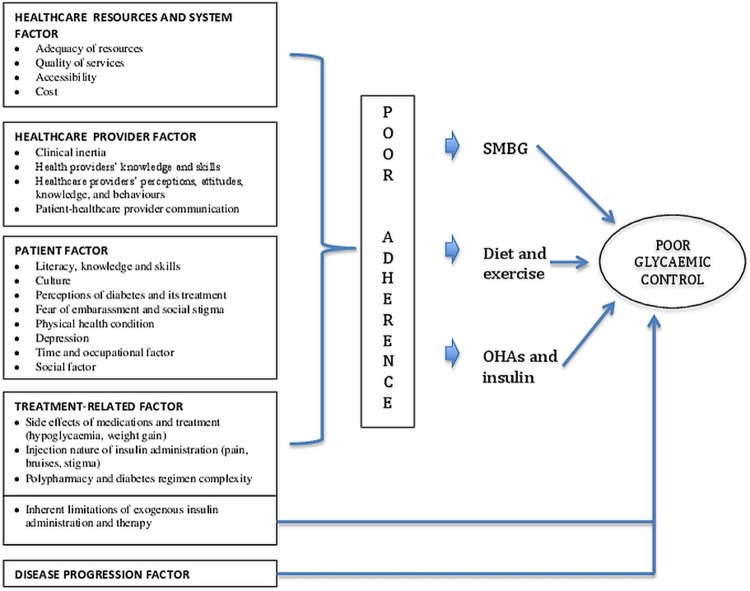
Data analysis uncovered four themes: lifestyle challenges in adhering to medical recommendations; psychosocial and emotional hurdles; treatment-related factors; lack of knowledge about and self-efficacy in diabetes self-care.
Factors that explain the poor glycaemic control in people with type 2 diabetes using insulin were identified. Healthcare providers could use these findings to address patients' concerns during consultations and help to improve glycaemic control.
探讨使用胰岛素的 2 型糖尿病患者血糖控制不佳的影响因素。
采用定性方法,包括深入的个体访谈。使用半结构化访谈指南。访谈进行录音,逐字转录,并使用主题分析方法进行分析。
17 名使用胰岛素的 2 型糖尿病患者,糖化血红蛋白(HbA1c)≥9%且>1 年。
马来西亚马来亚大学医学中心(UMMC)的基层医疗诊所和糖尿病诊所。
数据分析揭示了四个主题:生活方式挑战,难以遵守医疗建议;心理社会和情感障碍;治疗相关因素;对糖尿病自我护理的知识和自我效能感缺乏。
确定了使用胰岛素的 2 型糖尿病患者血糖控制不佳的解释因素。医疗保健提供者可以利用这些发现来解决患者咨询期间的问题,并帮助改善血糖控制。