Xu Dong-bei, Chen Ming, Ma Ya-nan, Xu Zhao-shi, Li Lian-cheng, Chen Yao-feng, Ma You-zhi
College of Agriculture, Northwest A&F University, Yangling, Shaanxi, 712100, China; Institute of Crop Sciences, Chinese Academy of Agricultural Sciences (CAAS)/National Key Facility for Crop Gene Resources and Genetic Improvement, Key Laboratory of Biology and Genetic Improvement of Triticeae Crops, Ministry of Agriculture, Beijing, 100081, China.
Institute of Crop Sciences, Chinese Academy of Agricultural Sciences (CAAS)/National Key Facility for Crop Gene Resources and Genetic Improvement, Key Laboratory of Biology and Genetic Improvement of Triticeae Crops, Ministry of Agriculture, Beijing, 100081, China.
PLoS One. 2015 Jan 30;10(1):e0116385. doi: 10.1371/journal.pone.0116385. eCollection 2015.
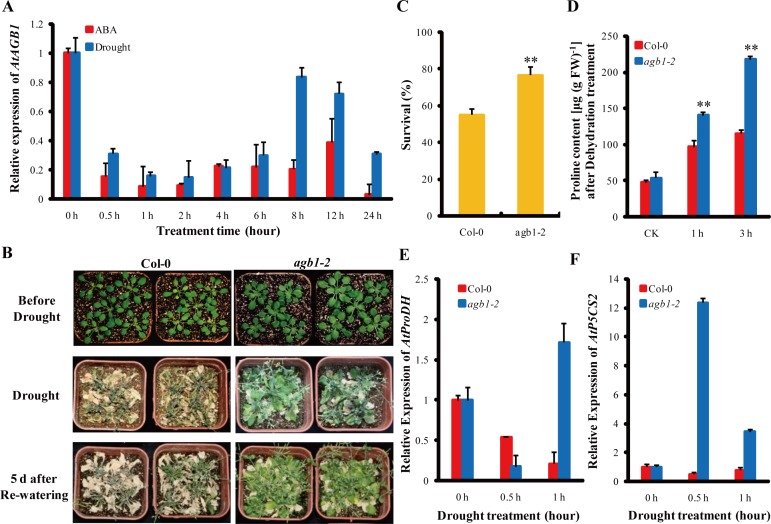
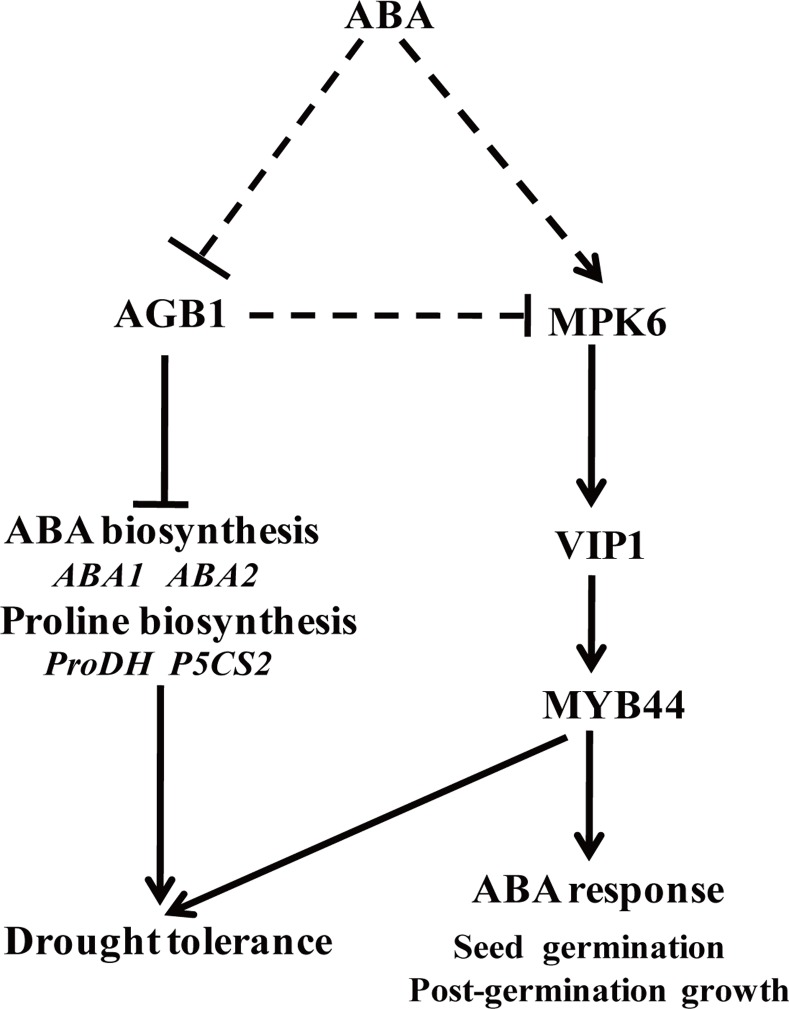
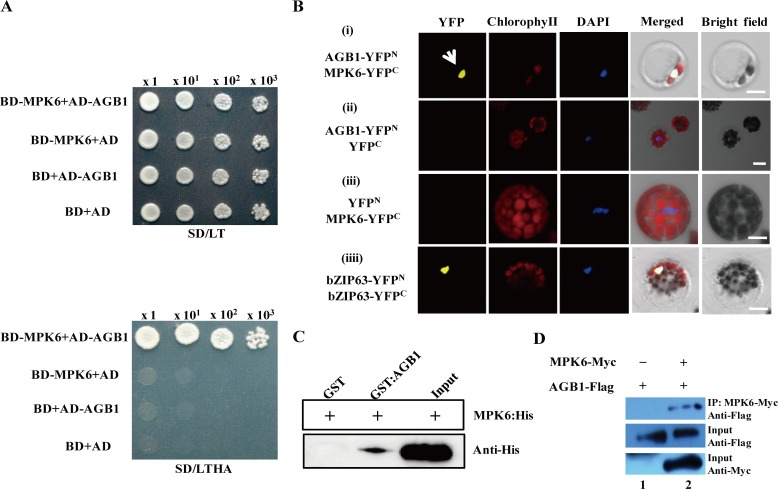
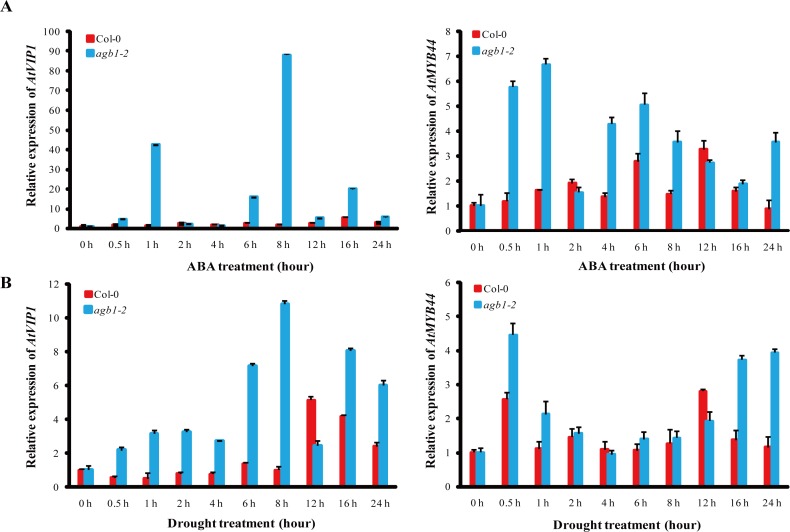
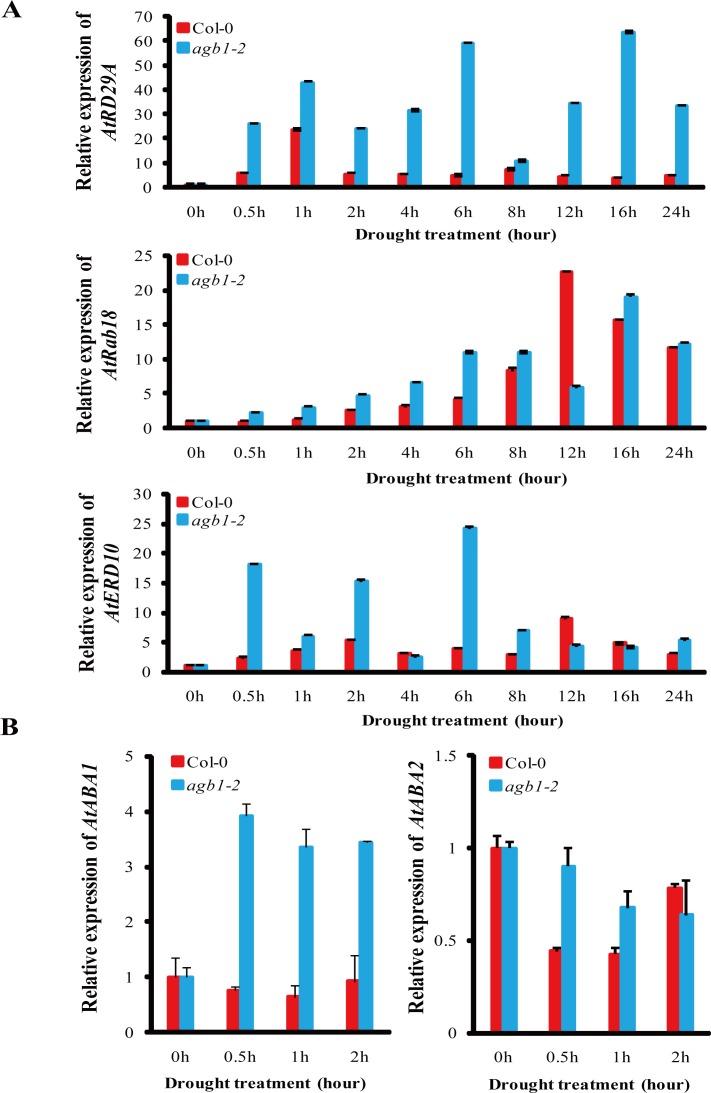
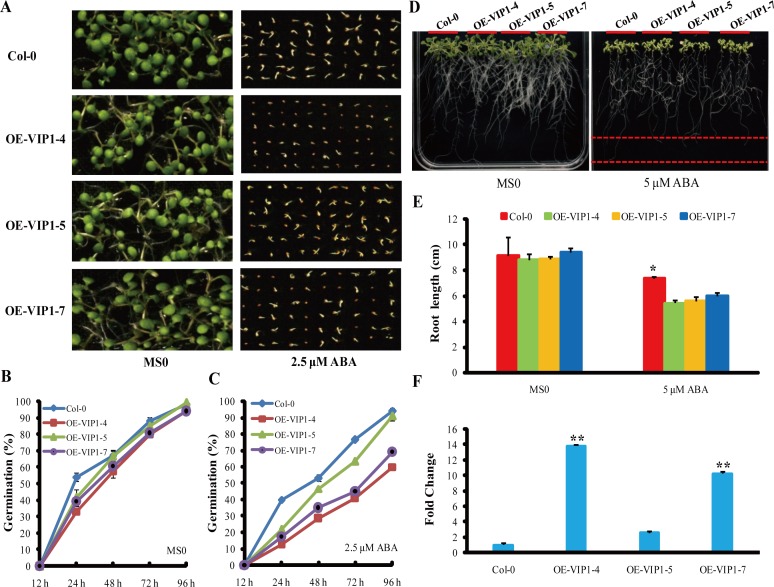
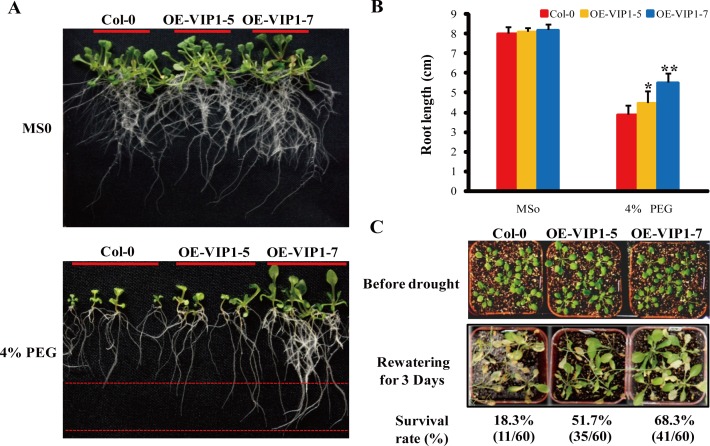
Heterotrimeric G-proteins are versatile regulators involved in diverse cellular processes in eukaryotes. In plants, the function of G-proteins is primarily associated with ABA signaling. However, the downstream effectors and the molecular mechanisms in the ABA pathway remain largely unknown. In this study, an AGB1 mutant (agb1-2) was found to show enhanced drought tolerance, indicating that AGB1 might negatively regulate drought tolerance in Arabidopsis. Data showed that AGB1 interacted with protein kinase AtMPK6 that was previously shown to phosphorylate AtVIP1, a transcription factor responding to ABA signaling. Our study found that transcript levels of three ABA responsive genes, AtMPK6, AtVIP1 and AtMYB44 (downstream gene of AtVIP1), were significantly up-regulated in agb1-2 lines after ABA or drought treatments. Other ABA-responsive and drought-inducible genes, such as RD29A (downstream gene of AtMYB44), were also up-regulated in agb1-2 lines. Furthermore, overexpression of AtVIP1 resulted in hypersensitivity to ABA at seed germination and seedling stages, and significantly enhanced drought tolerance in transgenic plants. These results suggest that AGB1 was involved in the ABA signaling pathway and drought tolerance in Arabidopsis through down-regulating the AtMPK6, AtVIP1 and AtMYB44 cascade.
异源三聚体G蛋白是参与真核生物多种细胞过程的多功能调节因子。在植物中,G蛋白的功能主要与脱落酸(ABA)信号传导相关。然而,ABA途径中的下游效应器和分子机制在很大程度上仍不清楚。在本研究中,发现AGB1突变体(agb1-2)表现出增强的耐旱性,这表明AGB1可能对拟南芥的耐旱性起负调控作用。数据显示,AGB1与蛋白激酶AtMPK6相互作用,此前已证明AtMPK6可磷酸化AtVIP1,AtVIP1是一种响应ABA信号的转录因子。我们的研究发现,在ABA或干旱处理后,agb1-2株系中三个ABA响应基因AtMPK6、AtVIP1和AtMYB44(AtVIP1的下游基因)的转录水平显著上调。其他ABA响应和干旱诱导基因,如RD29A(AtMYB44的下游基因),在agb1-2株系中也上调。此外,AtVIP1的过表达导致种子萌发和幼苗期对ABA超敏感,并显著增强转基因植物的耐旱性。这些结果表明,AGB1通过下调AtMPK6、AtVIP1和AtMYB44级联反应参与拟南芥的ABA信号通路和耐旱性。