Milovanovic Dragomir, Honigmann Alf, Koike Seiichi, Göttfert Fabian, Pähler Gesa, Junius Meike, Müllar Stefan, Diederichsen Ulf, Janshoff Andreas, Grubmüller Helmut, Risselada Herre J, Eggeling Christian, Hell Stefan W, van den Bogaart Geert, Jahn Reinhard
Department of Neurobiology, Max Planck Institute for Biophysical Chemistry, D-37077 Göttingen, Germany.
Department of NanoBiophotonics, Max Planck Institute for Biophysical Chemistry, D-37077 Göttingen, Germany.
Nat Commun. 2015 Jan 30;6:5984. doi: 10.1038/ncomms6984.
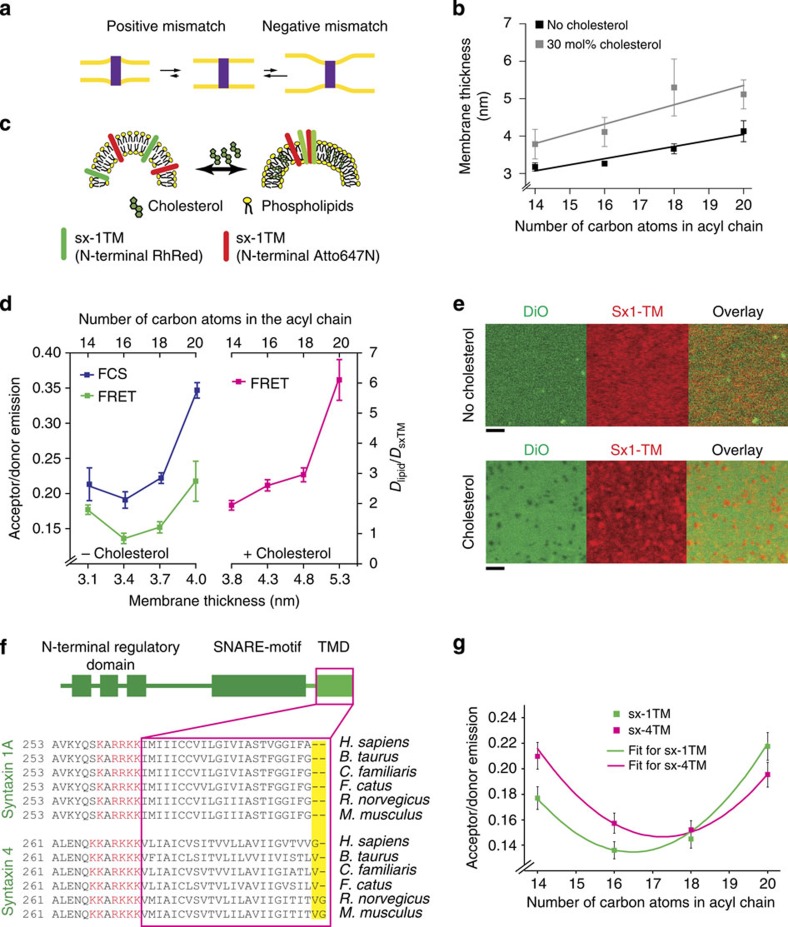
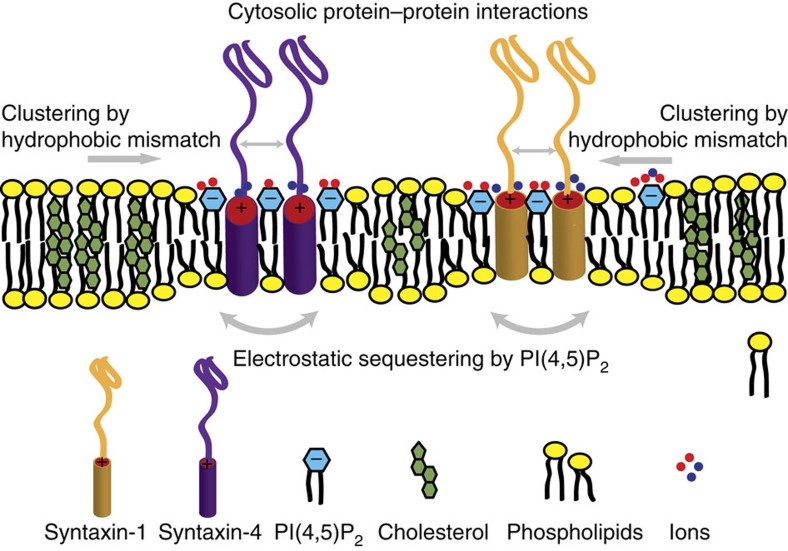
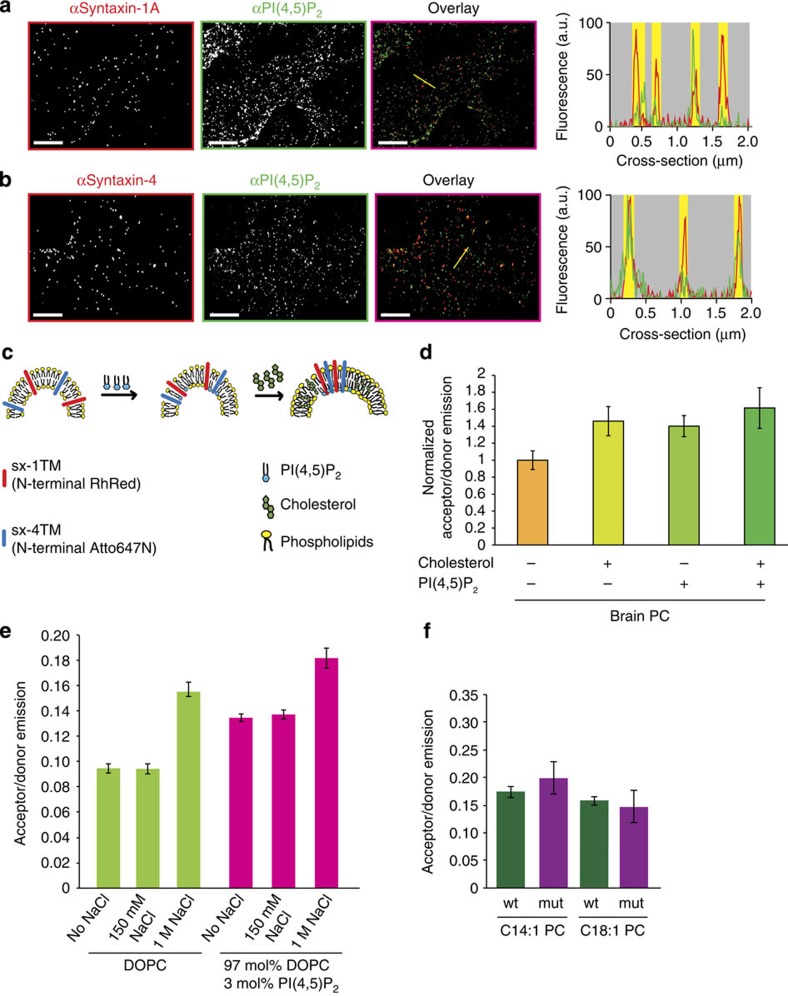
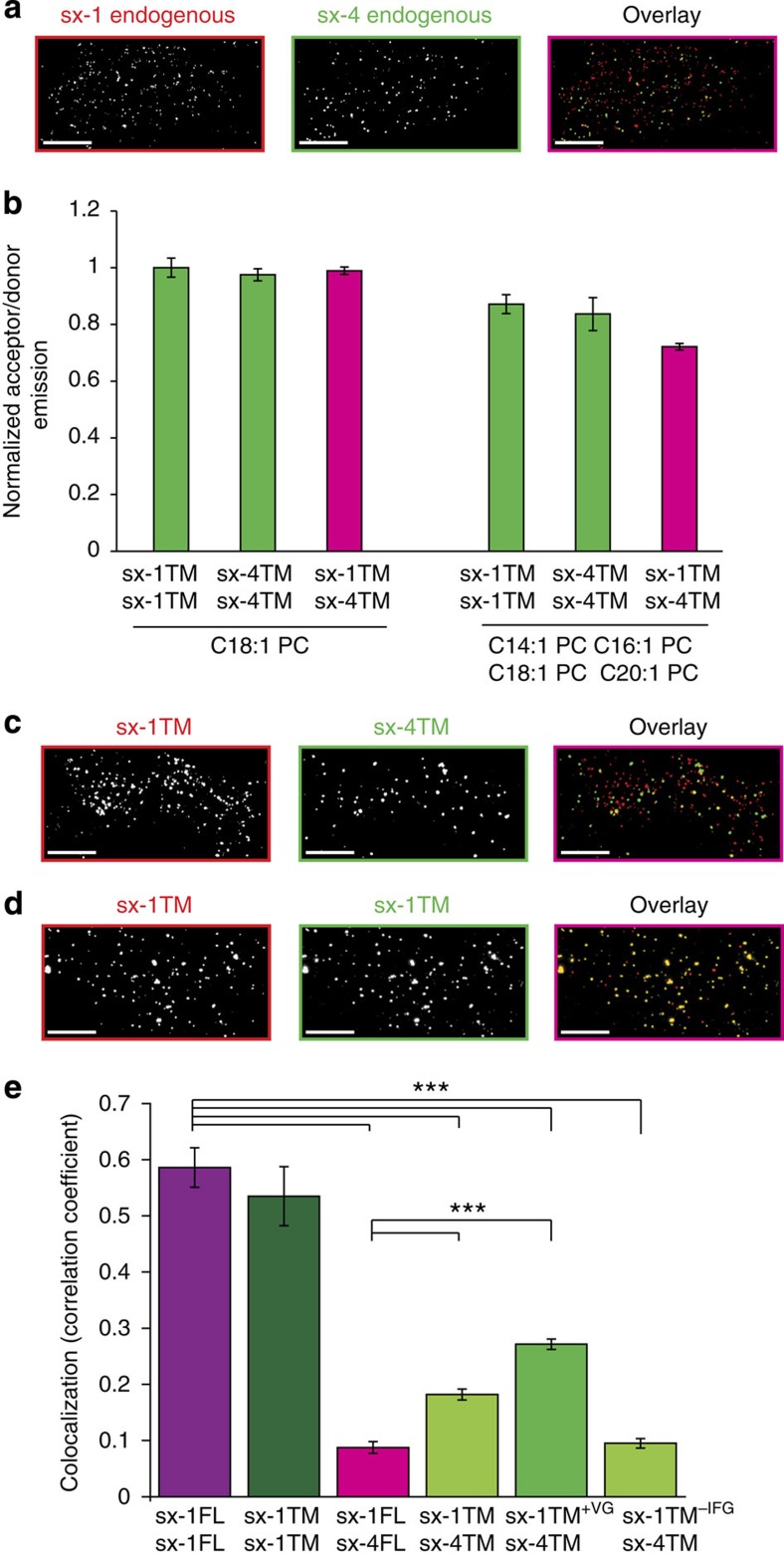
The clustering of proteins and lipids in distinct microdomains is emerging as an important principle for the spatial patterning of biological membranes. Such domain formation can be the result of hydrophobic and ionic interactions with membrane lipids as well as of specific protein-protein interactions. Here using plasma membrane-resident SNARE proteins as model, we show that hydrophobic mismatch between the length of transmembrane domains (TMDs) and the thickness of the lipid membrane suffices to induce clustering of proteins. Even when the TMDs differ in length by only a single residue, hydrophobic mismatch can segregate structurally closely homologous membrane proteins in distinct membrane domains. Domain formation is further fine-tuned by interactions with polyanionic phosphoinositides and homo and heterotypic protein interactions. Our findings demonstrate that hydrophobic mismatch contributes to the structural organization of membranes.
蛋白质和脂质在不同微结构域中的聚集正成为生物膜空间模式形成的一个重要原则。这种结构域的形成可能是与膜脂发生疏水和离子相互作用以及特定蛋白质-蛋白质相互作用的结果。在这里,我们以驻留在质膜上的SNARE蛋白为模型,表明跨膜结构域(TMD)长度与脂质膜厚度之间的疏水不匹配足以诱导蛋白质聚集。即使TMD的长度仅相差一个残基,疏水不匹配也能将结构上密切同源的膜蛋白分隔到不同的膜结构域中。与多阴离子磷酸肌醇的相互作用以及同型和异型蛋白质相互作用进一步微调了结构域的形成。我们的研究结果表明,疏水不匹配有助于膜的结构组织。