Mancino Alessandra, Termanini Alberto, Barozzi Iros, Ghisletti Serena, Ostuni Renato, Prosperini Elena, Ozato Keiko, Natoli Gioacchino
Department of Experimental Oncology, European Institute of Oncology (IEO), 20139 Milan, Italy;
Laboratory of Molecular Growth Regulation, Genomics of Differentiation Program, National Institute of Child Health and Human Development (NICHD), National Institutes of Health, Bethesda, Maryland 20892, USA.
Genes Dev. 2015 Feb 15;29(4):394-408. doi: 10.1101/gad.257592.114. Epub 2015 Jan 30.
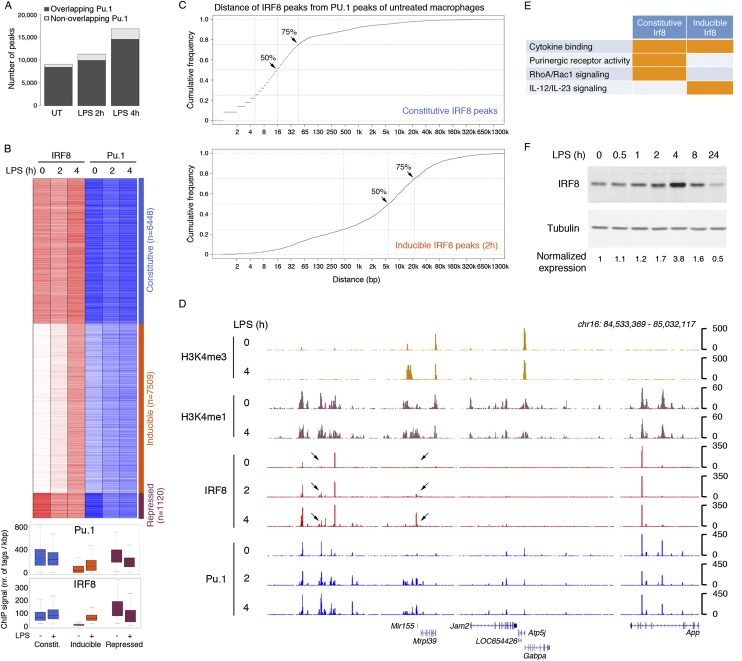
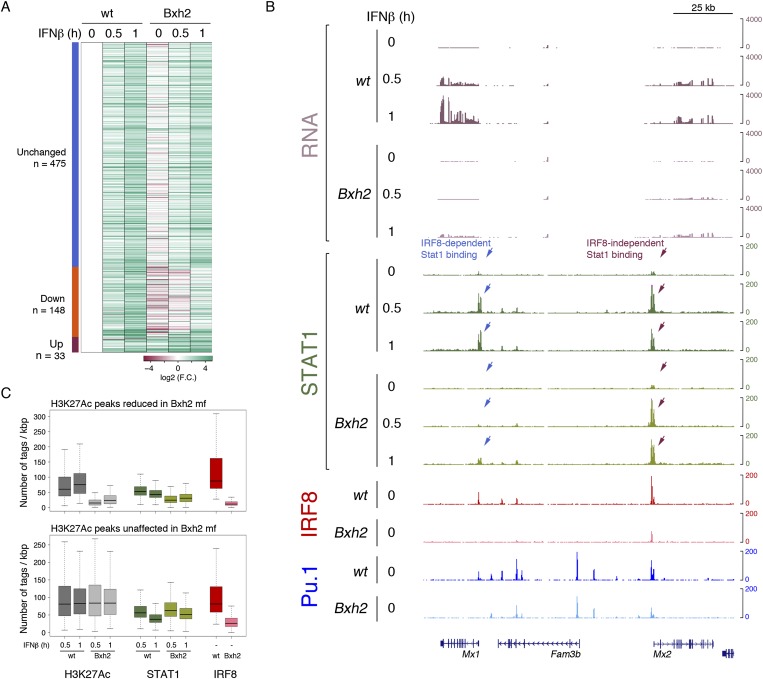
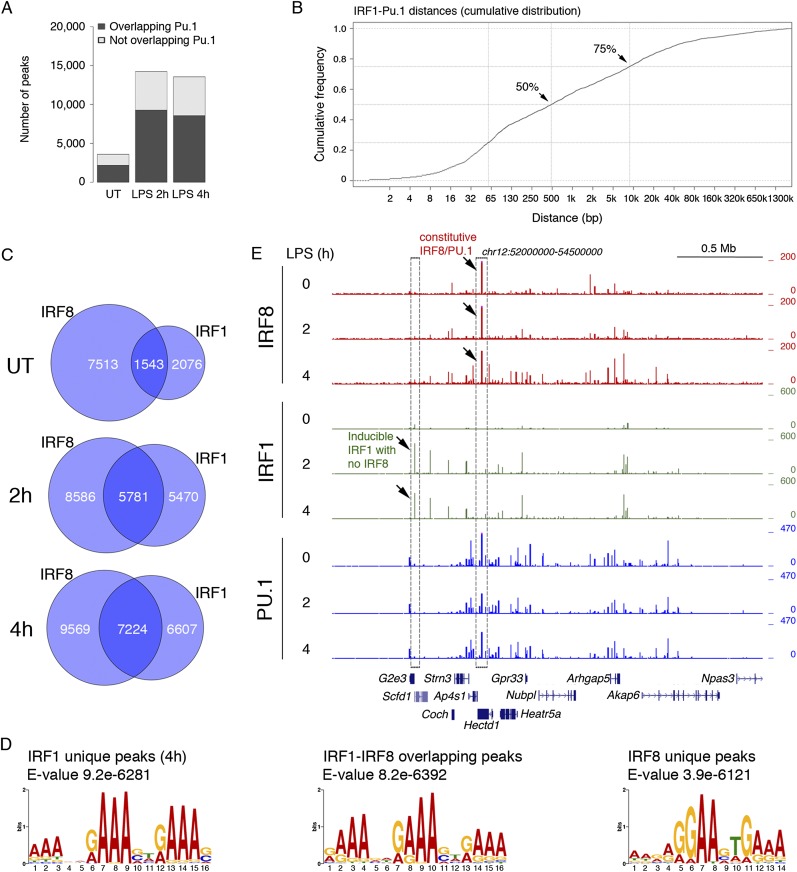
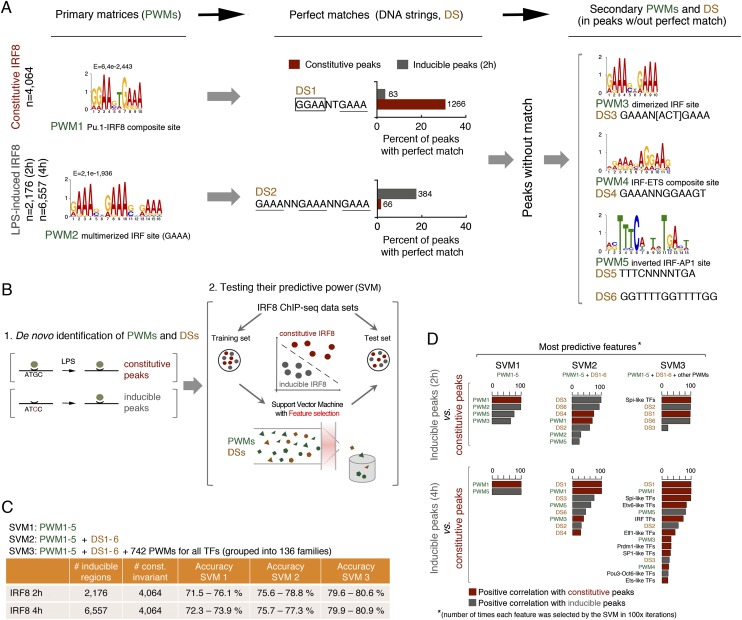
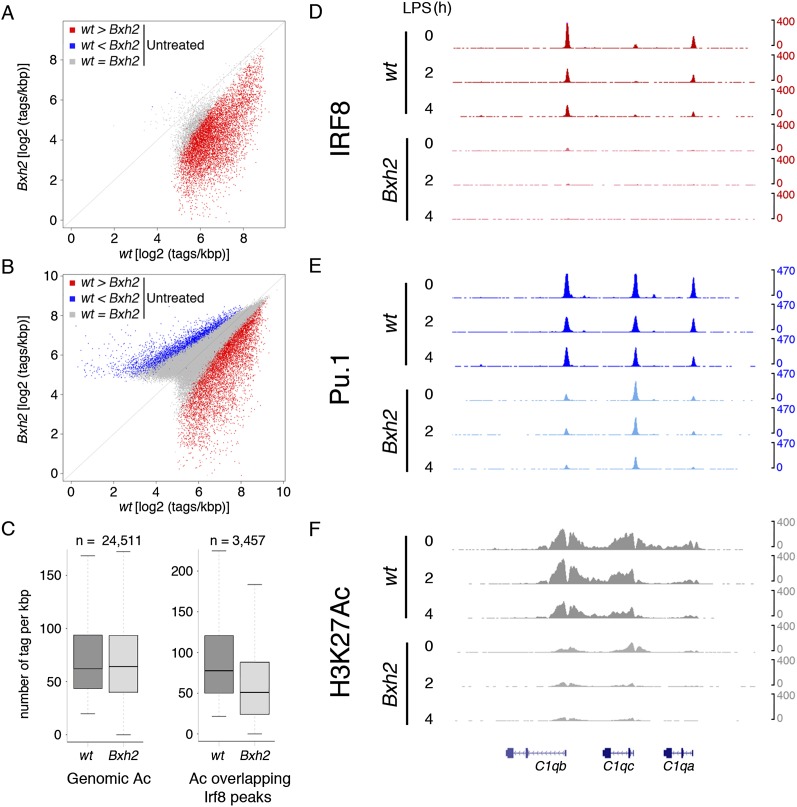
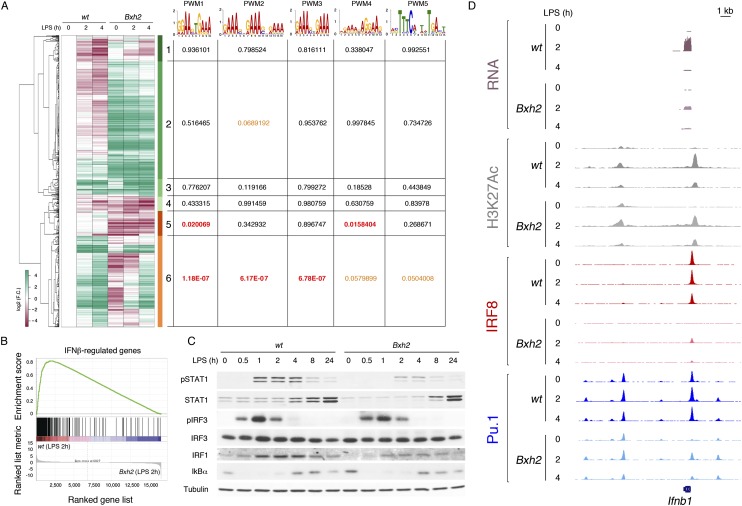
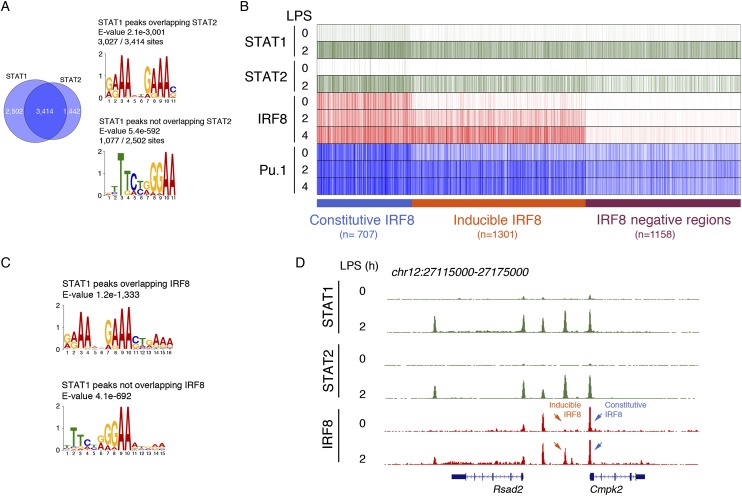
The transcription factor (TF) interferon regulatory factor 8 (IRF8) controls both developmental and inflammatory stimulus-inducible genes in macrophages, but the mechanisms underlying these two different functions are largely unknown. One possibility is that these different roles are linked to the ability of IRF8 to bind alternative DNA sequences. We found that IRF8 is recruited to distinct sets of DNA consensus sequences before and after lipopolysaccharide (LPS) stimulation. In resting cells, IRF8 was mainly bound to composite sites together with the master regulator of myeloid development PU.1. Basal IRF8-PU.1 binding maintained the expression of a broad panel of genes essential for macrophage functions (such as microbial recognition and response to purines) and contributed to basal expression of many LPS-inducible genes. After LPS stimulation, increased expression of IRF8, other IRFs, and AP-1 family TFs enabled IRF8 binding to thousands of additional regions containing low-affinity multimerized IRF sites and composite IRF-AP-1 sites, which were not premarked by PU.1 and did not contribute to the basal IRF8 cistrome. While constitutively expressed IRF8-dependent genes contained only sites mediating basal IRF8/PU.1 recruitment, inducible IRF8-dependent genes contained variable combinations of constitutive and inducible sites. Overall, these data show at the genome scale how the same TF can be linked to constitutive and inducible gene regulation via distinct combinations of alternative DNA-binding sites.
转录因子干扰素调节因子8(IRF8)可调控巨噬细胞中发育相关基因及炎症刺激诱导基因,但这两种不同功能背后的机制尚不清楚。一种可能性是,这些不同作用与IRF8结合不同DNA序列的能力有关。我们发现,脂多糖(LPS)刺激前后,IRF8被招募至不同的DNA共有序列组。在静息细胞中,IRF8主要与髓系发育的主要调节因子PU.1一起结合于复合位点。基础IRF8-PU.1结合维持了一系列对巨噬细胞功能至关重要的基因(如微生物识别和嘌呤反应)的表达,并促进了许多LPS诱导基因的基础表达。LPS刺激后,IRF8、其他IRF和AP-1家族转录因子表达增加,使IRF8能够结合数千个额外区域,这些区域包含低亲和力多聚化IRF位点和复合IRF-AP-1位点,这些位点未被PU.1预先标记,也不参与基础IRF8顺式作用组。虽然组成型表达的IRF8依赖性基因仅包含介导基础IRF8/PU.1募集的位点,但诱导型IRF8依赖性基因包含组成型和诱导型位点的可变组合。总体而言,这些数据在基因组规模上展示了同一转录因子如何通过不同DNA结合位点的不同组合与组成型和诱导型基因调控相联系。