Lu Jun, Li Guangliang, He Kuifeng, Jiang Weiqin, Xu Cong, Li Zhongqi, Wang Haohao, Wang Weibin, Wang Haiyong, Teng Xiaodong, Teng Lisong
Department of Surgical Oncology, The 1st Affiliated Hospital, School of Medicine, Zhejiang University, NO. 79 Qingchun Road, Hangzhou, 310003, Zhejiang, China.
Department of Pathology, The 1st Affiliated Hospital, School of Medicine, Zhejiang University, NO. 79 Qingchun Road, Hangzhou, 310003, Zhejiang, China.
J Transl Med. 2015 Feb 1;13:42. doi: 10.1186/s12967-015-0398-z.
Aberrated activation of cMet in gastric cancer contributes to tumor growth, angiogenesis and metastasis. cMet-overexpressing gastric cancer has a poor prognosis because of high tumor metastasis and limited therapeutic options. Luteolin is a common dietary flavonoid with antitumor properties. However, the antitumor effect of luteolin on cMet-overexpressing gastric cancer remain unclear.
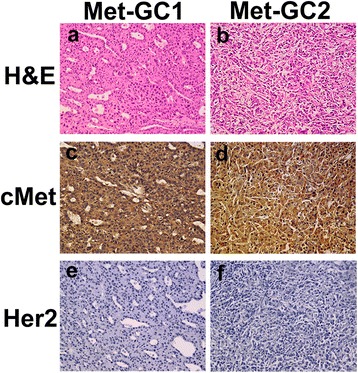
Two cMet-overexpressing patient-derived human tumor xenograft (PDTX) models of gastric cancer were established, and treated with luteolin or vehicle to evaluate the antitumor effects of luteolin. Tumor specimens were subjected to H&E staining and immunohistochemistry. MKN45 and SGC7901 cells that show high cMet expression were treated with varying concentrations of luteolin and evaluated by western blot, cell viability, apoptosis, migration, and invasion assays.
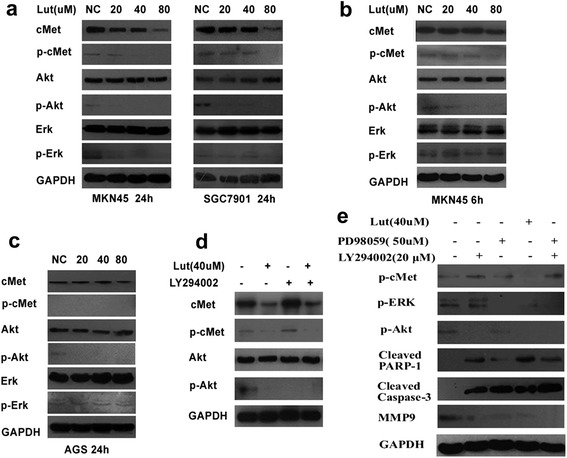
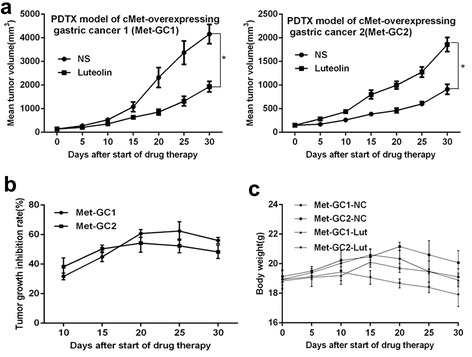
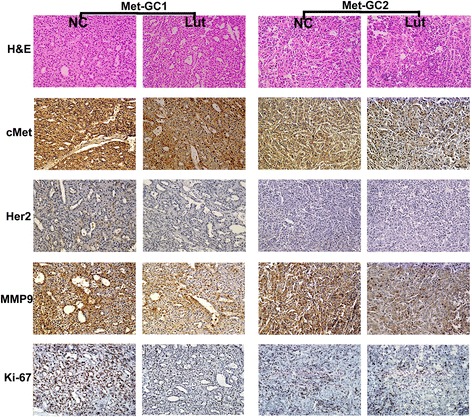
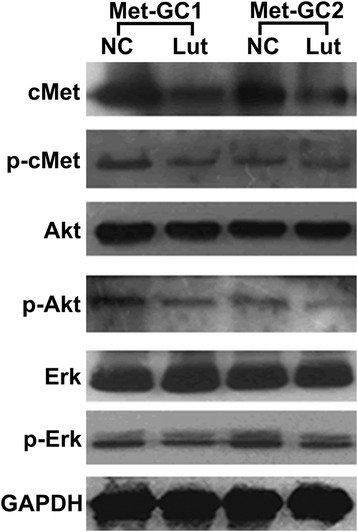
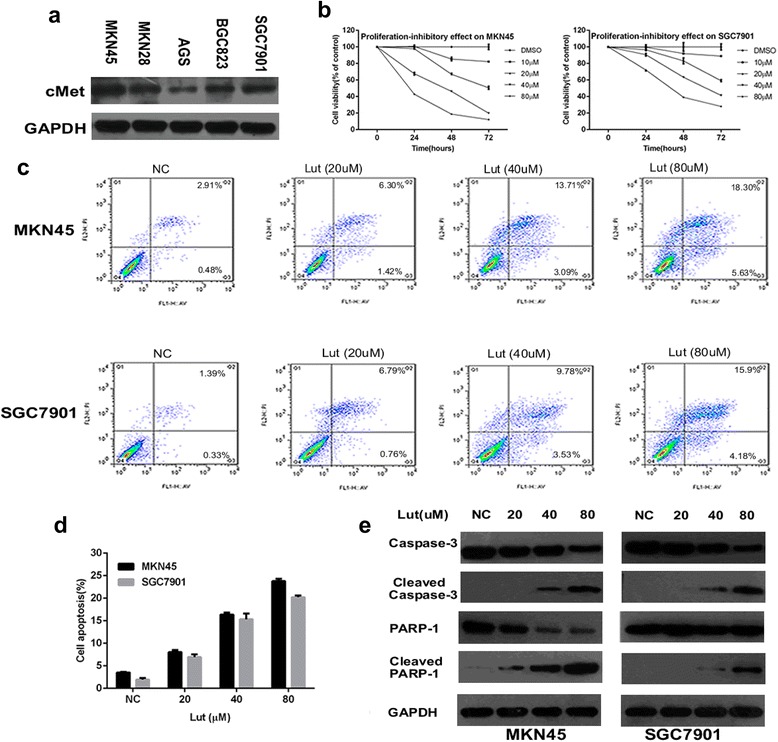
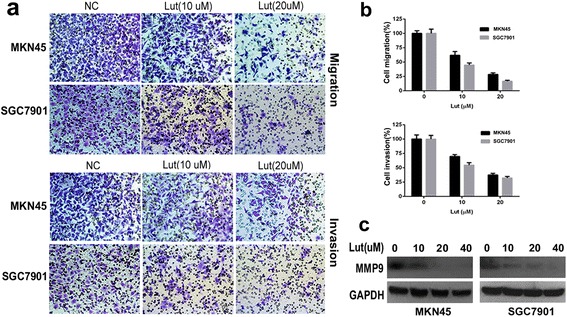
Luteolin inhibited the tumor growth in cMet-overexpressing PDTX models. Immunohistochemistry demonstrated that expression of cMet, MMP9 and Ki-67 were significantly down-regulated. Luteolin inhibited proliferation, promoted apoptosis and reduced the invasiveness of MKN45 and SGC7901 cells. Western blot revealed that luteolin promoted the activation of apoptosis-related proteins, caspase-3 and PARP-1, and down-regulated the invasion-associated protein, MMP9. Further studies demonstrated that luteolin decreased the expression and phosphorylation of cMet, and downstream phosphorylation of Akt and ERK. In addition, luteolin down-regulated phosphorylated Akt independently of cMet. Blocking Akt and/or ERK with the PI3K inhibitor, LY294002, or the ERK inhibitor, PD98059, induced down-regulation of MMP9 and up-regulation of cleaved caspase-3 and PARP-1, resembling the effects of luteolin.
Our findings ,for the first time, demonstrate that luteolin exerts marked antitumor effects in cMet-overexpressing PDTX models of gastric cancer, through a mechanism likely involving cMet/Akt/ERK signaling. These findings indicate that luteolin may act as a potential therapeutic option for cMet-overexpressing gastric cancer.
cMet在胃癌中的异常激活有助于肿瘤生长、血管生成和转移。cMet过表达的胃癌由于肿瘤转移率高且治疗选择有限,预后较差。木犀草素是一种具有抗肿瘤特性的常见膳食类黄酮。然而,木犀草素对cMet过表达的胃癌的抗肿瘤作用仍不清楚。
建立了两种cMet过表达的患者来源的人胃癌肿瘤异种移植(PDTX)模型,并用木犀草素或赋形剂处理以评估木犀草素的抗肿瘤作用。对肿瘤标本进行苏木精-伊红(H&E)染色和免疫组织化学分析。用不同浓度的木犀草素处理cMet高表达的MKN45和SGC7901细胞,并通过蛋白质免疫印迹法、细胞活力、凋亡、迁移和侵袭实验进行评估。
木犀草素抑制了cMet过表达的PDTX模型中的肿瘤生长。免疫组织化学显示,cMet、基质金属蛋白酶9(MMP9)和Ki-67的表达显著下调。木犀草素抑制MKN45和SGC7901细胞的增殖,促进其凋亡并降低其侵袭性。蛋白质免疫印迹法显示,木犀草素促进凋亡相关蛋白半胱天冬酶-3(caspase-3)和聚(ADP-核糖)聚合酶-1(PARP-1)的激活,并下调侵袭相关蛋白MMP9。进一步研究表明,木犀草素降低了cMet的表达和磷酸化,以及Akt和细胞外信号调节激酶(ERK)的下游磷酸化。此外,木犀草素独立于cMet下调磷酸化的Akt。用磷脂酰肌醇-3激酶(PI3K)抑制剂LY294002或ERK抑制剂PD98059阻断Akt和/或ERK,可诱导MMP9下调以及切割的caspase-3和PARP-1上调,类似于木犀草素的作用。
我们的研究结果首次表明,木犀草素在cMet过表达的胃癌PDTX模型中发挥显著的抗肿瘤作用,其机制可能涉及cMet/Akt/ERK信号通路。这些研究结果表明,木犀草素可能是cMet过表达胃癌的一种潜在治疗选择。