Pawlowski Przemyslaw, Wawrusiewicz-Kurylonek Natalia, Eckstein Anja, Reszec Joanna, Luczynski Wlodzimierz, Johnson Kristian, Kretowski Adam, Bakunowicz-Lazarczyk Alina, Gorska Maria, Szamatowicz Jacek, Chyczewski Lech, Mysliwiec Janusz
Department of Medical Pathomorphology, Cathedral of Biostructure, Medical University of Białystok, 13 Waszyngtona Street, 15-269 Białystok, Poland ; Department of Pediatric Ophthalmology with Strabismus Treatment Unit, Medical University of Białystok, 17 Waszyngtona Street, 15-274 Białystok, Poland.
Department of Diabetology, Endocrinology and Internal Medicine, Medical University of Białystok, 24A Skłodowskiej-Curie Street, 15-276 Białystok, Poland.
Mediators Inflamm. 2015;2015:340934. doi: 10.1155/2015/340934. Epub 2015 Jan 12.
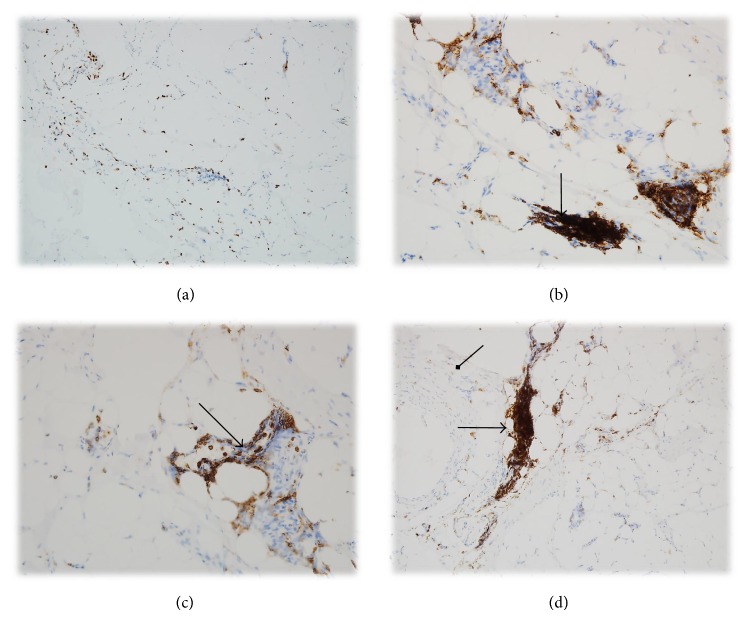
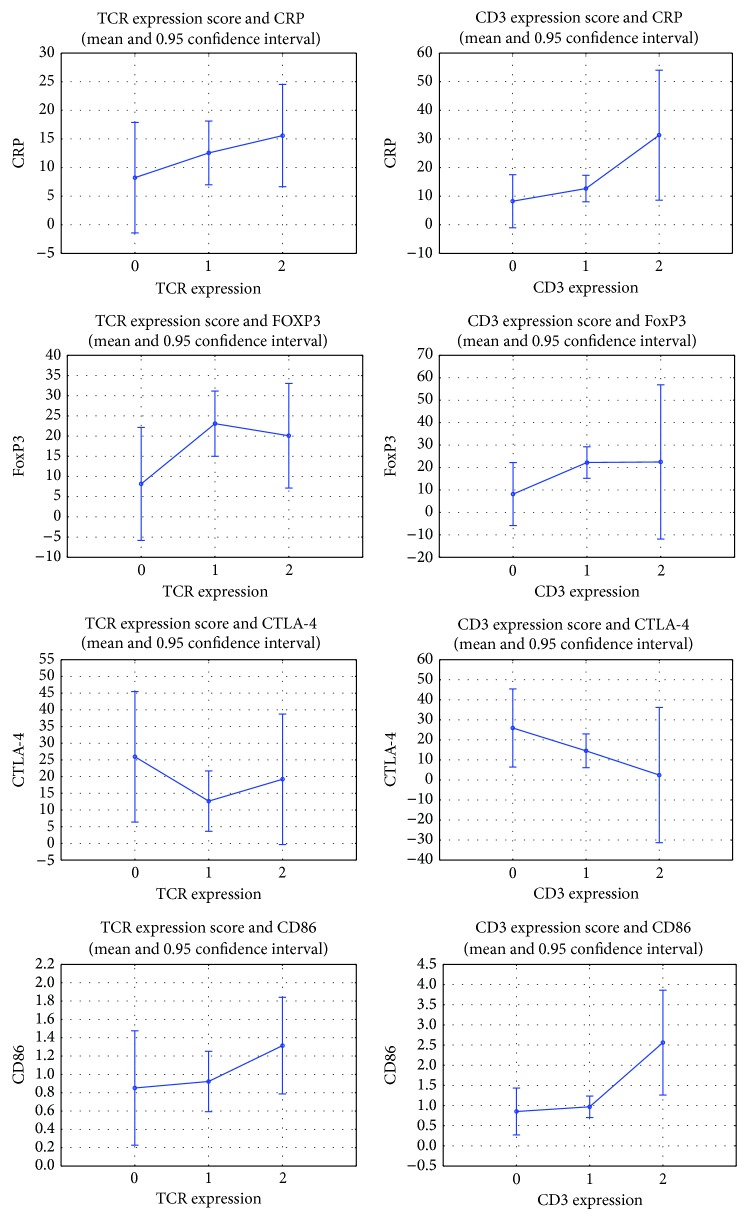
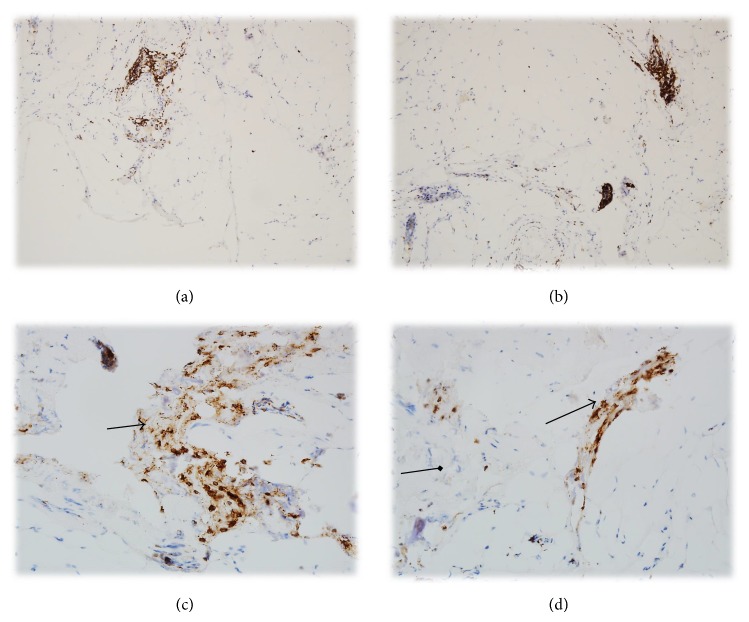
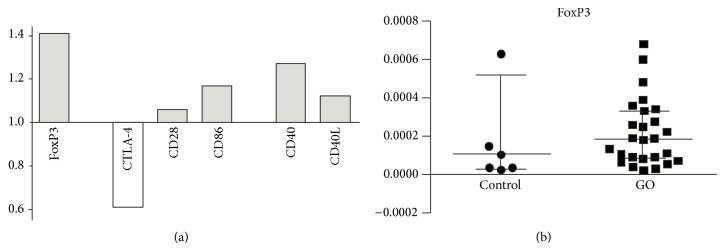
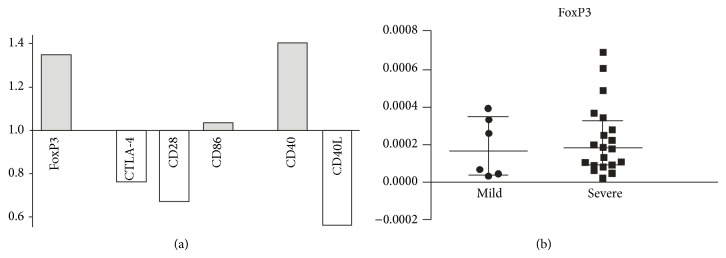
Purpose. To evaluate the relationship between the expression of orbital tissue mRNA for FOXP3, CTLA-4/CD28/CD80/CD86, and CD40/CD40 and the severity of Graves' orbitopathy (GO). Material and Methods. Orbital tissue was obtained from 26 patients with GO, with mild (n = 6) or severe GO (n = 20), and 7 healthy controls. The expression of mRNA of FOXP3, CTLA-4/CD28/CD80/CD86, CD40/CD40L was measured by RT-PCR. TCR and CD3 were evaluated by immunohistochemistry. Results. Higher mRNA for FoxP3 (relative expression: 1.4) and CD40 (1.27) and lower expression of CTLA-4 (0.61) were found in the GO tissues versus controls. In severe GO as compared to mild GO higher mRNA expression for FoxP3 (1.35) and CD40 (1.4) and lower expression for CTLA-4 (0.78), CD28 (0.62), and CD40L (0.56) were found. A positive correlation was found between FOXP3 mRNA and CD3 infiltration (R = 0.796, P = 0.0000001). Conclusions. The enhanced FOXP3 mRNA expression in GO samples may suggest the dysfunction of FOXP3 cells in the severe GO. The diminished mRNA expression of CTLA-4 in severe GO may indicate inadequate T regulatory function. The enhanced mRNA expression of CD40 in severe GO and negative correlation to CRP mRNA may suggest their role in the active and inactive GO.
目的。评估FOXP3、CTLA-4/CD28/CD80/CD86以及CD40/CD40L眼眶组织mRNA表达与Graves眼病(GO)严重程度之间的关系。材料与方法。从26例GO患者(轻度,n = 6;重度,n = 20)以及7例健康对照者获取眼眶组织。通过逆转录聚合酶链反应(RT-PCR)检测FOXP3、CTLA-4/CD28/CD80/CD86、CD40/CD40L的mRNA表达。通过免疫组织化学评估T细胞受体(TCR)和CD3。结果。与对照组相比,GO组织中FoxP3(相对表达:1.4)和CD40(1.27)的mRNA水平较高,而CTLA-4(0.61)的表达较低。与轻度GO相比,重度GO中FoxP3(1.35)和CD40(1.4)的mRNA表达较高,而CTLA-4(0.78)、CD28(0.62)和CD40L(0.56)的表达较低。发现FOXP3 mRNA与CD3浸润之间存在正相关(R = 0.796,P = 0.0000001)。结论。GO样本中FOXP3 mRNA表达增强可能提示重度GO中FOXP3细胞功能障碍。重度GO中CTLA-4 mRNA表达降低可能表明T调节功能不足。重度GO中CD40 mRNA表达增强以及与CRP mRNA的负相关可能提示它们在活动期和非活动期GO中的作用。