Department of Microbiology and Molecular Genetics, Oklahoma State University , Stillwater, OK , USA.
Front Bioeng Biotechnol. 2015 Jan 20;3:1. doi: 10.3389/fbioe.2015.00001. eCollection 2015.
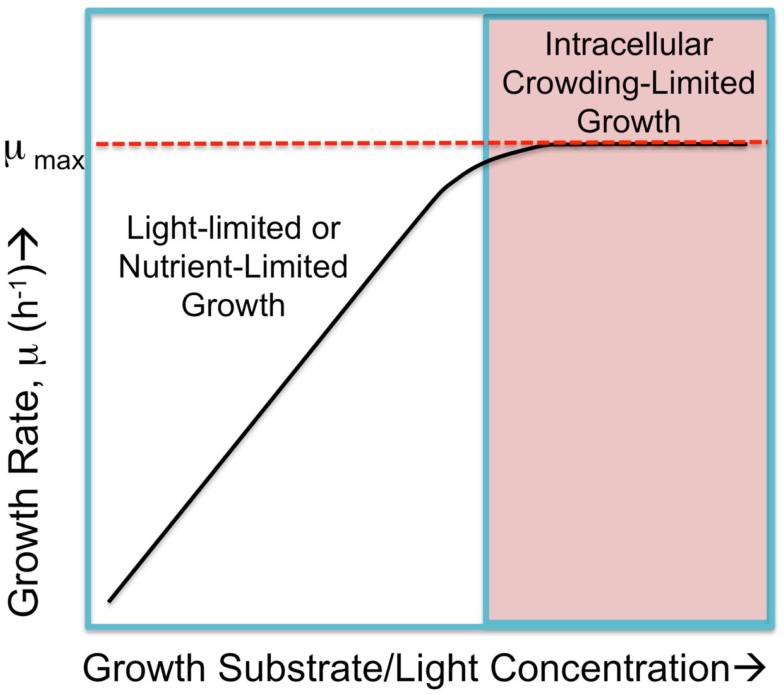
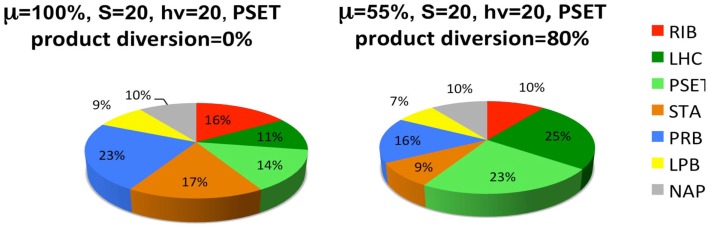
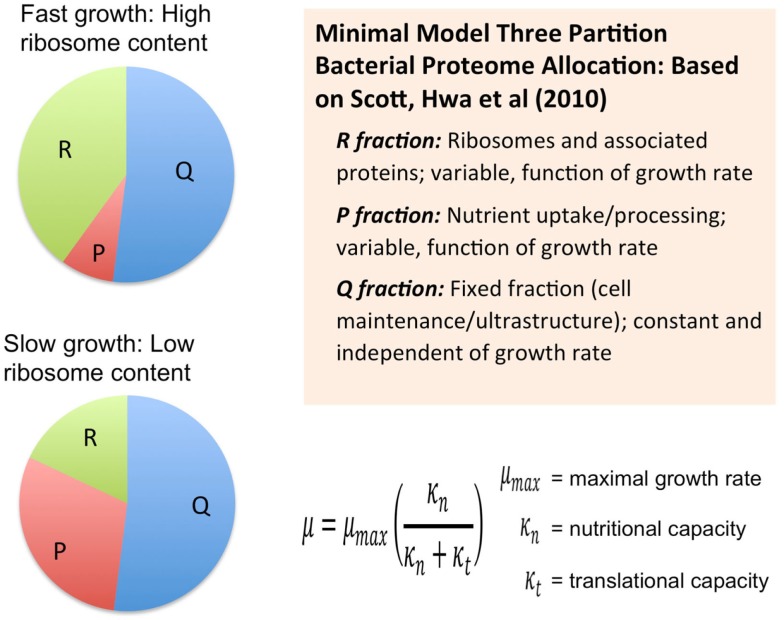
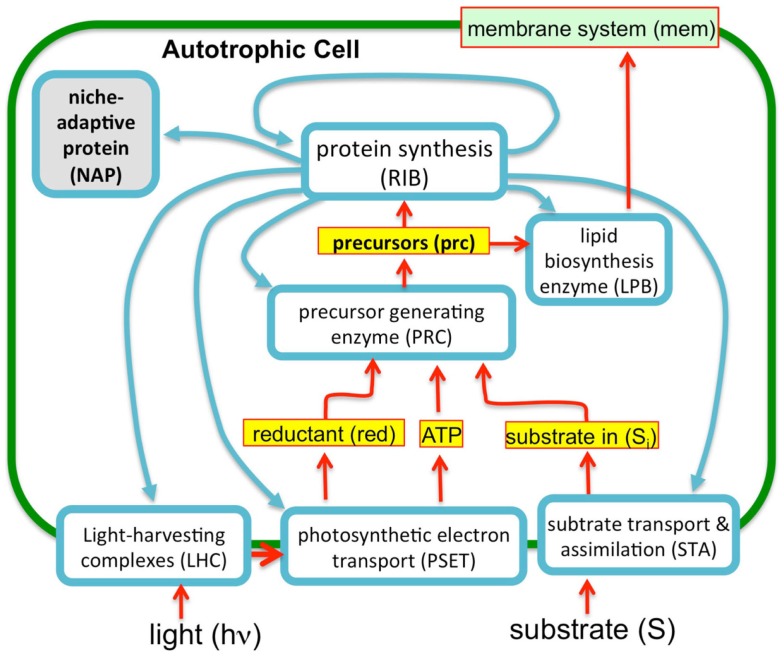
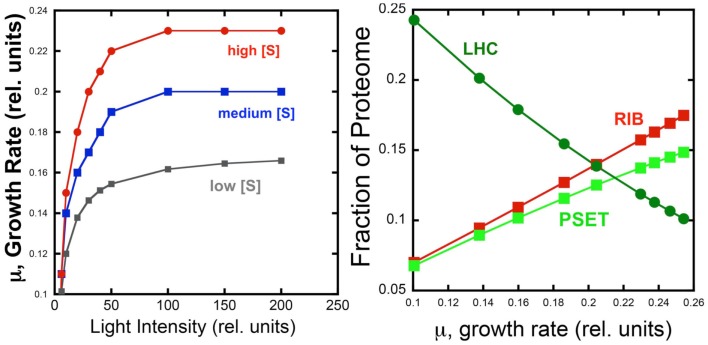
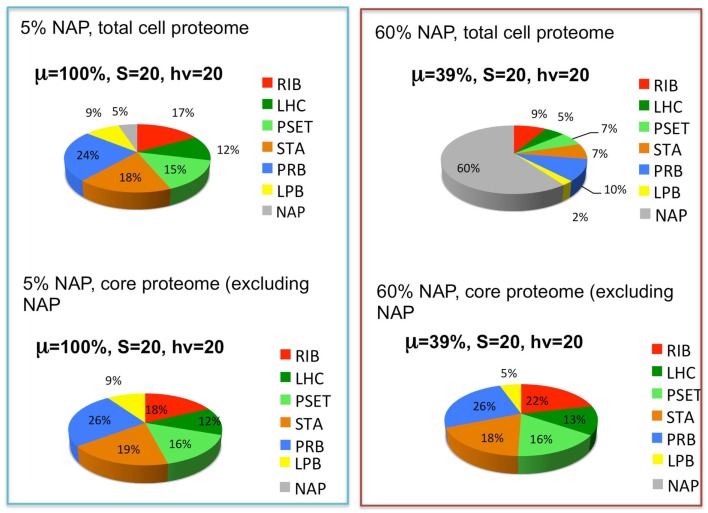
Recent advances in the modeling of microbial growth and metabolism have shown that growth rate critically depends upon the optimal allocation of finite proteomic resources among different cellular functions and that modeling growth rates becomes more realistic with the explicit accounting for the costs of macromolecular synthesis, most importantly, protein expression. The "proteomic constraint" is considered together with its application to understanding photosynthetic microbial growth. The central hypothesis is that physical limits of cellular space (and corresponding solvation capacity) in conjunction with cell surface-to-volume ratios represent the underlying constraints on the maximal rate of autotrophic microbial growth. The limitation of cellular space thus constrains the size the total complement of macromolecules, dissolved ions, and metabolites. To a first approximation, the upper limit in the cellular amount of the total proteome is bounded this space limit. This predicts that adaptation to osmotic stress will result in lower maximal growth rates due to decreased cellular concentrations of core metabolic proteins necessary for cell growth owing the accumulation of compatible osmolytes, as surmised previously. The finite capacity of membrane and cytoplasmic space also leads to the hypothesis that the species-specific differences in maximal growth rates likely reflect differences in the allocation of space to niche-specific proteins with the corresponding diminution of space devoted to other functions including proteins of core autotrophic metabolism, which drive cell reproduction. An optimization model for autotrophic microbial growth, the autotrophic replicator model, was developed based upon previous work investigating heterotrophic growth. The present model describes autotrophic growth in terms of the allocation protein resources among core functional groups including the photosynthetic electron transport chain, light-harvesting antennae, and the ribosome groups.
近年来,微生物生长和代谢的建模研究进展表明,生长速率主要取决于有限蛋白质组资源在不同细胞功能之间的最优分配,并且通过明确核算大分子合成(最重要的是蛋白质表达)的成本,使生长速率的建模更加真实。本文考虑了“蛋白质组约束”及其在理解光合微生物生长中的应用。核心假设是,细胞空间的物理限制(以及相应的溶剂化能力)与细胞表面积与体积比相结合,代表了自养微生物生长的最大速率的潜在限制。因此,细胞空间的限制限制了大分子、溶解离子和代谢物的总复合物的大小。从第一近似值来看,总蛋白质组的细胞数量上限受此空间限制。这预测,由于必需细胞生长的核心代谢蛋白的细胞浓度降低,适应渗透胁迫将导致最大生长速率降低,这是由于积累了相容的渗透调节剂,如之前推测的那样。膜和细胞质空间的有限容量也导致了这样的假设,即最大生长速率的种间差异可能反映了空间分配给特定生态位的蛋白质的差异,相应地减少了用于其他功能的空间,包括驱动细胞繁殖的核心自养代谢途径的蛋白质。基于先前研究异养生长的工作,开发了一种自养微生物生长的优化模型,即自养复制子模型。该模型从蛋白质资源在核心功能群(包括光合电子传递链、光捕获天线和核糖体群)之间的分配的角度来描述自养生长。