Gunderson Carl W, Seifert H Steven
Department of Microbiology-Immunology, Feinberg School of Medicine, Northwestern University, Chicago, Illinois, USA.
Department of Microbiology-Immunology, Feinberg School of Medicine, Northwestern University, Chicago, Illinois, USA
mBio. 2015 Feb 10;6(1):e02452-14. doi: 10.1128/mBio.02452-14.
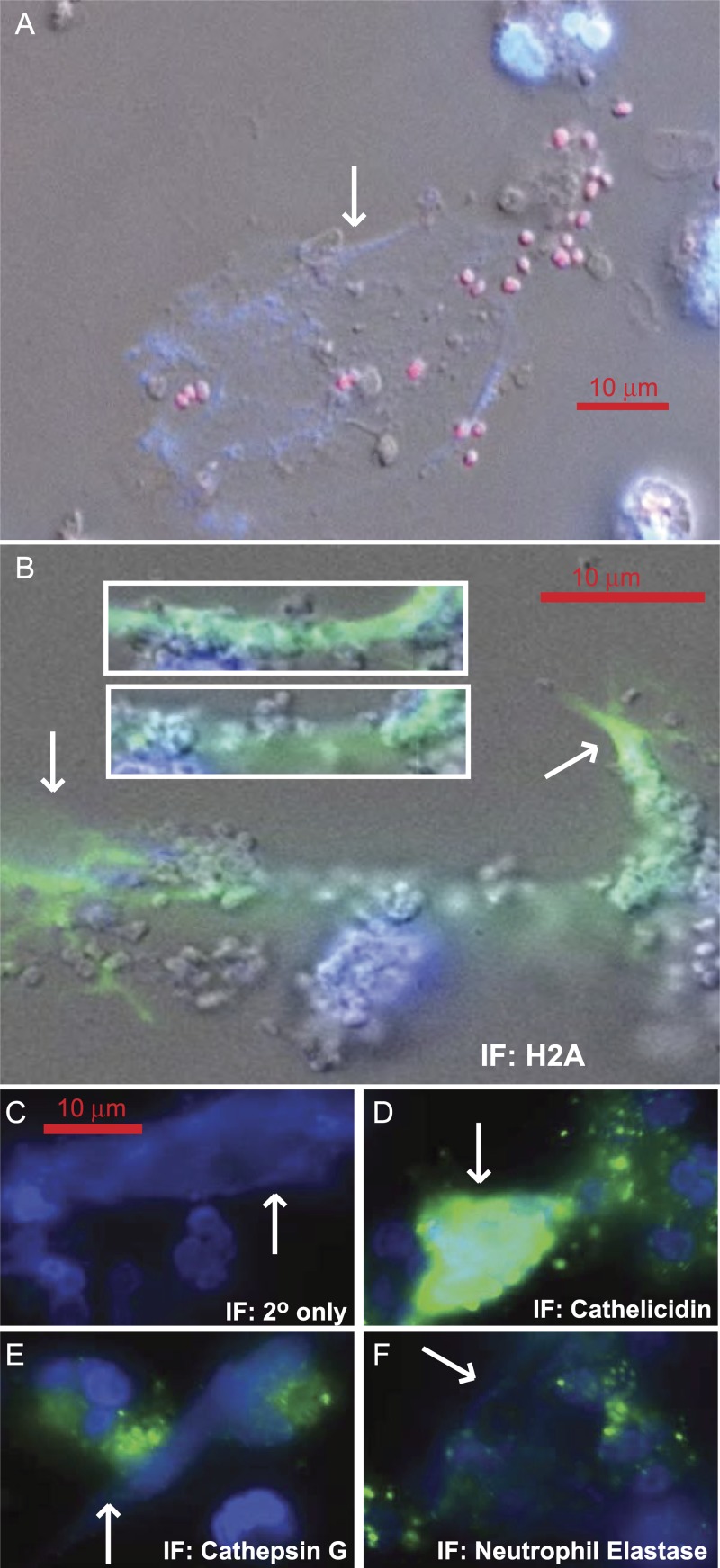
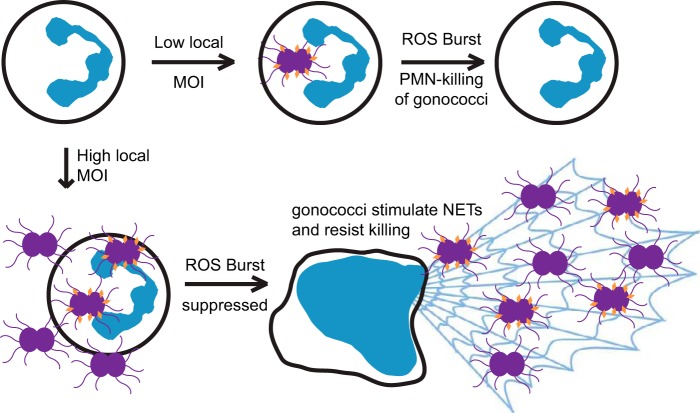
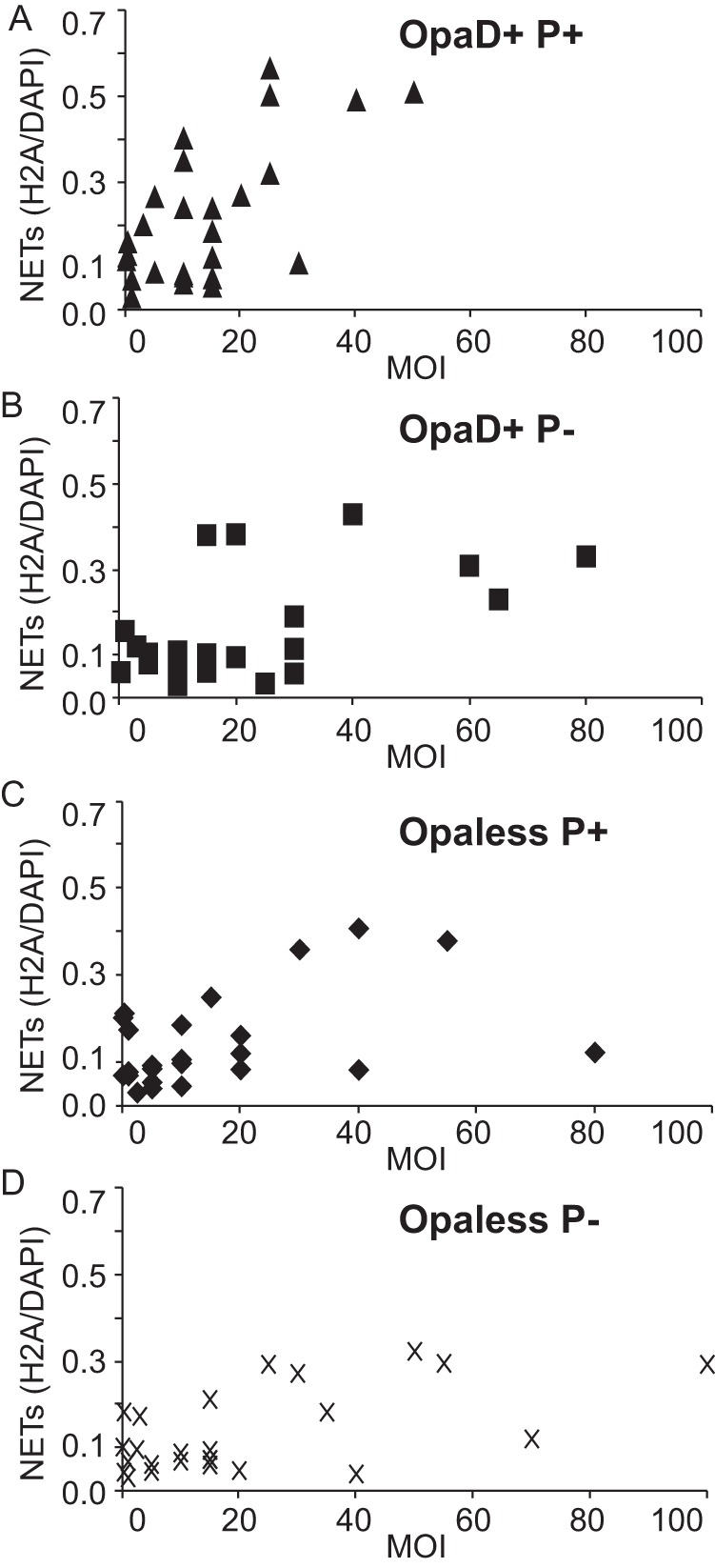
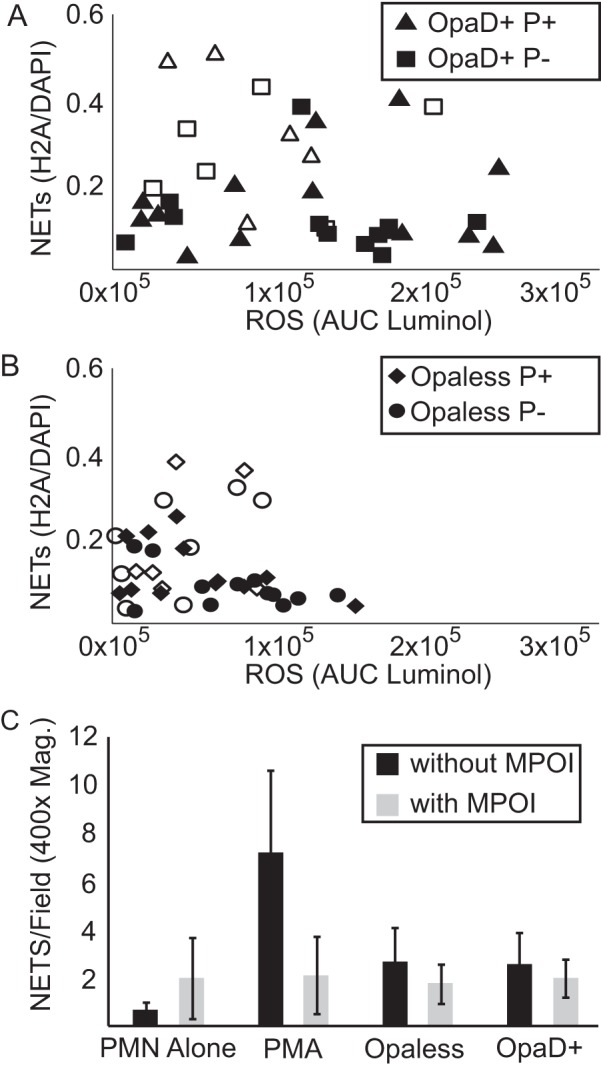
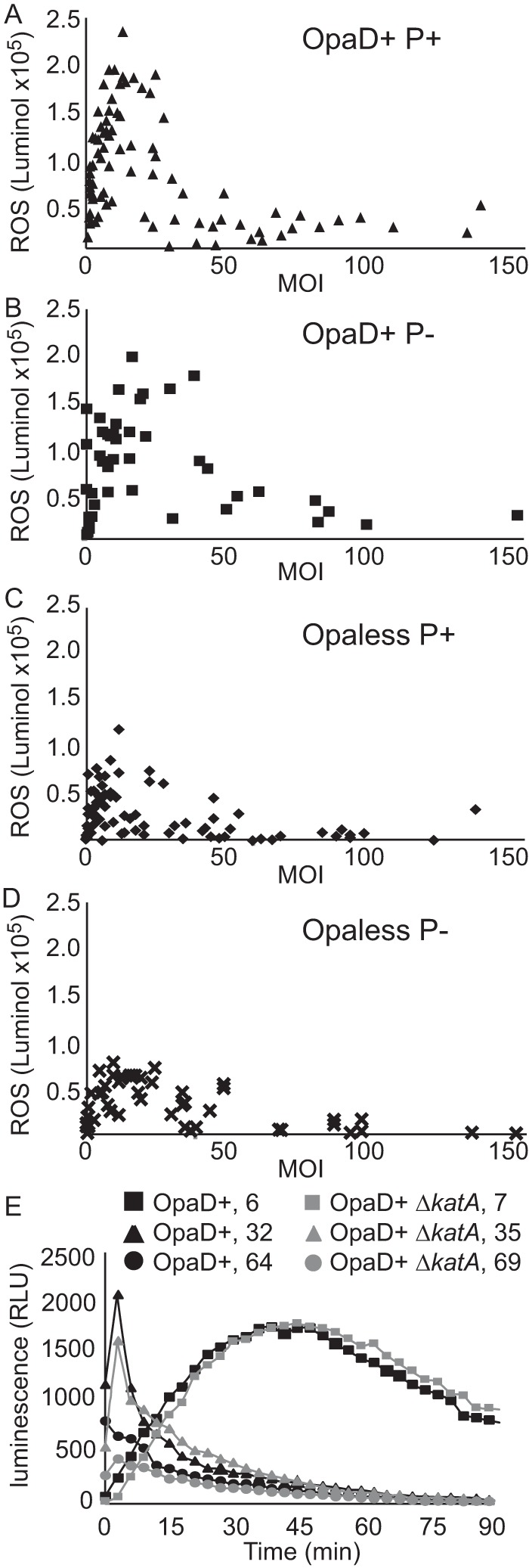
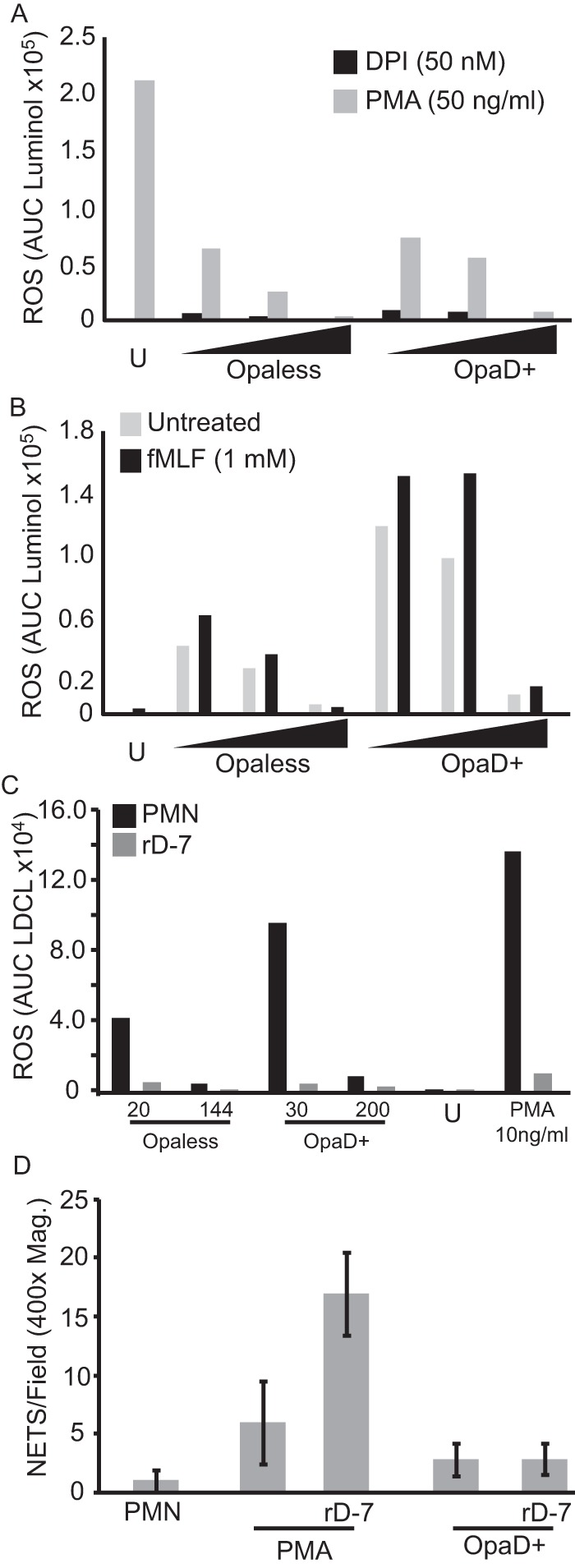
Neisseria gonorrhoeae (the gonococcus) causes gonorrhea and is uniquely adapted to survive within the human reproductive tract. Gonococci evade host immune surveillance in part by varying their pili and opacity-associated proteins. These variable surface antigens influence interactions with host epithelial and immune cells. A potent polymorphonuclear leukocyte (PMN) response is a hallmark of symptomatic gonococcal infection, with vast numbers of PMNs recruited to the site of infection. A large body of literature describes gonococcus-PMN interactions, but the factors driving the outcome of infection are not fully understood. Gonococci have been described to both induce and suppress the PMN oxidative burst, but we determined that gonococci differentially affect induction of the PMN oxidative burst depending on the multiplicity of infection (MOI). Infecting PMN at an MOI of <20 gonococci elicits an oxidative burst, while an MOI of >20 suppresses the burst. Oxidative burst in response to gonococci is enhanced by, but does not require, expression of pili or opacity proteins. Neutrophil extracellular traps (NETs) were observed in gonococcus-infected PMNs, a process which requires an oxidative burst, yet gonococci induced NETs under suppressing conditions. The NETs were unable to kill gonococci despite killing the common vaginal bacterium Lactobacillus crispatus. Thus, gonococci influence PMN biology to promote their own survival by suppressing the oxidative burst of PMNs and stimulating the formation of NETs, which do not effectively kill gonococci, illustrating how N. gonorrhoeae has evolved to modulate PMN responses to promote infection.
Neisseria gonorrhoeae, the gonococcus, is the only causative agent of gonorrhea and is exclusively found within the human host. Gonococci stochastically vary the composition of antigens on their surface to evade immune surveillance. We used gonococcal mutants which stably express different surface antigens to dissect interactions between gonococci and primary human polymorphonuclear leukocytes (PMNs). We found that gonococci, depending on the number of bacteria present, either induce or suppress the oxidative burst of PMNs regardless of other stimuli. Gonococci also cause PMNs to release DNA, forming neutrophil extracellular traps (NETs) independently of the oxidative burst. The NETs were unable to kill gonococci but were able to kill commensal bacteria, suggesting that NET production can help gonococci outcompete other bacterial species. We propose that gonococci have evolved to manipulate PMN responses to promote their own survival during infection.
淋病奈瑟菌(淋球菌)可引起淋病,且特别适应在人类生殖道内存活。淋球菌部分地通过改变菌毛和不透明相关蛋白来逃避宿主免疫监视。这些可变表面抗原影响与宿主上皮细胞和免疫细胞的相互作用。强烈的多形核白细胞(PMN)反应是有症状淋病感染的一个标志,大量PMN被招募到感染部位。大量文献描述了淋球菌与PMN的相互作用,但驱动感染结果的因素尚未完全了解。已有报道称淋球菌既能诱导也能抑制PMN的氧化爆发,但我们确定淋球菌对PMN氧化爆发诱导的影响因感染复数(MOI)而异。以<20个淋球菌的MOI感染PMN会引发氧化爆发,而MOI>20则会抑制爆发。对淋球菌的氧化爆发反应可因菌毛或不透明蛋白的表达而增强,但并非必需。在感染淋球菌的PMN中观察到中性粒细胞胞外陷阱(NETs),这一过程需要氧化爆发,但淋球菌在抑制条件下也能诱导NETs形成。尽管NETs能杀死常见的阴道细菌卷曲乳杆菌,但却无法杀死淋球菌。因此,淋球菌通过抑制PMN的氧化爆发和刺激NETs形成来影响PMN生物学特性以促进自身存活,而NETs并不能有效杀死淋球菌,这说明了淋病奈瑟菌是如何进化来调节PMN反应以促进感染的。
淋病奈瑟菌,即淋球菌,是淋病的唯一病原体,仅存在于人类宿主体内。淋球菌随机改变其表面抗原的组成以逃避免疫监视。我们使用稳定表达不同表面抗原的淋球菌突变体来剖析淋球菌与原代人类多形核白细胞(PMN)之间的相互作用。我们发现,无论其他刺激因素如何,淋球菌根据存在的细菌数量,要么诱导要么抑制PMN的氧化爆发。淋球菌还会导致PMN释放DNA,独立于氧化爆发形成中性粒细胞胞外陷阱(NETs)。NETs无法杀死淋球菌,但能够杀死共生细菌,这表明NETs的产生有助于淋球菌在与其他细菌物种的竞争中胜出。我们提出,淋球菌已经进化出操纵PMN反应以在感染期间促进自身存活的能力。