Uwizeye Dieudonné, Sokoni Cosmas H, Kabiru Caroline W
Centre for Environment, Entrepreneurship and Sustainable Development, University of Rwanda, Kigali, Rwanda ; Centre for Population Studies and Research, University of Dar es Salaam, Dar es Salaam, Tanzania.
Centre for Population Studies and Research, University of Dar es Salaam, Dar es Salaam, Tanzania.
Springerplus. 2014 Dec 16;3:745. doi: 10.1186/2193-1801-3-745. eCollection 2014.
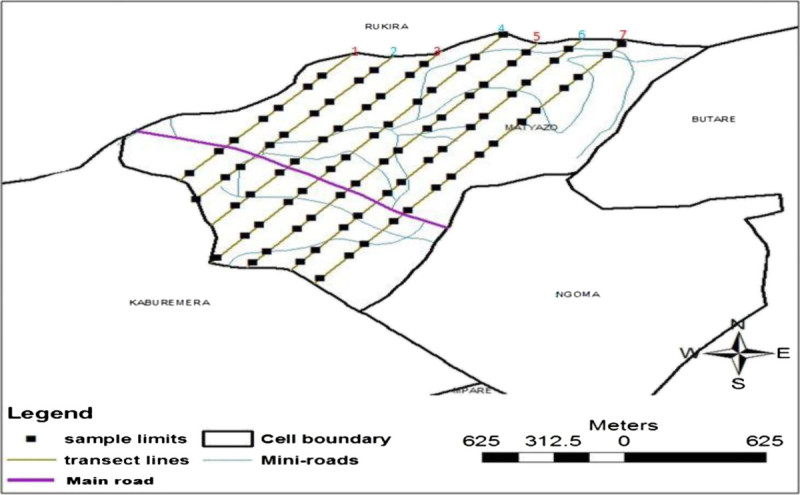
Dwellers of urban informal settlements in developing countries are consistently reported to be victims of high diarrhoea prevalence. Studies have frequently reported the association between high diarrhoea prevalence and other factors, such as poor living conditions, inadequate hygiene, and sanitation in these settings. However, little is known about the dynamics of diarrhoea prevalence in mountainous urban informal settlements similar to the Rwandan context. This study was conducted in the Matyazo cell of Huye town to review the prevalence and correlates of diarrhoea. A survey of 214 households and transect walks in the neighbourhoods were conducted during the rainy and dry seasons. Logistic regression was used to analyse the survey data while the thematic analysis technique was used to analyse qualitative data. Results indicated a substantial reduction of diarrhoea prevalence from the rainy to the dry season. It was also found that the prevalence was unequally distributed in the neighbourhoods according to household location. After controlling for other household characteristics and sanitation conditions of around homes, the study indicated that households established at 1800 metres or more above sea level were protected against diarrhoea during both rainy seasons (Adjusted Odds Ratio_ AOR: .42, 95% Confidence Interval_ CI: .13-.81) and dry seasons (AOR: .58, CI: .12-.90) while households found further from the road were likely to suffer from diarrhoea during rainy seasons (AOR: 3.32, CI: 1.47-7.48) as well as in dry seasons (AOR: 1.60, CI: 1.26-4.10). Poor sanitation within and around homes was also found to be associated with the increase of diarrhoea in either season. However, the evidence was not sufficient enough to confirm a significant association between diarrhoea prevalence and other household characteristics. We believe this is due to the strength of environmental factors in mountainous settings.
据报告,发展中国家城市非正规住区的居民一直是腹泻高发的受害者。研究经常报告腹泻高发与其他因素之间的关联,如这些地区恶劣的生活条件、卫生条件不足和环境卫生问题。然而,对于类似于卢旺达情况的山区城市非正规住区腹泻流行的动态情况知之甚少。本研究在胡耶镇的马蒂亚佐小区进行,以审查腹泻的患病率及其相关因素。在雨季和旱季对214户家庭进行了调查,并在社区进行了横断面走访。采用逻辑回归分析调查数据,同时采用主题分析技术分析定性数据。结果表明,从雨季到旱季,腹泻患病率大幅下降。还发现,根据家庭位置,腹泻患病率在各社区分布不均。在控制了其他家庭特征和房屋周围的卫生条件后,研究表明,海拔1800米或以上的家庭在雨季(调整优势比_AOR:0.42,95%置信区间_CI:0.13 - 0.81)和旱季(AOR:0.58,CI:0.12 - 0.90)都能预防腹泻,而离道路较远的家庭在雨季(AOR:3.32,CI:1.47 - 7.48)以及旱季(AOR:1.60,CI:1.26 - 4.10)更容易患腹泻。房屋内外卫生条件差也与两个季节腹泻发病率的增加有关。然而,证据不足以证实腹泻患病率与其他家庭特征之间存在显著关联。我们认为这是由于山区环境因素的影响。