Burger Eva, Mendes Ana Carolina S C, Bani Giulia M A C, Brigagão Maísa R P L, Santos Gérsika B, Malaquias Luiz Cosme C, Chavasco Jorge Kleber, Verinaud Liana M, de Camargo Zoilo P, Hamblin Michael R, Sperandio Felipe F
Department of Microbiology and Immunology, Institute of Biomedical Sciences, Federal University of Alfenas (UNIFAL-MG), Alfenas, Minas Gerais, Brazil.
Department of Biochemistry, Institute of Biomedical Sciences, Federal University of Alfenas (UNIFAL-MG), Alfenas, Minas Gerais, Brazil.
PLoS Negl Trop Dis. 2015 Feb 12;9(2):e0003541. doi: 10.1371/journal.pntd.0003541. eCollection 2015 Feb.
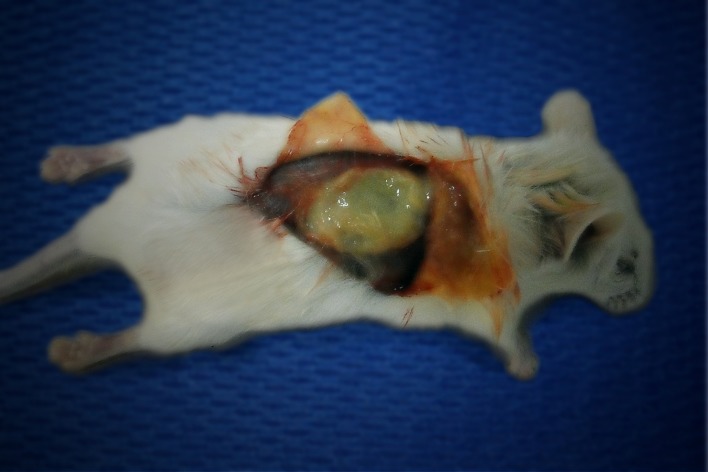
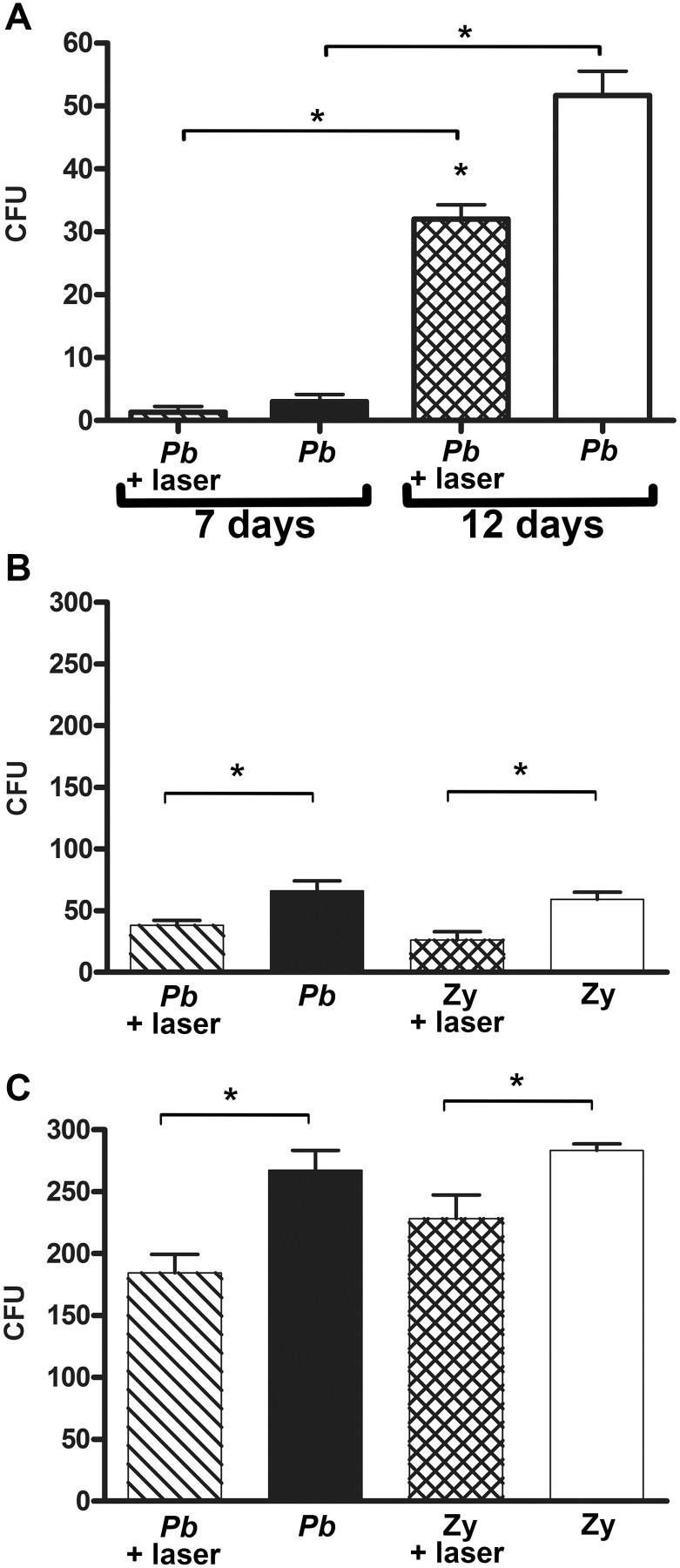
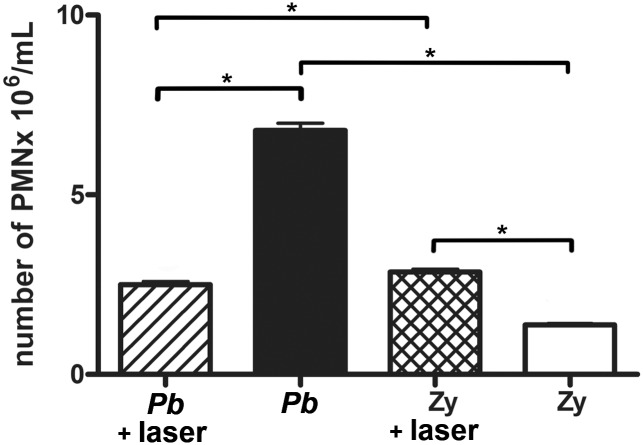
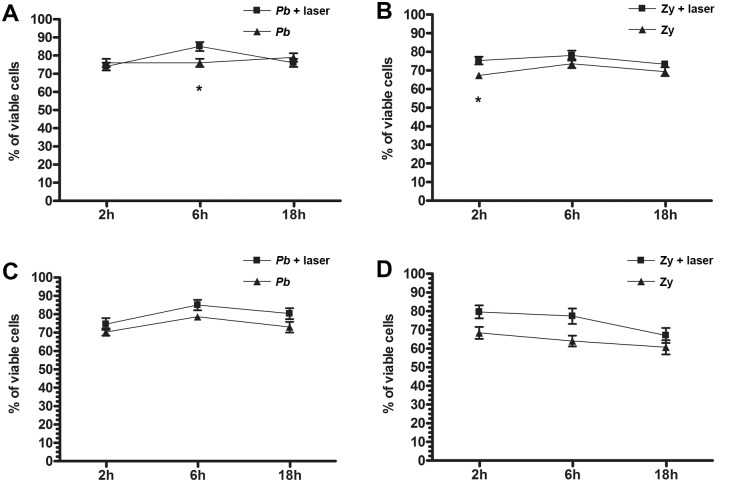
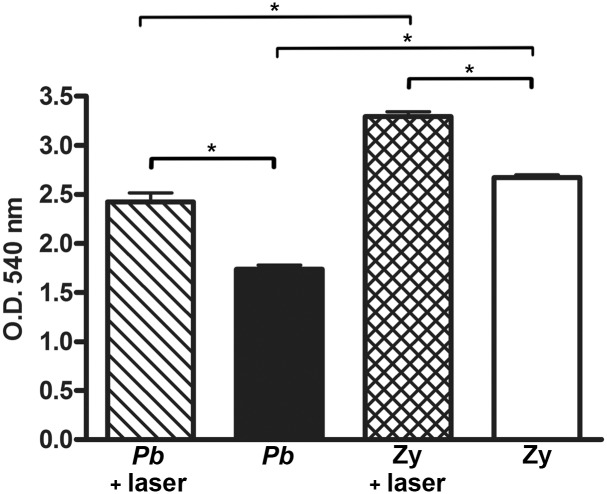
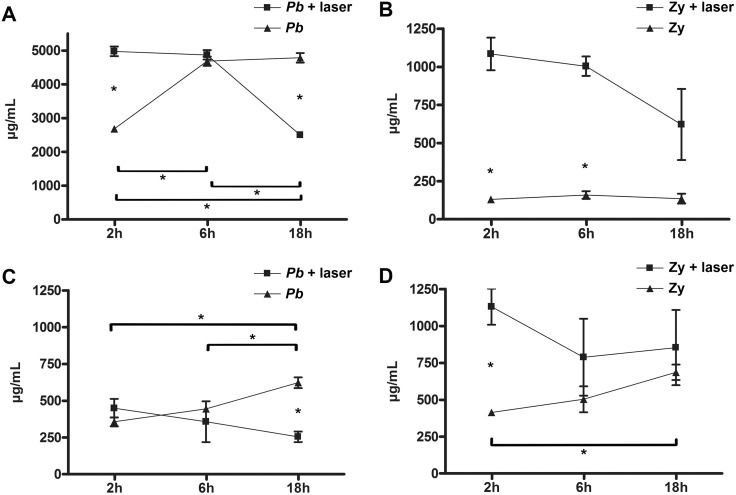
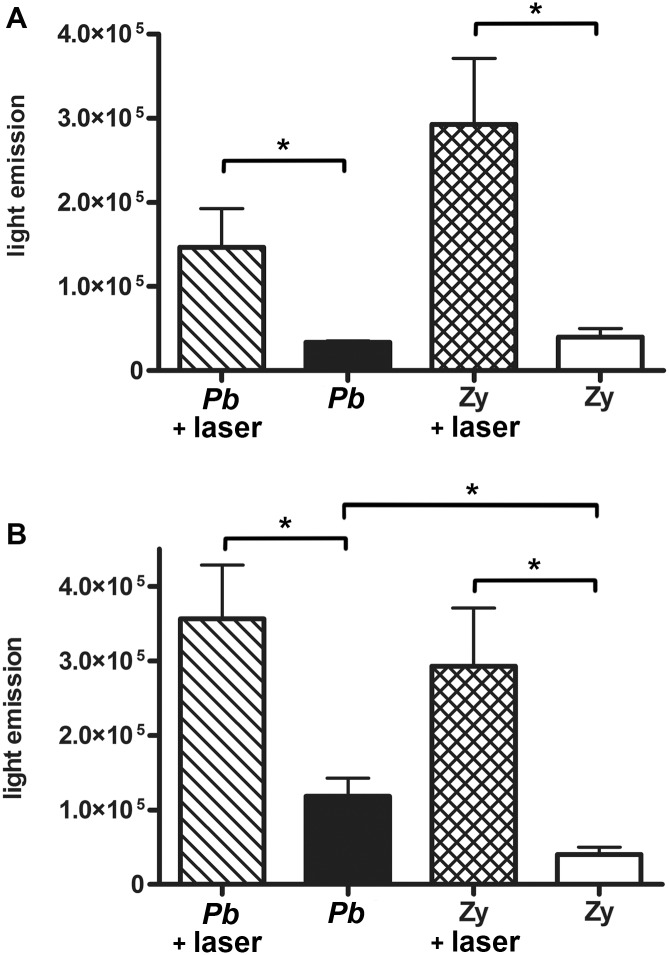
Neutrophils (PMN) play a central role in host defense against the neglected fungal infection paracoccidioidomycosis (PCM), which is caused by the dimorphic fungus Paracoccidioides brasiliensis (Pb). PCM is of major importance, especially in Latin America, and its treatment relies on the use of antifungal drugs. However, the course of treatment is lengthy, leading to side effects and even development of fungal resistance. The goal of the study was to use low-level laser therapy (LLLT) to stimulate PMN to fight Pb in vivo. Swiss mice with subcutaneous air pouches were inoculated with a virulent strain of Pb or fungal cell wall components (Zymosan), and then received LLLT (780 nm; 50 mW; 12.5 J/cm2; 30 seconds per point, giving a total energy of 0.5 J per point) on alternate days at two points on each hind leg. The aim was to reach the bone marrow in the femur with light. Non-irradiated animals were used as controls. The number and viability of the PMN that migrated to the inoculation site was assessed, as well as their ability to synthesize proteins, produce reactive oxygen species (ROS) and their fungicidal activity. The highly pure PMN populations obtained after 10 days of infection were also subsequently cultured in the presence of Pb for trials of protein production, evaluation of mitochondrial activity, ROS production and quantification of viable fungi growth. PMN from mice that received LLLT were more active metabolically, had higher fungicidal activity against Pb in vivo and also in vitro. The kinetics of neutrophil protein production also correlated with a more activated state. LLLT may be a safe and non-invasive approach to deal with PCM infection.
中性粒细胞(PMN)在宿主抵御由双态真菌巴西副球孢子菌(Pb)引起的被忽视的真菌感染——副球孢子菌病(PCM)中发挥着核心作用。PCM至关重要,尤其是在拉丁美洲,其治疗依赖于使用抗真菌药物。然而,治疗过程漫长,会导致副作用甚至真菌耐药性的产生。该研究的目的是使用低强度激光疗法(LLLT)刺激PMN在体内对抗Pb。给带有皮下气囊的瑞士小鼠接种毒力强的Pb菌株或真菌细胞壁成分(酵母聚糖),然后每隔一天在每条后腿的两个点接受LLLT(780纳米;50毫瓦;12.5焦/平方厘米;每点照射30秒,每点总能量为0.5焦)。目的是用光照射到股骨中的骨髓。未照射的动物用作对照。评估迁移到接种部位的PMN的数量和活力,以及它们合成蛋白质、产生活性氧(ROS)的能力和杀真菌活性。感染10天后获得的高度纯化的PMN群体随后也在有Pb的情况下进行培养,以进行蛋白质产生试验、线粒体活性评估、ROS产生和存活真菌生长定量。接受LLLT的小鼠的PMN代谢更活跃,在体内和体外对Pb都具有更高的杀真菌活性。中性粒细胞蛋白质产生的动力学也与更活跃的状态相关。LLLT可能是一种安全且非侵入性的治疗PCM感染的方法。